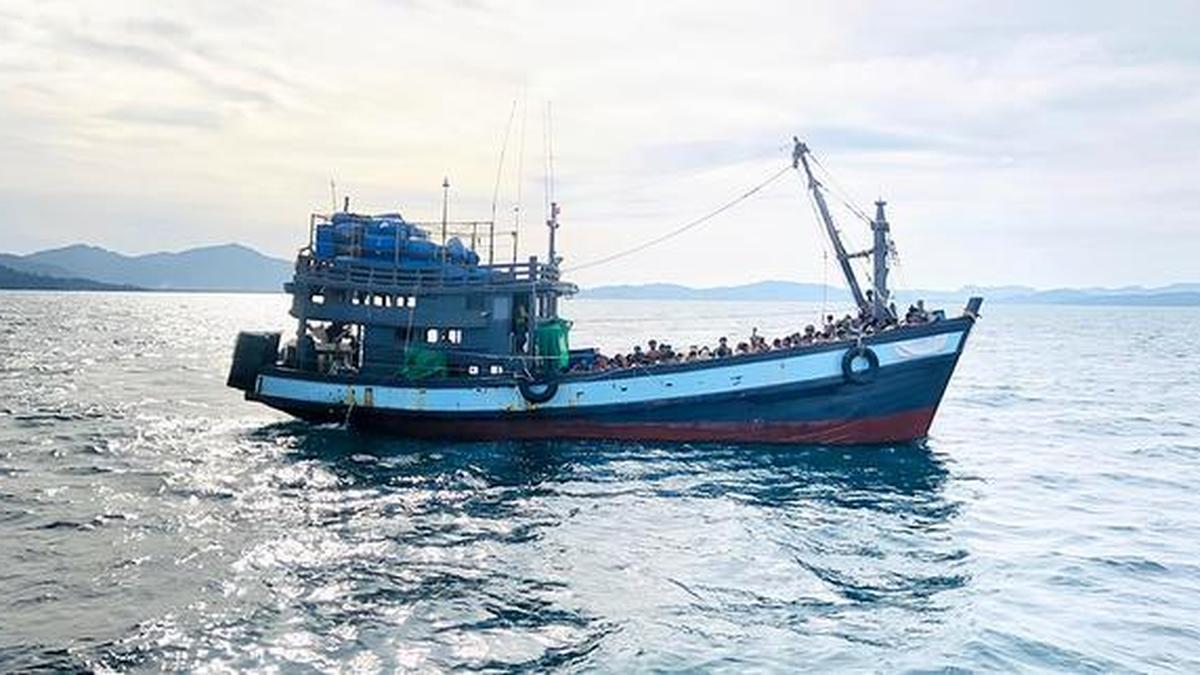
The Andaman Sea has turned into a massive, unmarked graveyard. It’s a harsh reality that many people choose to ignore, but the latest data from the UN Refugee Agency (UNHCR) makes it impossible to look away. In 2025, nearly 900 Rohingya refugees were reported dead or missing while trying to cross the Bay of Bengal and the Andaman Sea.
Let that number sink in. These aren't just statistics. They're families, children, and individuals who were so desperate to escape their circumstances that they hopped on overcrowded, unseaworthy boats, knowing full well they might never reach land. Honestly, when one in every seven people who starts a journey ends up dead or lost at sea, you’re not looking at a travel route. You're looking at a death trap.
The Grim Reality of the Deadliest Year on Record
2025 has officially gone down as the deadliest year for Rohingya maritime movements. To put this in perspective, more than 6,500 people attempted these crossings last year. The mortality rate is staggering—the highest of any major refugee or migrant sea route in the world. It’s even deadlier than the Mediterranean routes that usually dominate international headlines.
Most people don't realize that over half of those on these boats are women and children. They aren't just looking for better jobs; they're running for their lives. When you talk to survivors, the story is always the same. They feel trapped. Between the escalating violence in Myanmar’s Rakhine State and the crumbling conditions in the refugee camps in Bangladesh, they feel like they’re choosing between a slow death on land or a quick one at sea.
Why the Crisis Spiked in 2025
You might wonder why things got so much worse last year. It wasn't just bad luck or rougher weather. It was a perfect storm of political instability and a massive failure of international support.
- Rations and Resources: In the Bangladesh camps, food rations were slashed because international funding dried up. Imagine trying to feed a family on less than $10 a month. People are literally starving, which makes the risk of a rickety boat seem like a logical gamble.
- Security Breakdown: The camps in Cox’s Bazar have become increasingly dangerous. Gang violence, kidnappings, and fires are common. If you don’t feel safe in your tent, the open ocean starts to look like an exit strategy.
- No Way Back: In Myanmar, the conflict has only intensified. There’s no citizenship on the table, no safety, and no hope for a "dignified return" anytime soon.
The situation didn't just stay in 2025, either. Between January and mid-April of 2026, we’ve already seen over 2,800 people take to the sea. Just a few days ago, a boat that left Teknaf, Bangladesh, capsized. Roughly 250 people are feared dead from that single incident. Nine survivors were found near the Andaman Islands. Nine. Out of 250.
The Policy of Indifference
The regional response has been, frankly, pathetic. We see a recurring cycle where boats are spotted, but no one wants to take responsibility. Nations often engage in "pushbacks," where they literally tow these leaking boats back into international waters rather than letting them dock. It’s a game of human ping-pong with fatal consequences.
Experts like Babar Baloch from the UNHCR have been shouting into the void for months. The argument is simple: no one puts their child on a boat that has a high chance of sinking unless the alternative is even worse. We’re failing on two fronts. We aren't providing enough aid to keep people stable where they are, and we aren't coordinating a regional search-and-rescue effort to save them when they flee.
Breaking Down the Numbers
If you look at the historical data, the scale of the 2025 tragedy is unprecedented. Since 2012, nearly 200,000 Rohingya have attempted these journeys. But the jump in 2025 shows a total collapse of the status quo.
The mortality rate hitting one in seven is the red flag that should have triggered a global emergency. In previous years, the ratio was significantly lower, though still tragic. The increase tells us that the boats are getting more crowded and the smugglers are getting more reckless. They know these people have nowhere else to go, so they pack them in like cargo.
What Needs to Happen Right Now
This isn't a problem that will just disappear if we look the other way. If 2026 continues at its current pace, it will dwarf the horrors of 2025. Here is what actually needs to happen if we want to stop the Andaman Sea from claiming another thousand lives.
- Fund the Joint Response Plan: The humanitarian aid for camps in Bangladesh is currently a shell of what it needs to be. Restoring food rations and basic security would immediately take the pressure off families to flee.
- Regional Search and Rescue: Southeast Asian nations need a formal agreement to land these boats. Pushing them back out to sea is a death sentence, and everyone knows it.
- Address Myanmar’s Root Causes: As long as the Rohingya are denied citizenship and targeted by violence in Myanmar, the exodus will continue. This requires sustained diplomatic pressure that goes beyond just "expressing concern."
You can help by supporting organizations on the ground like the UNHCR or Médecins Sans Frontières (Doctors Without Borders), who are providing the medical and psychological support that survivors desperately need. Reach out to your local representatives and demand that refugee funding be prioritized. The world stood by while nearly 900 people drowned in 2025. We can't let 2026 be a repeat performance.
The data is clear. The stories are heart-wrenching. The only thing missing is the political will to act. Stop treating this as a "migration issue" and start treating it as the humanitarian catastrophe it actually is.