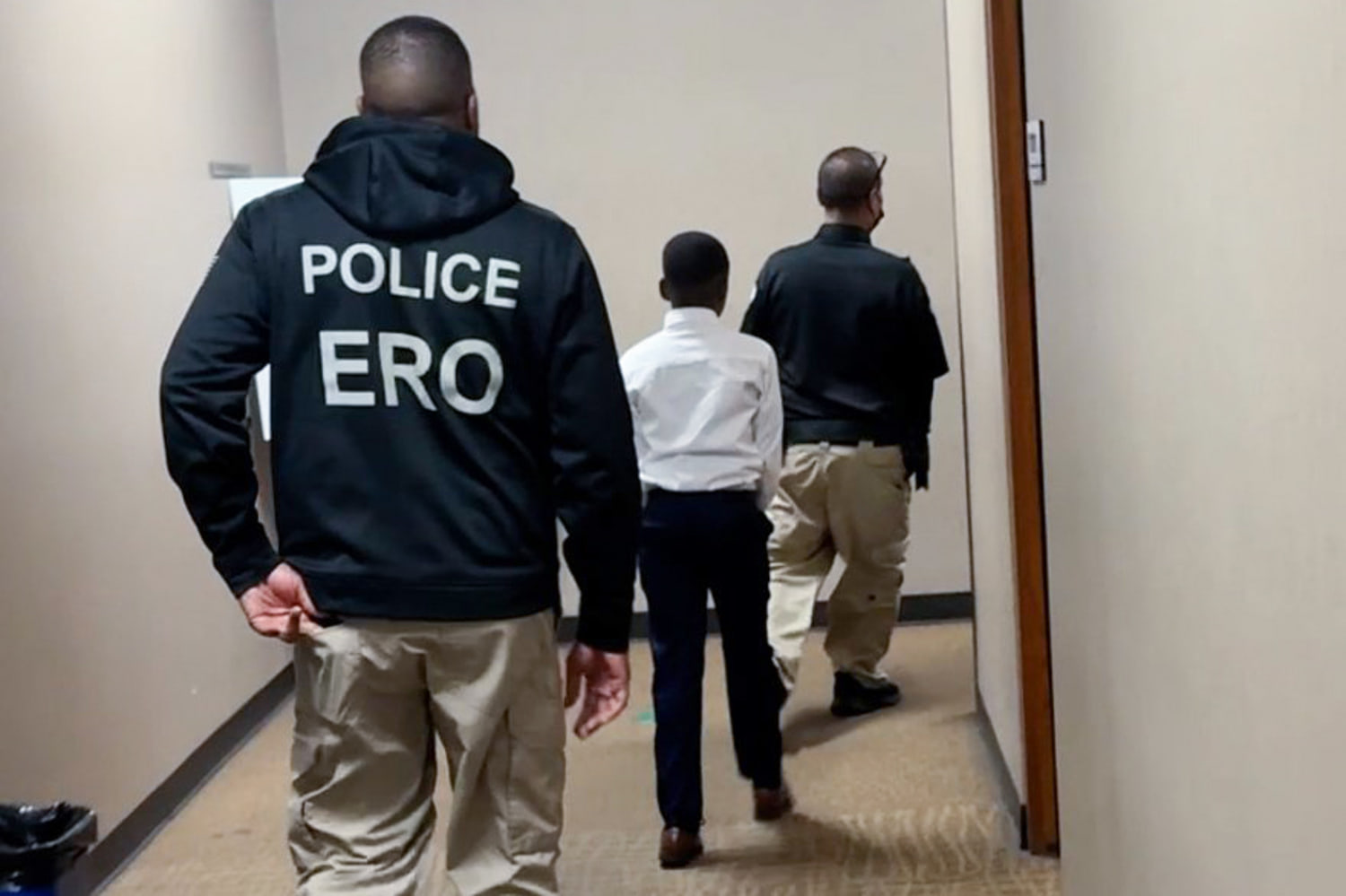
An empty desk in a second-grade classroom tells a story policy memos never capture.
In San Diego, a routine Immigration and Customs Enforcement appointment ended with an 8-year-old Haitian student taken into federal custody alongside their parent, sending immediate shockwaves through a local school district and leaving classmates staring at a vacant chair. Parents who show up for scheduled check-ins are following the exact rules the federal government laid out for them. They aren't hiding. They aren't dodging court dates. Yet showing up has become a gamble with devastating stakes for children who spent the previous afternoon learning multiplication tables and trading snacks at recess.
Why Routine Check-Ins Are Rattling San Diego Schools
Most people assume immigration enforcement happens during dramatic early-morning raids or border interdictions. That's a massive misconception.
In reality, the Intensive Supervision Appearance Program and standard ICE check-ins bring thousands of families directly into federal office buildings every single week. Families arrive with folders full of paperwork, birth certificates, and school attendance records, expecting a ten-minute signature and a stamp for their next appointment six months out. When enforcement priorities shift or removal orders hit an administrative green light, those routine hallways turn into detention points without warning.
San Diego sits at the epicenter of this friction. Because the region borders Tijuana and serves as a major processing corridor for asylum seekers from Haiti, Central America, and beyond, local public school districts enroll hundreds of newcomer students each academic year. Teachers build trust slowly with kids who have already survived grueling journeys across multiple countries. When a student vanishes overnight after a routine ICE check-in in San Diego, that hard-won sense of safety collapses across the entire campus.
School administrators rarely get advance notice. One morning a child is on the attendance roster; by afternoon dismissal, word spreads through parent WhatsApp groups and frantic phone calls to the front office that the family never walked out of the federal building. Principals are suddenly forced to manage traumatized classmates, panicked immigrant parents wondering if drop-off is still safe, and teachers who don't know whether to pack up a student's artwork or keep it taped to the wall.
What Happens Inside the Immigration Check-In Process
To understand why this case hit San Diego educators so hard, you have to look at how the check-in system actually works on the ground.
When families enter the United States seeking asylum or humanitarian relief, U.S. Customs and Border Protection frequently releases them on parole or an Order of Recognizance while their immigration court cases pend. Part of that release agreement requires periodic check-ins at a local ICE Enforcement and Removal Operations field office, such as the facility in downtown San Diego.
Here's the catch nobody outside immigration law talks about enough:
- Compliance offers zero immunity. Following every reporting rule doesn't pause an underlying removal order if a judge has already denied asylum or if an appeal deadline lapsed without legal representation.
- Families rarely have lawyers at check-ins. Unlike criminal court, immigrants in civil removal proceedings have no right to a government-appointed attorney. Many Haitian families navigate complex English-language filings alone or rely on overwhelmed nonprofits.
- Detention decisions happen fast. If ICE officers determine a family is subject to an executable removal order, they can take both parent and child into custody right inside the waiting room, transferring them to family staging facilities or out-of-state detention centers within hours.
For an 8-year-old child, the transition is jarring. There's no chance to say goodbye to friends, grab a favorite jacket from a school cubby, or understand why following the rules led to being placed behind locked doors.
The Ripple Effect on Classroom Stability and Attendance
Educators know attendance is the bedrock of early elementary learning. At age eight, kids are making the critical leap from learning to read to reading to learn.
When news breaks that a Haitian 8-year-old was detained during a routine check-in, the impact doesn't stop with one family. Chronic absenteeism spikes almost immediately across neighboring classrooms. Immigrant parents—even those with valid work permits, Temporary Protected Status, or pending asylum applications—start keeping their kids home out of sheer fear that public institutions are connected to federal databases.
They aren't, of course. Under the Supreme Court's 1982 ruling in Plyler v. Doe, every child in the United States has a constitutional right to a free public K-12 education regardless of immigration status. School districts across California reinforce this with strict state laws, including the California Values Act (SB 54), which bars school staff from collecting immigration status data or assisting federal immigration agents without a judicial warrant.
Legal protections on paper don't erase visceral panic in a school parking lot.
Teachers end up carrying an impossible emotional load. You try explaining to a room full of 7- and 8-year-olds why their friend didn't come back after lunch yesterday without terrifying them. Counselors get pulled from regular duties to run emergency check-ins with kids who suddenly worry their own parents might disappear during a routine errand. Meanwhile, district leaders scramble to translate reassurance letters into Haitian Creole and Spanish before rumors outrun the facts.
Why Haitian Families Face Unique Legal Hurdles
The fact that this student is Haitian adds another layer of complexity that gets glossed over in quick news blurbs.
Haitian migrants have faced whipsawing federal policies over the past several years. While some arrived through humanitarian parole programs or crossed at ports of entry using federal scheduling apps, others entered during periods of acute political collapse and gang violence in Port-au-Prince. Navigating the U.S. asylum system requires proving individualized persecution—a notoriously high legal bar that often leaves people fleeing generalized state collapse vulnerable to deportation orders.
Language access makes everything harder. San Diego has robust Spanish-language legal aid and school translation services, built up over decades. Haitian Creole resources? Far thinner. Finding an accredited immigration attorney in Southern California who speaks fluent Haitian Creole—or even securing a qualified court interpreter for nuanced legal hearings—can take months families simply don't have.
When paperwork gets misunderstood or a hearing notice arrives at an outdated shelter address, an in absentia removal order gets entered automatically. Months later, a parent walks into a routine ICE check-in thinking everything is fine, unaware that a judge ordered their deportation on paper weeks earlier.
How School Districts and Communities Respond When a Student Is Taken
When a detention hits a local school community, scrambling after the fact isn't enough. Districts that handle these crises best rely on protocols built long before an emergency call comes in.
First comes rapid verification and family outreach. School social workers and community liaisons work with local legal aid organizations—like Jewish Family Service of San Diego or the Immigrant Defenders Law Center—to locate where the family was transferred using the ICE Online Detainee Locator System. Because minor children don't always show up in public database searches for privacy reasons, advocates usually have to track the parent's Alien Registration Number to confirm the child is still with them.
Second is preserving educational continuity. Even when a child is held in federal custody or transferred to a family residential facility in Texas or Pennsylvania, school districts prepare academic packets, transfer records, and immunization histories so the student doesn't lose months of progress.
Third is protecting the remaining student body from rumor-driven panic. Effective principals avoid vague corporate statements and instead host direct, multilingual family meetings with trusted legal aid attorneys present to answer questions plainly.
Practical Steps for Immigrant Families and Educators Right Now
Nobody should walk into a federal check-in blind, and no school staff member should have to improvise during a detention crisis. If you're a parent facing scheduled ICE appointments, an educator, or a community advocate, take these concrete precautions immediately:
- Have an immigration attorney review your file before every check-in. Never assume a routine appointment is purely administrative. A lawyer can check the Executive Office for Immigration Review (EOIR) automated hotline or portal to confirm no in absentia removal order exists on your record before you step inside an ICE building.
- Complete a Family Preparedness Plan and Caregiver's Authorization Affidavit. In California, parents can designate a trusted relative or friend to make medical and school decisions for their child if the parent is unexpectedly detained. Keep signed copies with your child's school front office and inside a folder you carry to appointments.
- Memorize your A-Number and share it with a trusted advocate. Write your nine-digit Alien Registration Number down and leave it with a family member or legal aid organization outside the building. If you're detained, advocates cannot locate you or confirm your child's whereabouts without that number.
- Update emergency contact cards at school. Make sure at least two local contacts who are not attending the same immigration appointment are listed on your child's school emergency card with explicit permission for school pickup.
- Demand clear safe-haven protocols from your school board. Parents and teachers should verify that their district actively trains front-office staff on how to respond if federal agents appear on campus, ensuring no student records or information are ever shared without a judge-signed judicial warrant.
Keep copies of your child's school enrollment records, medical needs, and legal contacts in a single physical folder before your next scheduled appointment, and verify your court status through the EOIR case information system at least 48 hours before walking through the door.