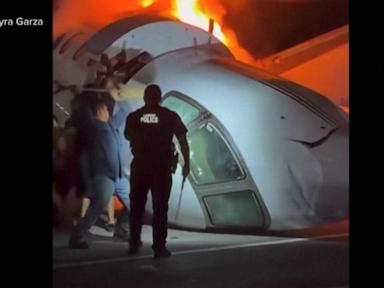
The internet loves a hero. When a small plane clipped power lines and slammed into a Texas highway, the media immediately spun the predictable narrative. "Good Samaritans race towards fiery plane to rescue survivors." Videos went viral. Comments sections flooded with praise. Everyone cheered the brave drivers who left their vehicles to pull victims from the burning wreckage.
They are lucky they didn't end up in body bags alongside them.
We need to stop romanticizing untrained civilian interventions at major accident scenes. The "Good Samaritan" narrative is dangerous. It encourages a lethal mix of main-character syndrome and toxic ignorance that routinely compromises active rescue operations, endangers first responders, and gets well-meaning bystanders killed.
I spent over a decade in emergency management and incident response. I have watched civilians walk directly into toxic vapor clouds because they wanted to film a TikTok or "help." I have seen vehicles blocked by looky-loos, preventing fire engines from accessing a scene.
The harsh reality of emergency response is simple: if you do not have the training, the gear, and the situational awareness, your desire to help is a liability.
The Myth of the Controlled Explosion
The biggest flaw in the media's coverage of these incidents is the failure to understand the physics of an aviation fire. People watch Hollywood movies where cars and planes burn at a slow, predictable rate until a dramatic countdown triggers a clean explosion.
Real life does not have a special effects coordinator.
An aircraft fuselage is essentially a highly pressurized tube sitting on top of hundreds of gallons of aviation fuel (Avgas or Jet-A). When a plane crashes on a highway, you are not dealing with a standard car fire. You are dealing with unique, highly volatile hazards:
- Thermal Runaway and Magnesium: Many aircraft components utilize magnesium alloys. Once magnesium catches fire, it burns at over 3,000 degrees Fahrenheit. Water cannot extinguish it; it actually reacts violently with water, releasing hydrogen gas and causing explosions.
- Composite Material Toxicity: Modern aircraft rely heavily on carbon fiber composites. When these materials burn, they release microscopic, razor-sharp airborne fibers and highly toxic gases like hydrogen cyanide. Inhaling this smoke just once can cause permanent respiratory damage or instant incapacitation.
- Pressurized Vessels: Fire extinguishers, oxygen bottles, and hydraulic lines can become unguided missiles when exposed to extreme heat.
When you run toward that wreckage without a self-contained breathing apparatus (SCBA) and turnout gear, you are gambling your life on variables you cannot see, smell, or comprehend.
Dismantling the "People Also Ask" Delusion
Whenever these viral videos surface, search engines light up with predictable queries. The answers provided by generic content farms are usually wrapped in legal disclaimers and fluffy sentimentality. Let’s answer them with brutal honesty.
Can I be sued for helping someone in a plane crash?
Most states have Good Samaritan laws that protect civilians from civil liability if they render aid in good faith. But you are asking the wrong question. You shouldn't be worried about a courtroom; you should be worried about the morgue. A lawsuit can be settled. Inhaling a lungful of burning plastics cannot be undone.
What should you do first if you witness a plane crash?
The instinct is to run. The mandate is to look. Your first action should always be to secure your own safety, pull over to a safe distance, and call emergency services with precise location data. Giving a dispatcher an exact mile marker and confirming whether power lines are down saves more lives than sprinting into a fuel fire with a 2-pound car extinguisher.
How do you pull someone out of a burning vehicle safely?
Unless the vehicle is actively consuming the passenger compartment and you have an immediate, clear path of egress, you don't. Moving a trauma victim without stabilizing their cervical spine can easily cause permanent paralysis. If you pull someone out of a wreck and transect their spinal cord because you panicked, your heroism just cost them the use of their legs.
The Operational Reality of Secondary Disasters
First responders talk constantly about the concept of the "secondary disaster." This happens when the initial accident causes a chain reaction that creates more victims.
Imagine a scenario where five drivers stop their cars on a busy highway to run toward a crashed plane. They leave their car doors open. Traffic backs up instantly. A semi-truck rounding the bend cannot stop in time, swerves to avoid the abandoned cars, and plows into the crowd of onlookers.
This isn't a hypothetical thought experiment. It happens constantly.
By stopping haphazardly on a major thoroughfare, you create a massive traffic bottleneck that actively delays the arrival of heavy rescue equipment. A fire truck carrying 1,000 gallons of water and foam cannot weave through a chaotic maze of abandoned civilian vehicles. Every second a fire engine is delayed because someone wanted to be a hero is a second the actual victims spend without professional suppression systems.
The Exception to the Rule
Are there moments where intervention is justified? Yes. But the criteria are incredibly narrow.
If the aircraft is completely stable, the fire is minimal, and a victim is visibly trapped but conscious and pleading for help, a calculated risk might be warranted. But even then, you must assess the scene using a professional triage mindset:
- Identify the Fuel Source: Is fuel actively leaking? Is it running downhill toward you or away from you? If it’s running toward you, the scene is an immediate no-go.
- Locate Power Lines: Planes on highways almost always take down utility poles. If there is a downed wire touching the plane or the ground nearby, approaching means instant electrocution.
- Know Your Limits: If you cannot lift the debris or open the jammed door within 10 seconds, get out. Do not linger in the hot zone hoping for a miracle.
Stop Rewarding Recklessness
The media needs to stop treating survival as proof of a good strategy.
The bystanders in Texas survived because they got lucky, not because running toward a burning fuselage is a smart operational move. When we celebrate reckless behavior without highlighting the immense, unmitigated risk, we condition the public to make fatal mistakes the next time a disaster strikes.
If you find yourself witnessing a catastrophic accident, swallow the adrenaline. Put your ego aside. Pull over safely, give the dispatcher flawless information, and clear the way for the professionals who actually have a chance of puting the fire out.
The best way to be a hero is to ensure you don't become another casualty.