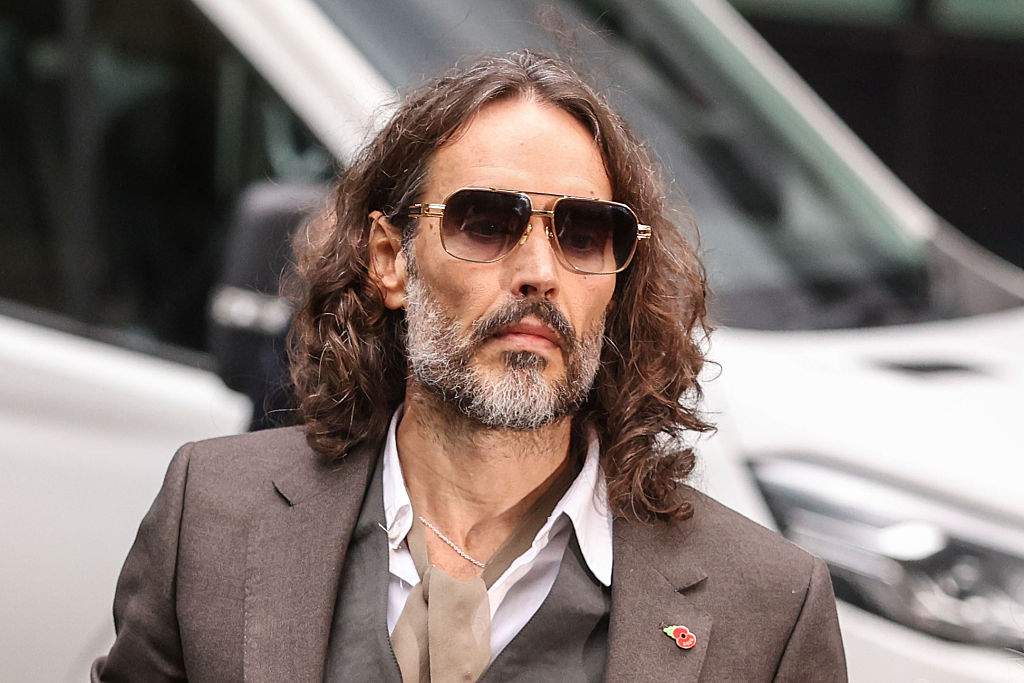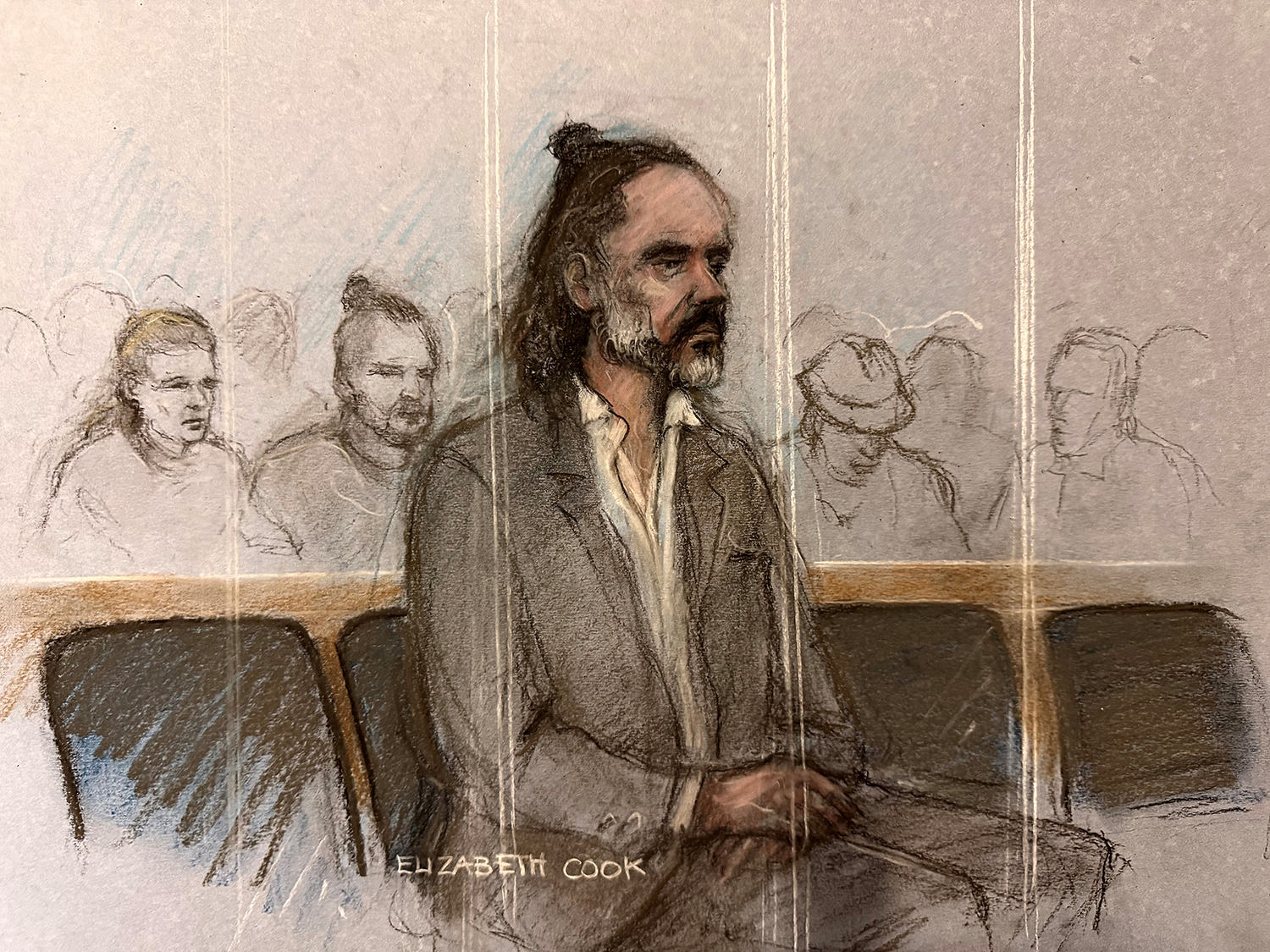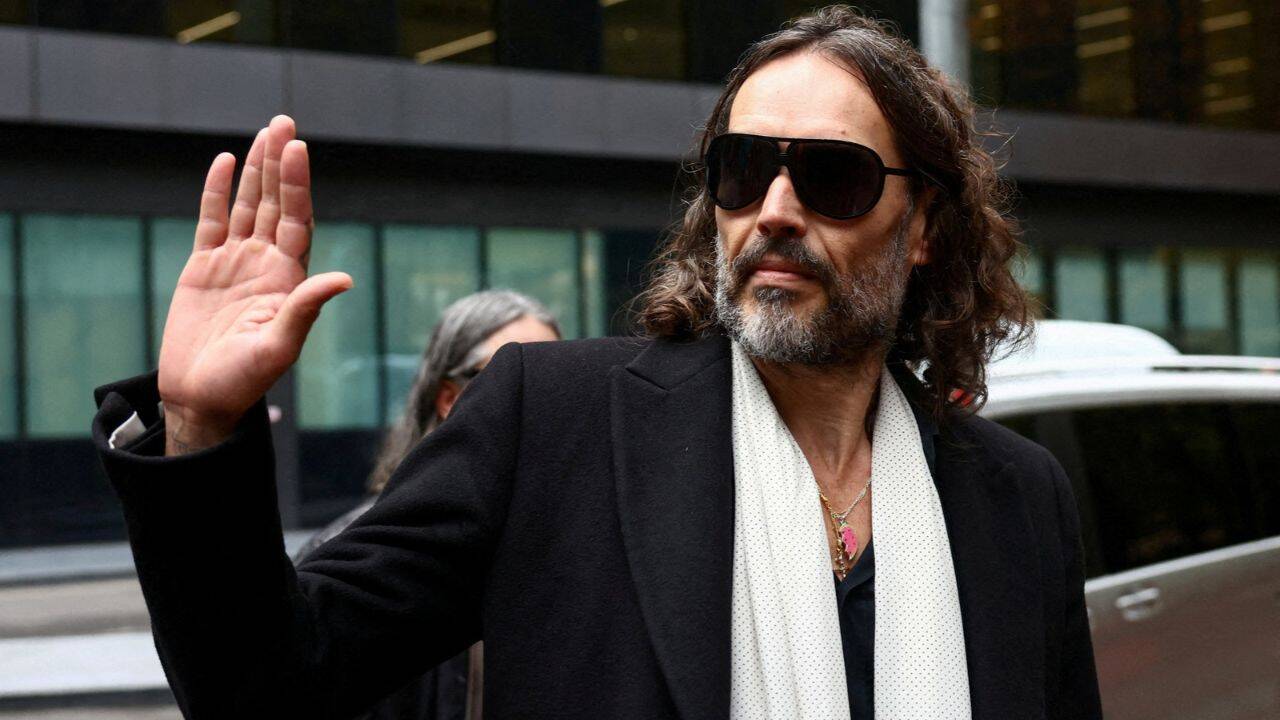
Everyone is staring at the courtroom door in London, waiting to see how many years a judge hands down to a disgraced comedian. That is the wrong place to look.
The mainstream press treats a high-profile criminal conviction like the series finale of a prestige drama. Hero falls, justice prevails, credits roll. Standard coverage of the Russell Brand case follows this exact, predictable script. It focuses on the salacious timeline, the pending sentencing guidelines in the UK, and the breathless speculation over what his life behind bars will look like. Learn more on a connected topic: this related article.
This framing is lazy. Worse, it is dangerously misleading.
Treating a criminal conviction as the ultimate solution to systemic abuse in entertainment lets the actual perpetrators off the hook. Not the individual offender—he faces the weight of the Crown Court—but the vast, insulated machinery of managers, network executives, publicists, and talent agencies that monetized his behavior for decades. While the public celebrates a single sentencing hearing, the infrastructure that enabled the abuse remains entirely intact, quietly scouting its next cash cow. Further journalism by BBC explores related views on this issue.
The Myth of the Rogue Monster
Entertainment journalism thrives on the "rogue monster" theory. It is clean. It is simple. It isolates the rot to one person’s moral failing, allowing the surrounding industry to wash its hands, issue a boilerplate statement of shock, and move on to the next upfront presentation.
I have spent years watching crisis management teams and talent agencies operate behind closed doors when an A-list client becomes a liability. The playbook never changes. When the money is flowing, eccentricities are marketed as "genius." Aggression is rebranded as "edgy." Open secrets in green rooms and production offices are brushed off with a nervous laugh and a non-disclosure agreement. The moment the legal dam breaks, those same executives suffer from acute, collective amnesia.
In the UK legal system, specifically under the Sexual Offences Act 2003, securing a conviction for historical rape and sexual assault requires overcoming an extraordinarily high evidentiary bar—proving guilt beyond reasonable doubt years after the fact. When a jury returns a guilty verdict under these rigorous standards, it confirms severe criminal conduct. Yet, the media coverage stops at the defendant's gavel, ignoring the commercial ecosystem that treated his volatility as a feature rather than a bug.
Legal scholars and criminologists who study institutional abuse, such as those analyzing patterns across media and sports organizations, consistently point out that high-profile predators rarely operate in a vacuum. They require enablers. They require gatekeepers who prioritize ratings and ticket sales over basic human safety. By framing the London sentencing as the final word on the matter, we validate a system that only punishes failure to stay quiet, rather than the abuse itself.
Why Sentencing Guidelines Miss the Real Culprits
Let us look at the mechanics of what happens next in a London courtroom. Under the Sentencing Council guidelines for England and Wales, judges determine custodial terms by assessing two primary factors: culpability and harm.
- Culpability looks at the offender's role, planning, and abuse of trust.
- Harm evaluates the severe psychological and physical impact on the victims.
These guidelines are rigid, mathematical, and focused entirely on the individual standing in the dock. A judge cannot sentence a television network for willful blindness. A criminal court cannot hand down a custodial term to a comedy circuit that looked the other way because a headliner sold out arenas.
Imagine a scenario where a major corporation knowingly sells a defective, dangerous vehicle for fifteen years. When the brakes finally fail and cause a fatal crash, the state prosecutes the factory worker who tightened the bolts, while the board of directors keeps their bonuses and launches a new model the following quarter. That is the exact accountability structure of modern entertainment.
The public asks, "How many years will Russell Brand get?"
That is the wrong question. The right question is: "Why did it take criminal prosecutors to do the job that human resources, talent agencies, and broadcast standards departments were paid millions to do twenty years ago?"
Dismantling the Cancel Culture Fallacy
Before his legal reckoning, Brand successfully pivoted into the alternative media space, building a massive digital following by positioning himself as a victim of mainstream censorship. This is where the conventional commentary gets completely lost in the weeds.
Critics argue his pivot was a cynical shield against impending legal trouble. Defenders claim the legal trouble was a coordinated hit job by the establishment to silence a dissenting voice. Both sides are falling for the same distraction.
The digital creator economy did not invent a new way to evade accountability; it simply removed the few remaining friction points that traditional media still possessed. On legacy television, there was at least the theoretical threat of an advertiser boycott or a broadcast regulator like Ofcom stepping in. On decentralized video and podcast platforms, outrage is the currency. Controversy drives the algorithm. Accusations do not trigger an internal investigation; they trigger a spike in subscriber metrics and merchandise sales.
When a public figure moves from legacy media to independent digital broadcasting, they are not escaping the system. They are upgrading to a business model where bad behavior is completely decoupled from financial consequence—right up until the moment a bailiff puts handcuffs on them.
The Fatal Flaw of Public Outrage
We have conditioned ourselves to believe that public shaming and deplatforming are effective substitutes for institutional reform. They are not.
- Outrage has a short half-life. The news cycle moves on within days, leaving zero sustained pressure on production companies to alter their hiring or reporting practices.
- Deplatforming creates martyrs. Cutting off ad revenue on one site simply pushes an audience to another, more insulated platform, hardening their loyalty and insulating the creator from reality.
- Focus stays on the personality. As long as we argue about the celebrity's politics, spiritual awakenings, or personal demons, nobody is auditing the executives who signed the checks.
Admitting this reality comes with an uncomfortable truth: stripping away the celebrity gossip leaves us with a boring, bureaucratic problem. Fixing corporate governance, rewriting non-disclosure laws, and forcing talent agencies to carry fiduciary liability for workplace safety does not generate clicks. It does not make for good television. It requires tedious regulatory overhaul.
What Real Accountability Actually Looks Like
If we want to stop repeating this exact cycle every eighteen months with a different household name, we have to stop treating criminal trials as entertainment and start treating entertainment like any other high-risk industry.
First, ban the weaponization of Non-Disclosure Agreements (NDAs) in settlements involving workplace misconduct or assault. The UK government and various US states have made piecemeal progress here, yet loopholes remain massive. When a media company pays out a quiet settlement to protect a star, they are actively concealing a hazard from future employees. Make the concealment itself a regulatory offense with severe financial penalties.
Second, pierce the corporate veil of talent representation. Talent agencies take a flat percentage of a client's gross earnings—often 10% to 15%—while claiming zero responsibility for the client's conduct on sets they brokered. If an agency receives formal complaints about a client's predatory behavior and continues to place them in environments with junior staffers without disclosure, that agency should face direct civil liability. Hit the balance sheet, and behavior changes overnight.
Third, decouple HR from production budgets. On most film and television sets, the person responsible for handling complaints reports directly or indirectly to the executive producers—the very people whose jobs depend on keeping the star happy and the shoot on schedule. Independent, third-party ombudsmen with the authority to halt production without financial penalty to the crew are mandatory if reporting mechanisms are ever going to be trusted.
Stop Watching the Cell Door
The gavel will fall in London. A sentence will be read into the record. The pundits will spend forty-eight hours debating whether the term is too harsh or too lenient, dissecting the defendant's demeanor in the dock, and speculating on appeal timelines.
And across Los Angeles, London, and New York, the exact same meetings will happen in corner offices. Contracts will be signed. Rumors will be laughed off. NDAs will be drafted.
A prison sentence punishes one man for past crimes. It does nothing to dismantle the assembly line that built him, protected him, and profited from him until the very second he became inconvenient. Until the people who sign the checks start sharing the legal consequences with the talent, the courtroom drama is just another reruns season.