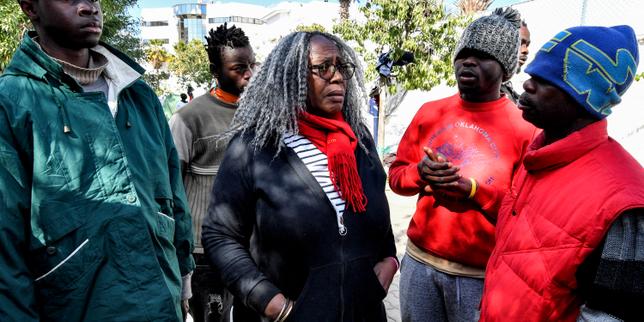
Tunisia just sent a terrifying message to anyone fighting for human rights. A Tunis appellate court confirmed an eight-year prison sentence for Saadia Mosbah, the country's most prominent Black anti-racism activist. This isn't just a legal mistake. It's a targeted, politically motivated hit on civil society. If you think Tunisia is still the shining beacon of the Arab Spring, you haven't been paying attention.
The state used financial charges to crush her. They claimed money laundering and illicit enrichment. Amnesty International calls these accusations completely unfounded, and they're right. The amounts in question are modest, regular operating expenses for her organization, Mnemty. But facts don't matter much in Tunis courts these days. Power matters.
We need to talk about what this verdict really means. It means the space for dissent in North Africa is shrinking to zero. Under President Kais Saied, the judiciary has become a weapon to silence critics, jail opponents, and dismantle independent groups. Mosbah's real crime wasn't financial. Her real crime was defending Black Tunisians and migrants in a political climate fueled by state-sponsored xenophobia.
The Grim Reality of the Appeal Verdict
The June 23 appellate ruling didn't shock anyone who follows Tunisian politics closely. It just confirmed our worst fears. Mosbah has already spent over two years in arbitrary pretrial detention since her arrest in May 2024. The court also slapped her with a massive fine of over 36,000 euros.
Think about that for a second. Eight years in prison for running an anti-racism nonprofit.
Her colleagues at Mnemty faced the hammer too. The court handed down prison terms ranging from one to three years for other staff members, alongside heavy fines. The government isn't stopping at jailing the leadership. They want the entire organization gone. Authorities initiated formal dissolution proceedings against Mnemty in May, aiming to wipe the group off the map completely.
This case shows a pattern of administrative technicalities weaponized as felonies. Under Tunisian law, minor financial or administrative discrepancies within public associations are supposed to be treated as civil infractions. Instead, the state upgraded them to major criminal charges. The prosecution relied on biased testimonies and openly discriminatory remarks against Mosbah during the proceedings. It was a circus.
Who Is Saadia Mosbah and Why Did the State Target Her
You can't understand this case without understanding who Saadia Mosbah is. She didn't just stumble into activism. She spent decades fighting the deep-seated, often ignored reality of anti-Black racism in Tunisia. In 2013, she founded Mnemty, which translates to "My Dream." It was a historic move in a country that long pretended racial discrimination didn't exist within its borders.
Mnemty gave a voice to Black Tunisians and Black sub-Saharan migrants. The group pushed for the historic 2018 law that criminalized racial discrimination in Tunisia, a first for the Arab world. That law was a massive victory. It felt like progress.
Then everything changed.
The political environment turned toxic. President Kais Saied made a highly controversial speech connecting sub-Saharan migrants to a conspiracy to alter Tunisia's demographic makeup. That speech sparked a wave of violence, evictions, and arbitrary arrests against Black people across the country. Mosbah didn't stay quiet. She visited migrant camps, spoke out against the state's rhetoric, and demanded accountability.
That made her a target. The state couldn't tolerate a prominent Black woman exposing the ugly truth of its policies to the world. They locked her up.
A Coordinated Campaign Against Civil Society
Mosbah is not an isolated case. She is part of a massive crowd. The Tunisian government is systematically clearing the board of anyone who can challenge its narrative.
Mainstream political opponents are sitting in cells. Journalists are facing prosecution under harsh cybercrime decrees. Union leaders have been detained. Even lawyers get dragged out of their offices by security forces. The judicial system doesn't protect citizens anymore. It protects the regime.
Human rights organizations are terrified, and for good reason. Dozens of NGOs face forced suspension or total dissolution. By going after Mnemty, the government is sending a clear warning to every other international and domestic group operating in Tunis. If they can lock up a world-renowned activist on fake financial charges, they can do it to anyone.
International watchdogs like Front Line Defenders have repeatedly pointed out the regular irregularities in these trials. Defense lawyers are routinely denied access to key documents. Judges who show any independence are quickly replaced or reassigned. It's an assembly line of convictions.
The International Community Needs to Wake Up
Foreign governments love to talk about human rights while funding the very regimes that abuse them. European nations, in particular, have a massive blind spot when it comes to Tunisia. Why? Because they want Tunisia to act as a border guard.
The European Union has poured hundreds of millions of euros into Tunisia to stop migrant boats from crossing the Mediterranean. They look the other way when Saied's government abuses migrants and jails anti-racism activists. It's a cynical trade-off. Europe gets fewer migrant arrivals, and Saied gets financial support and diplomatic silence.
This silence makes external powers complicit in the destruction of Tunisian democracy. You can't praise Tunisia's democratic transition in public while writing checks to a dictator who jails activists for eight years. The hypocrisy is glaring.
What Happens Next
Saadia Mosbah is facing a brutal reality inside prison. Reports from human rights groups indicate she has suffered racist abuse and physical assault while in detention. Her health is a major concern. At her age, an eight-year sentence could easily become a life sentence.
We cannot let her story fade into the background of global news. Activism requires visibility. International pressure works, but only when it's sustained and loud.
If you want to support the fight for human rights in North Africa, don't look away from Tunisia. Demand that your elected officials condition financial aid to Tunisia on the release of political prisoners and human rights defenders. Support organizations like Amnesty International and Front Line Defenders who are keeping the spotlight on Tunis.
Write letters. Share her story. Remind the Tunisian government that the world is watching, even when they try to hide their actions behind closed courtroom doors. Saadia Mosbah fought for a better, more inclusive Tunisia. The least we can do is fight for her freedom.