The air in Port of Spain doesn't just sit; it clings. It carries the scent of salt, diesel, and the ghost of woodsmoke, a heavy humidity that feels remarkably like the air in Chennai or Kolkata. If you closed your eyes and ignored the specific cadence of the local patois, you might forget which side of the planet you were standing on.
This is not a coincidence of geography. It is the result of a deliberate, often painful, stitching together of two worlds.
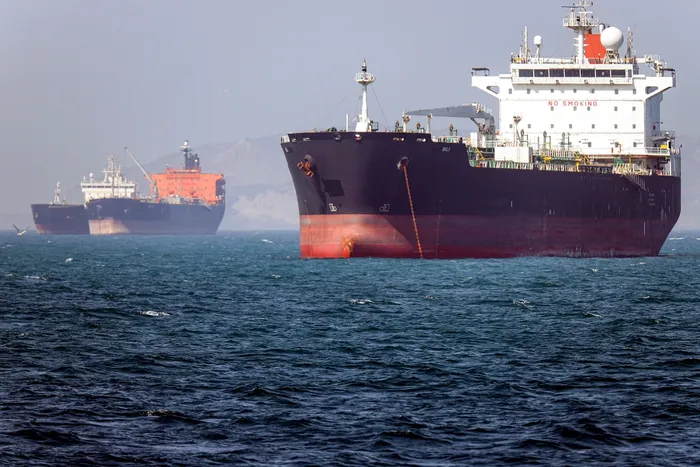
When External Affairs Minister S. Jaishankar speaks about the "shared history" between India and Trinidad and Tobago, he isn't just reciting a diplomatic script. He is talking about a ghost ship called the Fatel Razack. In 1845, that vessel arrived at these shores carrying 225 souls from India. They weren't tourists or explorers. They were indentured laborers, men and women brought to replace the labor force lost after the abolition of slavery.
They brought with them seeds, songs, and a stubborn refusal to let their identity dissolve in the Caribbean brine.
The Kitchen is a Time Machine
To understand the modern geopolitical alliance between these two nations, you shouldn't look at a map. Look at a plate of doubles.
This iconic Trinidadian street food—two pieces of fried flatbread (bara) filled with curried chickpeas (channa)—is the edible DNA of a migration. It is essentially chole bhature that took a long boat ride and adapted to the local pantry. When a diplomat from New Delhi sits down with a counterpart in Port of Spain, they aren't just discussing trade routes or energy security. They are breaking bread that looks and tastes like home for both of them.
This shared heritage creates a foundation of trust that Western powers often struggle to replicate. You can’t manufacture a century and a half of shared struggle. You can’t buy the kind of kinship that comes from knowing that your great-grandfathers likely sang the same bhajans while looking out at different oceans.
But sentimentality alone doesn't keep the lights on. The relationship has moved far beyond nostalgic cooking. Today, it is about the cold, hard mechanics of survival in a shifting global economy.
Trinidad and Tobago sits on a wealth of liquid natural gas and petrochemicals. India, meanwhile, is an energy-hungry giant, a machine that needs constant fueling to maintain its trajectory. The synergy—a word often overused but here quite literal—is obvious. Yet, the conversation is shifting from simple buyer-seller dynamics to something more profound: technology transfer and digital infrastructure.
The Digital Bridge over the Kalapani
For the descendants of those who crossed the Kalapani (the "black water"), the distance between India and the Caribbean was once an unbridgeable chasm. Letters took months. News was cold by the time it arrived.
Now, the bridge is made of code.
India’s recent push to export its "Digital Public Infrastructure"—the same systems that allow a vegetable vendor in Mumbai to take instant mobile payments—is finding a receptive audience in Trinidad. There is a specific kind of pride in this. For decades, the global south looked to the north for "solutions." Now, Trinidad is looking to a nation that shares its scars and its complexities.
They are looking for a partner that understands what it means to build a modern economy on top of a colonial foundation.
Consider a hypothetical small business owner in San Fernando, let’s call her Maya. Maya runs a boutique textile shop. For years, her ability to scale was hampered by expensive, clunky banking systems designed for London or New York. When India shares its UPI (Unified Payments Interface) technology, Maya isn't just getting a tool; she’s getting a system built by people who understand the chaos of a crowded marketplace.
It is a transfer of dignity as much as a transfer of data.
The Invisible Stakes of the Global South
We often talk about the "Global South" as if it were a monolith, a singular block of developing nations. It isn't. It is a messy, vibrant, and sometimes fractious collection of stories.
The bond between India and Trinidad and Tobago serves as a blueprint for how these stories can align. When the EAM highlights "shared history," he is acknowledging the invisible stakes. If these two nations can successfully collaborate on healthcare, renewable energy, and maritime security, they prove that the old colonial trade routes can be repurposed.
The stakes are nothing less than the rewriting of global influence.
In the wake of the pandemic, the world saw how fragile "global" solidarity really was. While the wealthiest nations hoarded vaccines, India’s "Vaccine Maitri" initiative sent doses to the Caribbean. It wasn't just a medical gesture. It was a reminder of who shows up when the chips are down.
The Cultural Echo
Walking through the streets during Divali in Trinidad is a surreal experience for any Indian traveler. The deyas (oil lamps) flicker in the Caribbean breeze, lighting up tropical gardens. The celebrations are often more traditional, more "frozen in time" than the high-tech, neon-lit festivals in modern Bengaluru.
There is a lesson there.
Culture isn't a museum piece; it’s a living, breathing thing that adapts to its environment. The Indian diaspora in Trinidad—now nearly 35% of the population—didn't just preserve their culture; they evolved it. They created Chutney music, a high-energy fusion of Indian folk and Soca rhythms.
This cultural resilience is the "soft power" that underpins the "hard power" of trade deals. It makes the negotiation table feel less like a battlefield and more like a family reunion. When you share a rhythm, it’s much harder to disagree on a policy.
The Future is Not a Straight Line
It would be a mistake to view this relationship as purely harmonious. There are challenges. Geographic distance remains a massive logistical hurdle. The bureaucracy of two different democratic systems can be a labyrinth.
But the momentum is undeniable.
The focus is now shifting toward the Caribbean Community (CARICOM). India isn't just looking at Trinidad in isolation; it sees the island as a gateway to the entire region. It’s a strategic play, yes, but one grounded in a genuine sense of duty toward the "diaspora family."
As the sun sets over the Gulf of Paria, the orange hue of the sky looks identical to a sunset over the Arabian Sea. It’s a visual reminder of the thinness of the veil between these two places.
We are living in an era where the old centers of power are wobbling. In this uncertainty, the ties that bind the descendants of the Fatel Razack to the modern powerhouse of India are becoming more than just historical footnotes. They are becoming the cables that will hold the future together.
The salt in the soil and the blood in the sea have created something permanent. A bridge built on bone and memory, now reinforced with steel, silicon, and a shared vision of a world where the old routes lead to entirely new destinations.
The boat arrived nearly two centuries ago. The journey, it seems, is only just beginning.