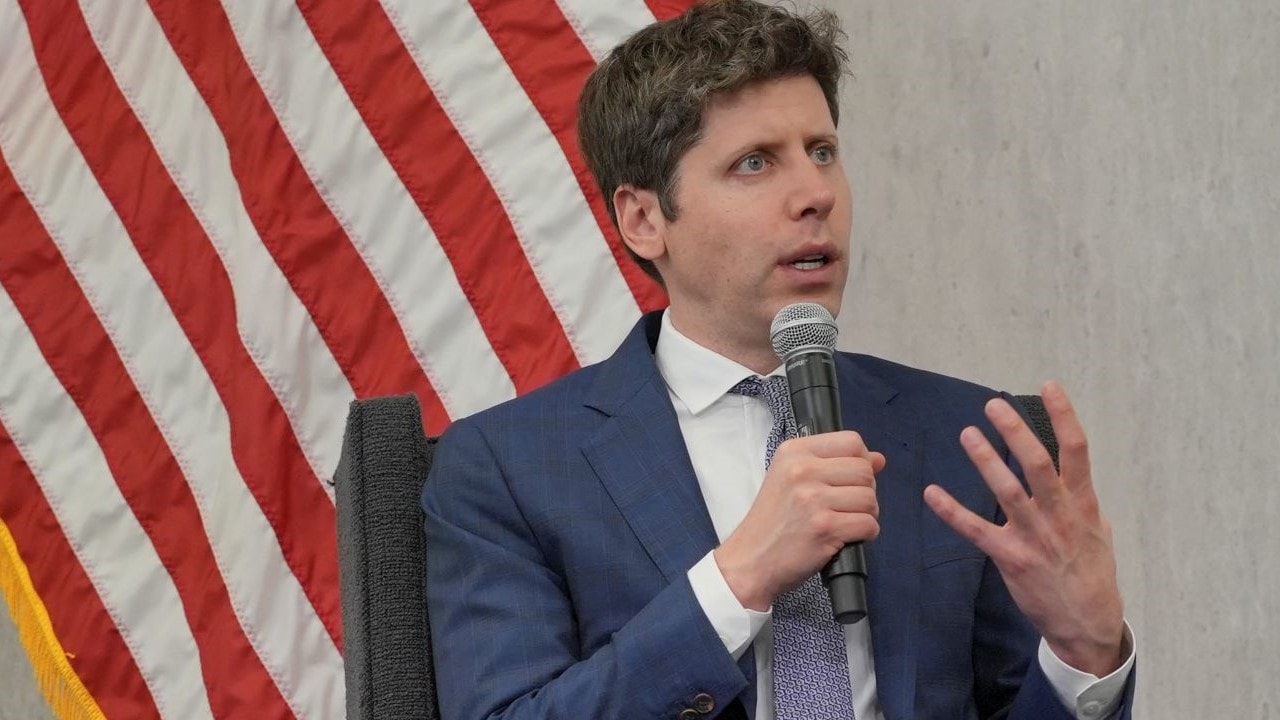
Sam Altman is currently engaged in a high-stakes cleanup operation. After quiet negotiations between OpenAI and the Department of Defense signaled a sharp departure from the company’s founding pacifism, the CEO is now signaling a retreat—or at least a rewrite. The original language of the partnership, which many saw as a bridge toward lethal autonomous weaponry, is being scrubbed in favor of more palatable terms like "cybersecurity defense" and "search and rescue." This isn’t just a simple clerical error. It is a calculated pivot meant to soothe an internal rebellion among researchers while maintaining a lucrative pipeline to the Pentagon.
The core of the issue lies in a sudden, quiet removal of the phrase "military and warfare" from OpenAI’s usage policies earlier this year. When the change came to light, it triggered a firestorm. Altman’s current regret isn't about the partnership itself, but about the optics of the rollout. He realized too late that the brand equity of OpenAI—built on the promise of "benefiting all of humanity"—cannot easily survive a direct association with the mechanics of the battlefield.
The Illusion of the Amended Clause
Amending the language of a contract is a classic Washington power move. By narrowing the definitions of what OpenAI’s models will do for the military, Altman hopes to create a "safe" version of defense collaboration. The new narrative focuses on mundane logistics, code repair, and administrative efficiency. However, anyone who has spent a decade watching the intersection of the Beltway and the Bay Area knows that "administrative efficiency" in a war zone is a force multiplier.
If an AI makes a logistics chain 30% more effective, it allows more kinetic energy to be directed at a target. The distinction between "helping a soldier read a manual" and "helping a drone find a coordinate" is a thin line that disappears in the heat of a conflict. Altman’s "regret" is a tactical pause. He needs to keep his talent from walking out the door to competitors like Anthropic, which has leaned even harder into the "safety-first" branding.
The Quiet Erosion of the Non-Profit Shield
OpenAI began as a non-profit designed to be a check on Google’s power. It was supposed to be the "open" alternative that wouldn't be corrupted by the quarterly earnings cycle or the demands of the military-industrial complex. That dream died the moment the first billion dollars from Microsoft hit the ledger.
The Department of Defense represents the ultimate "enterprise customer." Their data needs are infinite, and their budgets are sustained by taxpayers rather than fickle consumers. For a company like OpenAI, which is burning through cash at a rate that would make a traditional startup vomit, the military isn't just a client—it is a survival strategy.
The "War Department deal" wasn't a mistake made in a vacuum. It was the natural conclusion of a business model that requires billions in compute power. You cannot build a God-model on pocket change. To pay the electricity bills for the massive server farms in Iowa and beyond, you eventually have to talk to the people who own the biggest tanks.
Why the Engineers are Screaming
Silicon Valley has a long, checkered history with defense work. In 2018, Google employees revolted over Project Maven, a contract that used AI to analyze drone footage. The backlash was so severe that Google pulled out of the bidding for the JEDI cloud contract. Altman watched that happen. He knows that his most valuable assets aren't the H100 GPUs, but the PhDs who know how to program them.
These researchers generally didn't sign up to build the next generation of targeting software. They signed up to solve the mystery of intelligence. When the "War" clause appeared, it felt like a betrayal of the mission. By promising to "amend the language," Altman is trying to convince his staff that they are still the good guys. It’s a rebranding exercise designed to prevent a brain drain.
The Problem with Dual-Use Technology
The fundamental reality of Large Language Models (LLMs) is that they are "dual-use." This is a term usually reserved for things like enriched uranium or chemical precursors. A model that can write a heartwarming poem about a puppy can also identify vulnerabilities in a nation's power grid.
- Scenario A: The military uses GPT-5 to translate local dialects for humanitarian aid workers in a disaster zone.
- Scenario B: The military uses the same model to generate psychological operations (PSYOPS) content to destabilize a foreign election.
Altman can change the words in the policy, but he cannot change the nature of the math. Once the API is plugged into the Pentagon’s infrastructure, the "intent" of the software developer becomes irrelevant. The user determines the outcome.
The Geopolitical Pressure Cooker
We are currently in a cold war over compute. The United States government views AI as the definitive technology of the 21st century—the modern equivalent of the nuclear bomb. From their perspective, a company like OpenAI is a national asset. If the U.S. military doesn't use these tools, they argue, then adversaries certainly will.
Altman is caught between this nationalist pressure and the globalist ideals of the tech elite. If he refuses to work with the Department of Defense, he risks regulatory wrath or being labeled a "security risk" by hawks in Congress. If he dives in headfirst, he loses the soul of his company. The current "regret" is his attempt to find a middle path that likely doesn't exist.
The Architecture of the Amendment
What will these amendments actually look like? Expect a lot of "prohibitions on kinetic use." This is the industry's favorite shield. It essentially means: "Our software won't pull the trigger."
But in modern warfare, the trigger is the last link in a very long chain. If AI is used for target identification, surveillance synthesis, and tactical planning, it has already done 99% of the work. Claiming the software is "non-lethal" because it doesn't physically ignite the gunpowder is a legalistic fantasy.
The industry is watching to see if OpenAI will establish an independent oversight board specifically for defense contracts. Given the recent collapse and restructuring of their previous board, trust in such a body would be low. A board that can be fired by the CEO at will is not a watchdog; it’s a rubber stamp.
Tracking the Money Trail
To understand why this deal is being massaged rather than cancelled, follow the investment. OpenAI’s valuation is tied to its ability to scale. The consumer market for ChatGPT Plus is large, but it has a ceiling. The enterprise market is where the real growth lies, and there is no enterprise larger than the United States government.
By rephrasing the deal, OpenAI can maintain its valuation and keep its investors happy while signaling to the public that it still has a "conscience." It is a move straight out of the Big Tech playbook:
- Expand aggressively into a controversial space.
- Wait for the inevitable backlash.
- Apologize for the "lack of clarity."
- Rebrand the initiative with softer language.
- Continue the work under the new name.
The Cultural Cost of the Pivot
This isn't just about OpenAI. It's about what we expect from our tech leaders. For years, the industry marketed itself as a utopian project. Now, the mask is slipping. The "regret" Altman feels is the discomfort of a man realizing he can no longer be everyone’s hero. He cannot be the savior of humanity and a defense contractor at the same time.
The amendments will likely include a list of "Ethical Principles for Defense." These usually involve buzzwords about human-centric design and accountability. In practice, these principles are often sidelined when a multi-billion dollar contract is on the line. The reality of the defense industry is that it moves toward efficiency, and AI is the ultimate efficiency tool.
The Precedent for Future Models
As we move toward Artificial General Intelligence (AGI), the stakes of these "policy amendments" grow exponentially. If a model is smarter than a human, the "language" of its contract is the only thing standing between us and its weaponization. If Altman is already struggling to get the language right for a text-prediction engine, what happens when the software can autonomously navigate the internet or control physical systems?
The "War Department deal" is a preview of the struggles to come. It highlights the friction between the borderless nature of software and the hard borders of national security. OpenAI is trying to bridge that gap with a PR campaign, but the structural contradictions remain.
The Transparency Gap
One of the most frustrating aspects of this walkback is the lack of specific detail. We are told the language will be "amended," but we aren't told exactly what the military is currently doing with the models. Is it red-teaming? Is it strategy simulation? Without transparency, "regret" is just a word.
True accountability would involve a public audit of all government and military use cases. It would involve a clear, legally binding definition of what constitutes "warfare" in the age of code. Instead, we are getting a redacted version of the truth, polished for public consumption.
Altman’s regret is the byproduct of a collision between Silicon Valley’s ego and the Pentagon’s reality. He wanted the prestige of being a global statesman, but he needed the money of a defense giant. You can't have both without someone noticing the seams. The amended language won't change the direction of the ship; it just paints the hull a different color.
The move to work with the military is a one-way door. Once a company becomes part of the national security infrastructure, there is no going back. The "Department of War" deal—regardless of how it is eventually phrased—is the moment OpenAI stopped being a research lab and started being a pillar of the state.
Stop looking at the press release and start looking at the recruitment ads. OpenAI is still hiring for positions that require high-level security clearances. They are still building out the infrastructure to handle classified data. The "regret" is for the headlines, but the work continues in the basement. If you want to know what the future of AI warfare looks like, don't read the amended policy. Watch where the data flows.