Western leaders keep reaching for the same old toolbox when they're angry with Tehran. They pull out sanctions, tighten the screws, and wait for a collapse that never quite arrives. But here's the reality they're ignoring: you can't surgically remove a top-five OPEC+ producer from the global economy without making everyone else bleed.
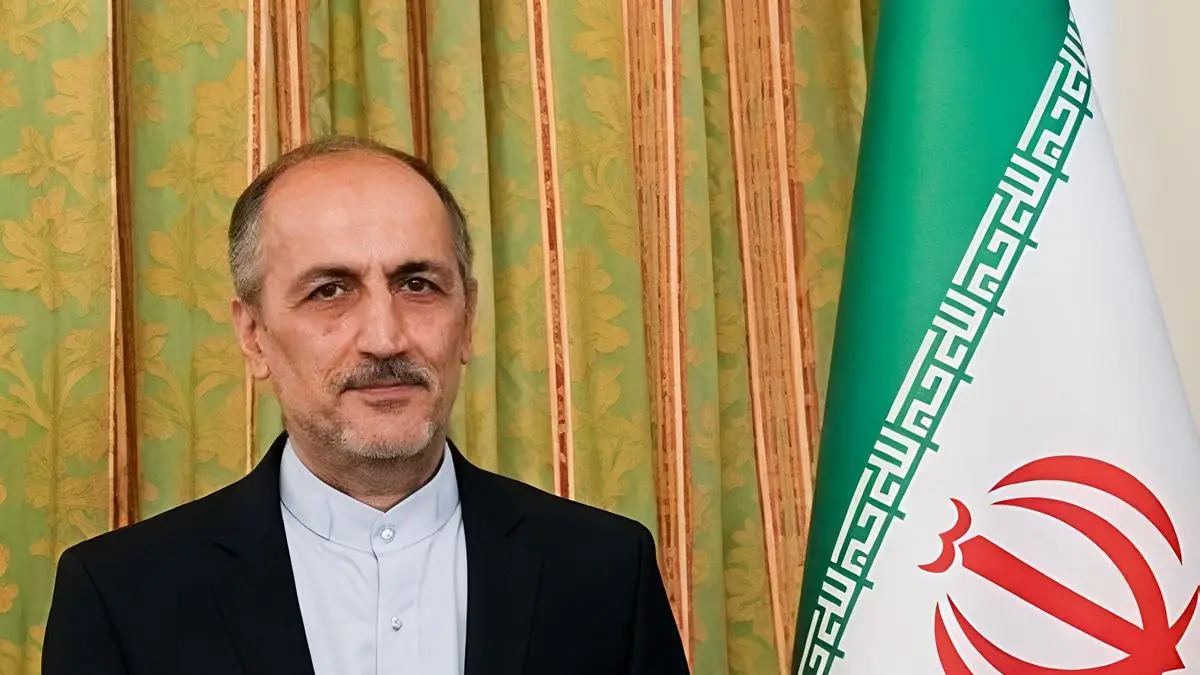
Saeid Reza Mosayeb Motlagh, Iran’s Consul General in Mumbai, recently laid it out straight. He isn't just talking about Iranian bank accounts or local inflation. He's pointing at the gas pump in Mumbai, the heating bill in Berlin, and the insurance premiums on every tanker currently white-knuckling its way through the Middle East. When you sanction a country that sits on 10% of the world's oil reserves, you aren't just punishing a regime. You're taxing the global consumer.
The Myth of Isolated Sanctions
The biggest mistake Western policymakers make is thinking sanctions stay within borders. They don't. They're a contagion. Motlagh rightly noted that Iran is a pillar of the energy market. When the U.S. or Europe tries to zero out Iranian exports, they create a supply vacuum. Basic math tells us what happens next: prices spike.
We've seen Brent crude dance toward $90 a barrel recently, and a huge chunk of that isn't just about scarcity—it's a "war premium." It's the cost of uncertainty. If you're running a logistics firm or an airline, you're paying for these political maneuvers every single day. The "hostility" Motlagh mentions has morphed from diplomatic cold-shouldering into direct economic hits that ripple through the International North-South Transport Corridor (INSTC) and beyond.
Why India is the Wildcard
India's position in this mess is uniquely complicated. On one hand, New Delhi wants to keep Washington happy. On the other, it has massive sunk costs in Iranian infrastructure. Take the Chabahar Port. India has poured millions into this project to bypass Pakistan and reach Central Asia.
In the 2026 budget, India notably didn't allocate fresh funds for Chabahar. Some analysts panicked, thinking the project was dead. It's not. India already fulfilled its $120 million commitment for equipment. But the hesitation to add more cash shows exactly how sanctions stifle growth. They create a "wait and see" atmosphere that kills long-term investment.
Motlagh pointed out something crucial regarding the Strait of Hormuz. Despite the rhetoric of total blockades, Iran has shown "restraint" specifically for partners like India. They know they can't afford to alienate everyone. This selective pressure keeps the global economy on a knife-edge. One wrong move and the 20 million barrels of oil passing through that 29-mile-wide choke point every day could stop.
The Diplomacy of Self Defense
The Consul General was blunt about the current escalation. From Tehran’s perspective, they aren't the aggressors; they're responding to a "long-standing pattern of hostility." Whether you agree with that narrative or not, the economic consequence is the same. War is expensive, and an "existential war," as Motlagh calls it, means Iran is willing to weaponize its economic position.
We're currently seeing a bizarre tug-of-war in the markets. The U.S. has recently allowed limited "straggler" cargoes of Iranian oil to move, not out of the goodness of their hearts, but because global prices are hitting "psychological thresholds." Basically, the West is realizing they need Iranian oil to keep their own inflation numbers from exploding. It's a tactical retreat disguised as diplomacy.
The Real Cost of the Squeeze
If you think this is just about oil, look at the maritime insurance industry. Premiums for transiting the Gulf have jumped 15-40% lately. Those costs don't vanish. They get tacked onto the price of your smartphone, your grain, and your car.
- Stranded Cargo: Roughly $10 billion in goods is currently constrained due to shipping delays and rerouting.
- Logistics Lag: Bypassing the region adds 10 to 15 days to a round trip.
- The Energy Gap: Europe is especially vulnerable as it tries to refill gas storage. Without Iranian or Russian stability, they’re competing with China and Japan for expensive LNG.
Stop Ignoring the Mirror Effect
Sanctions are a mirror. Whatever pressure you apply to the target eventually reflects back onto the sender. Motlagh mentioned that Iran remains open to dialogue, but only if "conditions are fulfilled." In plain English: stop the attacks, or the market stays volatile.
The West's "maximum pressure" hasn't led to a change in behavior; it’s just created a more resilient, albeit frustrated, adversary that has learned to trade in the shadows. For countries like India, the goal is survival and "strategic autonomy." They’ll continue to engage with Tehran because they have to. Bypassing Pakistan isn't a luxury for India; it’s a geographic necessity.
The path forward isn't more of the same. If the goal is a stable global market, the current strategy of perpetual sanctioning is a proven failure. It hasn't lowered prices, it hasn't stopped conflict, and it hasn't secured energy routes.
Keep a close eye on the April 26 deadline for the current U.S. sanctions waiver on Chabahar. If that waiver isn't extended, expect another jolt to the markets. You should also watch the Brent call skews—investors are already betting on a supply deficit by the end of the year. If you're managing a portfolio or a supply chain, start pricing in a permanent "Middle East risk" into your 2026 projections.