The political alliance that swept the 2022 Philippine elections didn't just break. It exploded.
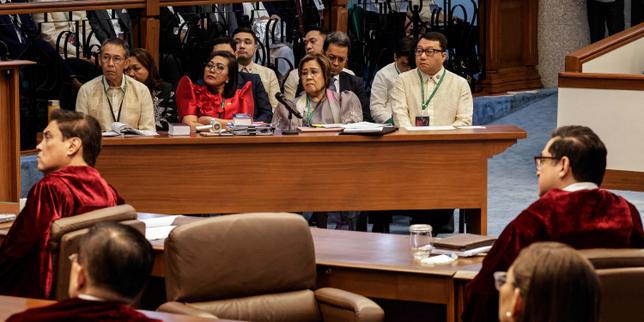
On July 6, 2026, the Philippine Senate officially opened the historic impeachment trial of Vice President Sara Duterte. It's the first time a sitting vice president has faced a formal trial of this magnitude in the country. With over 6,000 police officers deployed outside the Senate building and anti-riot units on standby, Manila is on absolute high alert.
But if you look at the empty defense bench, you'd notice something right away. Sara Duterte didn't even show up. She skipped the opening day entirely, choosing to let her legal team handle the heat.
This isn't just a legal proceeding. It's an all-out war between the two most powerful political dynasties in the Philippines, the Marcos family and the Duterte clan. What started as a "UniTeam" ticket has turned into a brutal struggle for control ahead of the 2028 presidential race.
The Raw Numbers Behind the Accusations
Let's clear up what this trial is actually about. The House of Representatives voted overwhelmingly back in May to impeach Duterte, sending four heavy Articles of Impeachment to the Senate.
The core of the prosecution's case boils down to a massive pot of money. Specifically, we're talking about 612.5 million pesos in confidential funds. The Commission on Audit started flagging the Office of the Vice President's use of these secret funds, pointing out that millions disappeared in just a matter of days without clear documentation.
The four charges she faces are concrete:
- Misuse of millions in confidential public funds
- Unexplained wealth
- High constitutional violations
- Betrayal of public trust
To make matters worse for the Vice President, the Senate impeachment court immediately threw a heavy punch on Day 1. The court issued subpoenas to nine different banks, demanding the full financial records of both Duterte and her husband. The prosecutors aren't just looking at government ledger books; they're coming for the personal bank accounts.
Day One Drama and the Battle for the Gavel
If anyone thought this trial would run smoothly, the very first hour proved them wrong. Before the prosecution could even present its opening statements, the Senate descended into a fierce debate over who should actually lead the court.
Senate President Sherwin Gatchalian was expected to preside. However, thanks to a controversial rule change passed in June under Senate Resolution 48, the chamber voted 12–8 to elect Senator Francis “Chiz” Escudero as the presiding officer instead.
This rules shakeup sparked immediate pushback. Senator Alan Peter Cayetano challenged the legality of the move, arguing that changing traditional rules right before a historic trial threatens the integrity of the entire system. On the flip side, Senator Francis “Kiko” Pangilinan defended the vote, stating that Congress has every right to set its own internal rules and that the Constitution doesn't strictly mandate the Senate President to run the show when a Vice President is on trial.
Escudero, now holding the gavel, quickly dropped a reality check for everyone in the room. He reminded the chamber that because three senators are currently unable to participate, the prosecution needs a minimum of 16 votes from the remaining senator-judges to secure a conviction. That's a high mountain to climb.
Why the Absentee Defense Strategy Is Risky
Duterte’s decision to boycott her own trial opening is a massive political gamble. Her defense spokesperson, lawyer Michael Poa, released a statement claiming that appearing only through counsel "does not diminish accountability or imply a lack of transparency."
Even President Ferdinand Marcos Jr. weighed in, suggesting publicly that it would be "much easier" if she just showed up to face the music. Duterte didn't hold back in her response, calling the president's opinion "of no importance" and declaring that she answers only to the Constitution.
While dodging the trial keeps her away from uncomfortable cross-examinations, it leaves her vulnerable to a public relations nightmare. Her critics are already painting her absence as a sign of guilt. Meanwhile, her loyal base—mostly concentrated in the southern region of Mindanao—claims the entire process is a rigged political circus designed by the Marcos administration to destroy her chances for 2028.
The Senate has lined up around 92 trial days to get through the mountain of evidence and testimonies. This means the political stability of the Philippines will be tested for months to come, as slow economic growth and an upcoming national budget debate compete with the trial for the Senate's attention.
Next up, the prosecution team will begin unpacking those subpoenaed bank records, and that's when the real fireworks start. If you want to watch the actual opening moments and the tense legislative debates inside the plenary hall, check out the live broadcast of the First Day of the Sara Duterte Impeachment Trial, which details the exact timeline of how this institutional crisis built up over the last two years. This footage breaks down the chaotic atmosphere in Manila as the trial officially kicked off.