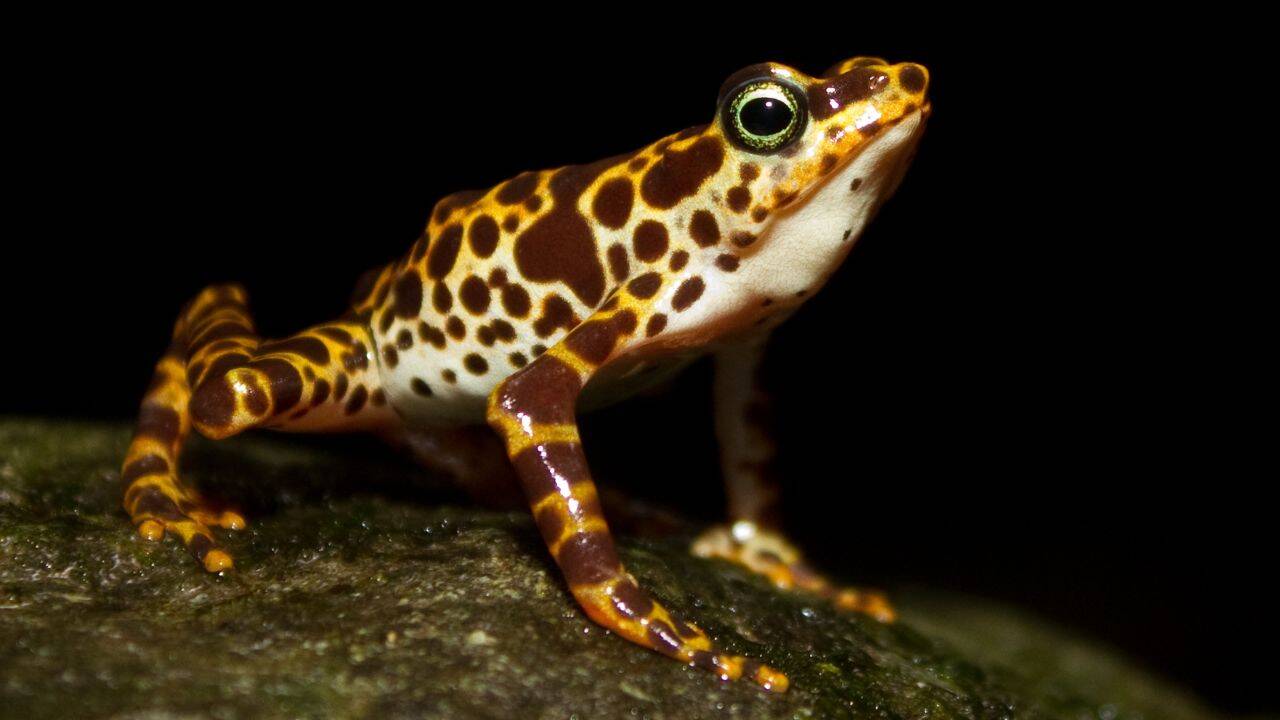
Conservation biology is addicted to a comforting lie. The narrative is always the same: pristine wilderness, ancient evolutionary adaptations, a fragile ecosystem tipping on the edge, and human intervention rushing in to save the day. Right now, the media is obsessing over South American poison frogs losing their chemical defenses. The panic is palpable. Headlines scream about toxic skin fading away, populations dropping, and scientists desperately searching for ways to restore their biochemical armor.
It is a completely backward interpretation of what is actually happening.
I have spent years watching conservation programs throw money at dead-end preservation strategies while ignoring the brutal mechanics of ecological adaptation. The lazy consensus says we need to rescue these amphibians from their own biological downgrade. The truth is far more uncomfortable. These frogs are not losing their edge by accident. They are shedding a high-maintenance defense mechanism because the environment changed underneath them, and evolution does not care about our nostalgia for bright colors.
The Cost of Toxic Skin
Let us start with basic metabolic reality. Producing alkaloids, which are the core toxins found in poison dart frogs, is not free. These animals do not manufacture these poisons out of thin air. They sequester them from their diet, primarily by consuming specific mites, ants, and beetles that feed on toxic plant secondary metabolites.
Captive breeding programs reveal the dirty secret right away. Put a wild-caught poison frog in a terrarium, feed it flightless fruit flies dusted with calcium powder, and watch what happens to the next generation. Within a single life cycle, their skin is completely harmless. The toxicity vanishes. Biologists throw up their hands and blame captivity.
They are missing the signal in the noise.
In the wild, maintaining a high-toxicity profile requires an uninterrupted supply chain of specific micro-arthropods. When habitat fragmentation occurs, or when climate shifts alter the forest floor humidity and soil composition, those dietary inputs disappear. The frog faces a binary choice: expend massive amounts of energy searching for scarce toxic prey, or redirect that energy toward survival, camouflage, and reproduction.
Evolution is a ruthless accountant. If the predators that drove the evolution of bright aposematic coloration and deadly skin toxins decline or shift, maintaining that toxicity becomes an evolutionary tax. Dropping the toxin is not a pathology. It is an optimization.
Dismantling the Rescue Fallacy
The mainstream conservation blueprint for this issue is predictable to a fault. Researchers want to map the declining alkaloid profiles, captive-breed the most toxic specimens, supplement their diets with synthetic or extracted toxins, and release them back into fragmented patches of rainforest.
This approach treats symptoms while ignoring the structural disease.
Imagine a retail business stubbornly manufacturing a luxury product nobody is buying anymore because the entire market shifted to discount essentials. Pumping more venture capital into marketing that luxury item will not save the company. It will just accelerate bankruptcy. That is what trying to artificially prop up frog toxicity in a degraded ecosystem looks like.
When conservationists argue that these frogs need to get their poison back to stay safe from predators, they misunderstand how predator-prey dynamics actually function. Predators like snakes and birds do not read species status reports. They learn visually. If a population of frogs loses its bright warning coloration and toxic defense, predators adjust their hunting strategies. Simultaneously, the frogs adapt by shifting toward cryptic coloration, nocturnal behavior, or increased reproductive output.
Nature does not maintain redundant systems when the energetic cost outweighs the benefit.
The Unspoken Trade-Offs
Every strategy has a downside, and my contrarian stance is no exception. By arguing that we should let these populations adapt on their own terms, I am accepting a hard reality: local extinction events will happen. Some populations that fail to adapt quickly enough will vanish.
The traditional conservationist finds this unacceptable. They want zero loss, zero change, and a static snapshot of biodiversity frozen in amber. But ecosystems are dynamic, messy, and constantly negotiating trade-offs. When we artificially lock a population into a historical baseline using human intervention, we create a genetic glass greenhouse. The moment our funding cuts out or our intervention stops, the system collapses entirely.
Allowing adaptation means accepting failure as part of the pipeline. It means letting natural selection do the dirty work of sorting out which lineages can hack the modern Anthropocene and which cannot.
The Wrong Question Entirely
People ask: "How can we restore the toxicity of South American frogs?"
It is the wrong question. It assumes that toxic skin is the ultimate goal of the organism's existence. The better question is: "What are these amphibians prioritizing instead of toxin sequestration, and how is that reshaping their ecological niche?"
When you look at populations where chemical defense is declining, you often see shifts in behavioral plasticity. They move differently. They hide smarter. They reproduce earlier. They are trading chemical warfare for behavioral agility. That is not a species in decline; that is a species in transition.
We need to stop treating wildlife like museum artifacts that need to be kept in their original condition. Evolution does not stop just because humans decided we liked the way a specific frog looked in a documentary.
Let the toxins fade. Watch what takes their place. The future belongs to the adaptable, not the preserved.

.png?itok=1mb05mKJ)

