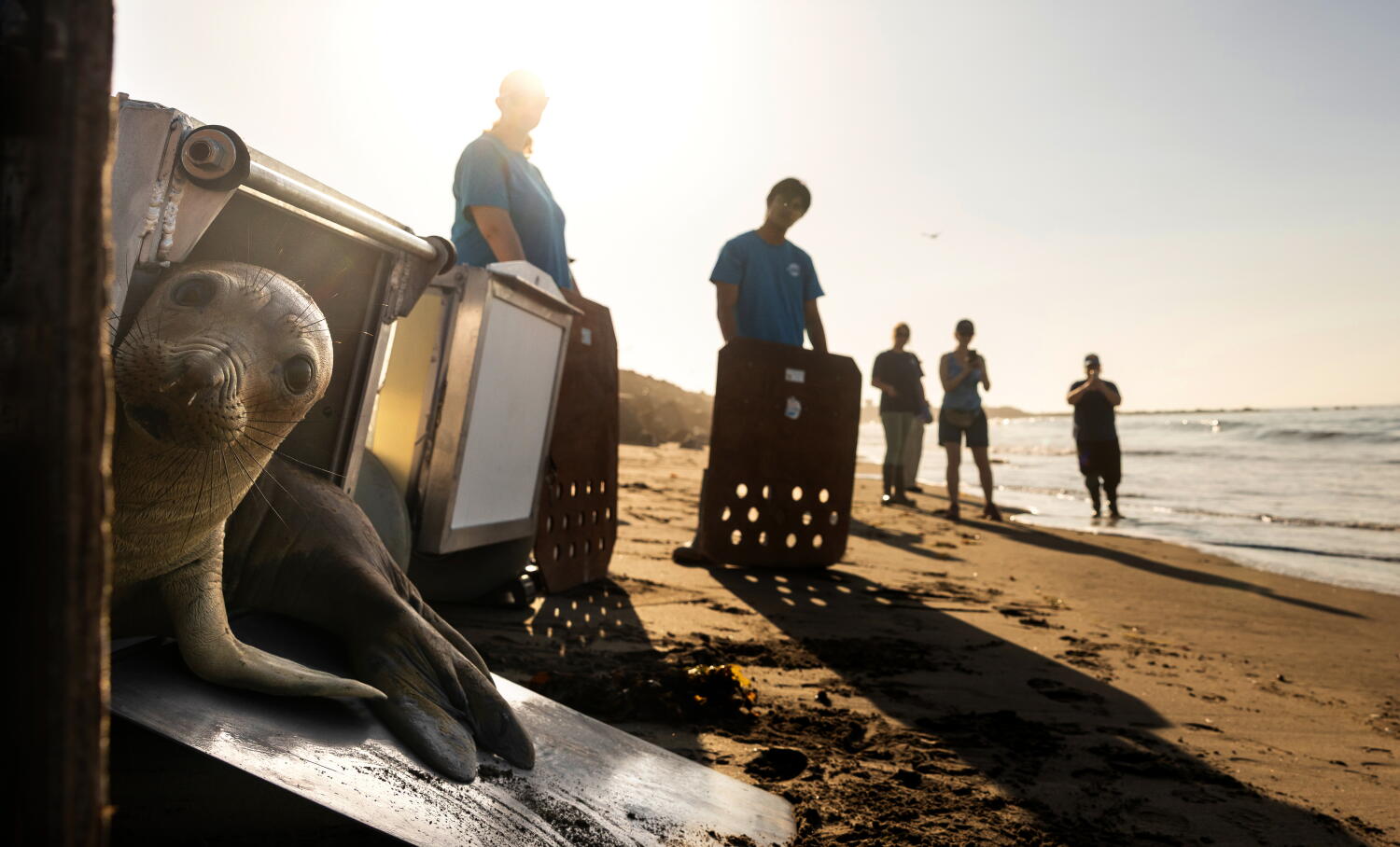
Every time El Niño rattles the Pacific, the headlines write themselves. You see the same devastating photos on your feed every single cycle: wide-eyed, emaciated sea lion pups stranded on California beaches, looking like furry skeletons washed ashore by warm water. The media frames it as a moral crisis. Conservation groups sound the alarms. Millions of well-meaning citizens demand immediate rescue, rehabilitation, and release back into the wild.
We treat every single stranded pup as a systemic failure of nature. It makes for good television and easy donations. It is also fundamentally backward.
Nature is not broken during an El Niño event. It is ruthless, efficient, and operating exactly as it has for millennia. The warm water pushes nutrient-rich upwelling deep below the surface, driving cold-water forage fish like sardines and anchovies into deeper waters or decimating their populations altogether. Mother sea lions, struggling to maintain their own metabolic needs, cannot produce enough milk. The pups starve.
That is not a tragedy in ecological terms. It is a filter.
For decades, I have watched marine mammal centers transform into high-end nurseries, pumping millions of dollars into hand-feeding animals that evolution has explicitly flagged for removal. We pull a starving pup off a stretch of sand in Malibu, pump it full of antibiotics, teach it how to eat dead fish in a sanitized concrete pool, and then ship it back out to sea with a shiny red flipper tag. We feel righteous. We feel like heroes.
And we are actively degrading the wild gene pool.
Let us be brutally honest about what is actually happening. When you intervene in a natural bottleneck, you are prioritizing individual sentimentality over population-level resilience. The pups that survive El Niño naturally are the offspring of foraging powerhouses—females with superior metabolic efficiency, better diving endurance, and sharper spatial awareness. They pass those traits to the next generation.
When you artificially rescue and rehabilitate hundreds of runts that would have otherwise perished, you inject vulnerable genetics back into an ecosystem that is facing unprecedented warming, overfishing, and habitat compression. You are breeding a dependent, weaker population and calling it conservation.
People ask why these strandings keep happening with greater frequency, pointing an accusing finger solely at climate change or local fishing fleets. While anthropogenic stressors are undeniably real and compounding the problem, the baseline driver remains the same cyclical oceanographic shift that has dictated marine life on the West Coast since the Pleistocene. El Niño is a stress test. When you cheat on the exam, nobody wins.
The standard counter-argument is emotional, not scientific. Rescuers will tell you that every life matters, that we have a moral obligation to fix the collateral damage of a warming planet. But conservation without ecological realism is just expensive zoo management. If we spent a fraction of the capital currently poured into rehabilitating individual pups toward protecting actual breeding rookeries from human disturbance or shutting down industrial overfishing in critical foraging zones, we would see a vastly different outcome.
Instead, we prefer the theater of rescue. It is photogenic. It fits on a smartphone screen.
Stop treating natural selection like an emergency. The ocean does not need your pity; it needs your restraint.


