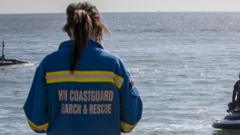
The crowd is cheering because the government just backed down on plans to cut payments for Coastguard volunteers. The media is calling it a victory for common sense, a triumph for coastal communities, and a hard-fought win for the brave souls who risk their lives at sea.
They are dead wrong.
This retreat is not a victory. It is a cowardly political concession that kicks a crumbling system down the road. By maintaining the status quo of the "paid volunteer," we are actively choosing romanticized, 19th-century nostalgia over modern, reliable maritime safety. The hybrid volunteer model is broken, dangerous, and costing lives under the guise of community spirit.
I have spent two decades auditing emergency response logistics and structural public funding. I have seen what happens when critical infrastructure relies on hobbyists who are thrown a few dollars to keep quiet.
The truth is simple: if a job is critical enough to require risking a life, it is critical enough to be a fully professional, salaried career. If it is not, we are running a dangerous, subsidized club.
The Hybrid Lie: Neither Volunteer Nor Professional
Let’s dismantle the biggest myth in maritime rescue: the idea that "paid volunteers" represent the best of both worlds.
In reality, they represent the absolute worst.
By paying volunteers a nominal "allowance" or "retaining fee" to stay on call, governments create a toxic middle ground. This middle ground fails on two distinct fronts:
- The Labor Trap: As soon as you pay someone for their time, they cease to be a pure volunteer. Under labor laws in multiple jurisdictions, nominal payments can inadvertently trigger employment status. This opens up a legal minefield of pension liabilities, mandatory rest periods, and union disputes that the state is entirely unprepared to fund.
- The Professional Illusion: Paying a volunteer $15 an hour does not magically grant them the 10,000 hours of training required to operate complex sonar, coordinate multi-agency air-sea rescues, or navigate a Category 4 storm. It merely buys their compliance while keeping them at a lower tier of operational readiness.
Consider the operational differences between a fully professionalized marine rescue unit and a hybrid volunteer squad:
| Metric | Professional Rescue Unit | Hybrid Volunteer Squad |
|---|---|---|
| Response Time (Scramble) | Under 3 minutes | 15 to 45 minutes (dependant on pager response) |
| Annual Training Hours | 800+ hours (structural, certified) | 40 to 80 hours (mostly self-directed) |
| Liability & Insurance | Fully covered under state sovereign immunity | Grey-area personal liability and weak group policies |
| Operational Continuity | 24/7/365 guaranteed shift patterns | Subject to work schedules, holidays, and harvest seasons |
When a commercial vessel goes down in freezing waters, the difference between a 3-minute scramble and a 30-minute scramble is not a matter of budget lines. It is the boundary between a rescue and a recovery operation.
Dismantling the "People Also Ask" Delusions
When people search for information on coastguard funding, the questions they ask reveal just how deeply the romantic myth of the volunteer has been drilled into the public consciousness. Let's look at these questions with brutal honesty.
"Aren't volunteers cheaper for the taxpayer?"
This is the ultimate accounting delusion.
Yes, on a direct balance sheet, a volunteer squad costs less in raw salaries than a professional station. But this completely ignores the massive secondary costs of structural inefficiency.
When you rely on volunteers, you must build massive redundancy into your network because you cannot guarantee who will show up when the pager goes off. Instead of three strategically placed, highly capable professional hubs, you end up funding thirty poorly equipped, under-utilized volunteer sheds just to ensure geographic coverage.
Add the astronomical cost of constant retraining due to high volunteer turnover (often exceeding 35% annually), and the "savings" evaporate. You are paying professional-grade capital expenditure for amateur-grade operational availability.
"If we stop paying them, won't they all quit?"
Yes, some will. And that is exactly what needs to happen to force systemic reform.
The argument that "coastal safety will collapse overnight" if we stop paying nominal stipends is a hostage-taking tactic used by legacy committees to block modernization. If a rescue service cannot survive without paying sub-minimum-wage stipends to keep people on call, it is not a volunteer organization. It is an exploitative, black-market employer.
Cutting the stipends forces a clean break: either the service becomes a genuine, community-funded charity (like the RNLI in the UK, which operates highly successfully on zero state funding), or it becomes a formal, professional branch of the national emergency services. This half-and-half purgatory serves no one.
The Safety Risk of the "Good Samaritan" Bias
Imagine a scenario where your commercial airliner experiences an engine failure. As the oxygen masks drop, the pilot announces over the intercom: "Don't worry, folks, I'm a passionate volunteer who does this on weekends because I love the community."
You would be terrified.
Yet, we accept this exact premise on the water. We have allowed a "Good Samaritan" bias to cloud our judgment. Because volunteers are brave, self-sacrificing, and well-meaning, we assume their operational output is beyond criticism.
This emotional shield prevents rigorous safety auditing. When a volunteer crew makes a critical navigational error or fails to deploy a thermal imaging asset correctly, the institutional response is almost always a protective shrug: "Well, they are only volunteers doing their best."
"Doing your best" is an unacceptable standard when lives are on the line.
Modern maritime search and rescue is no longer about throwing a life ring from a wooden rowboat. It is a high-tech, data-driven domain involving satellite tracking, forward-looking infrared (FLIR) systems, and complex drift-modeling algorithms.
Operating this gear requires continuous, repetitive, daily training. It cannot be mastered during a Tuesday night meet-up after a ten-hour shift at a local construction site or accounting firm.
The Blueprint for Real Coastal Safety
The government's decision to drop plans to stop paying volunteers is a classic political retreat. It pacified a vocal lobby, secured a few local votes, and guaranteed that our coastal safety infrastructure remains stuck in the mid-twentieth century.
If we actually cared about saving lives rather than saving face, we would implement a brutal, three-step restructuring program immediately.
1. Professionalize the Core
Consolidate the sprawling network of volunteer stations into high-readiness, professional hubs.
We do not need a rescue boat in every single harbor if the boats we do have can travel at 40 knots, operate in all-weather conditions, and are crewed by professionals who live at the station. One professional crew on a shift pattern beats three volunteer crews who have to drive to the station from their homes.
2. Draw a Hard Line on Volunteering
If an area must rely on volunteers due to extreme geographical isolation, strip away all state stipends and run it as a pure, community-supported model.
Remove the administrative overhead of government-managed volunteer registries. True volunteerism thrives on community ownership, local fundraising, and clear, uncompromised altruism. The moment the state starts writing small checks to "volunteers," it smothers local initiative under a wet blanket of civil service bureaucracy.
3. Automate and Outsource
Stop relying on human eyes staring through binoculars from coastal watchtowers.
A single autonomous drone wing running automated thermal sweeps can cover more ocean in twenty minutes than a dozen volunteer spotters can in a weekend. Redirect the millions spent on managing volunteer allowances toward sensor networks, autonomous rescue buoys, and real-time satellite monitoring of high-risk coastal choke points.
The Final Reckoning
By celebrating this government climbdown, we are cheering for our own vulnerability. We are validating a system that uses the goodwill of brave individuals to paper over the cracks of a cheap, outdated national safety strategy.
It is time to stop romanticizing the sacrifice of the volunteer and start demanding the competence of the professional. The ocean does not care how good your intentions are when you are drowning. It only cares how fast the rescue boat arrives, and who is driving it.


