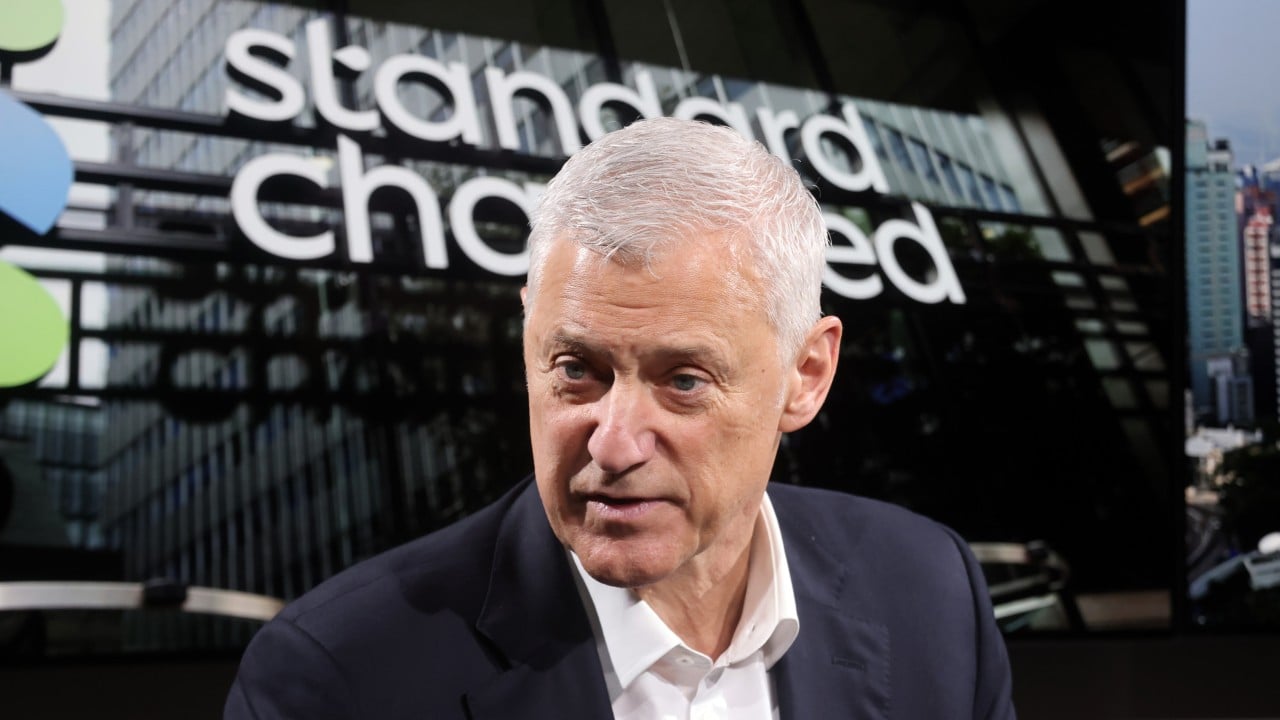
Corporate executives usually spend millions on public relations to avoid saying exactly what they mean. Then there is Bill Winters.
The Standard Chartered CEO managed to spark an international corporate relations crisis by describing laid-off workers in the worst possible terms. While detailing the bank's massive push into artificial intelligence at an investor conference in Hong Kong, Winters explained that the upcoming layoffs weren't about slashing budgets. Instead, he called it "replacing in some cases lower-value human capital with the financial capital and the investment capital we're putting in."
Unsurprisingly, telling your workforce that they are "lower-value human capital" doesn't go over well.
The backlash was instant, fierce, and reached all the way to top government officials. By Friday, Winters was forced to issue a formal apology on LinkedIn, marking his second attempt in 48 hours to clean up the mess. But the damage was done. The incident exposes a deeper, more uncomfortable reality in global banking. Executives are growing bolder about using AI to replace humans, and they are dropping the polite euphemisms faster than expected.
The Anatomy of an Executive Backlash
Standard Chartered isn't just trimming its sails; it's restructuring its entire global operational base. The bank announced plans to eliminate roughly 15% of its back-office support workforce by 2030. That translates to about 7,800 jobs on the chopping block. The cuts will hit operations hubs in Chennai, Bengaluru, Kuala Lumpur, and Warsaw hardest.
When you tell 7,800 people that their livelihoods are ending, you usually lead with gratitude or corporate boilerplate about tough choices. Winters chose efficiency talk.
The reaction on social media and inside the bank was brutal. Former Singapore President Halimah Yacob publicly called the remarks "disturbing" and "demeaning" in a Facebook post, pointing out that these employees had contributed deeply to the bank's survival and growth. When a former head of state calls you out for treating workers like obsolete machinery, your PR team has a long week ahead.
Regulators in Hong Kong and Singapore immediately demanded clarifications from the bank regarding Winters' remarks. By Thursday, Bloomberg reported that executive offices were scrambled to handle queries from government watchdogs worried about sudden, unmanaged mass unemployment in key financial hubs.
The Flawed Logic of the Non-Apology Apology
Winters tried to fix the leak on Wednesday with an internal memo, claiming the headlines took his quotes out of context. He wrote that role changes reflect "changes in the work, not the value of our people."
That didn't work. The internet doesn't forget, and internal bank forums lit up anyway.
On Friday, Winters posted a formal apology on LinkedIn. "I have received a lot of support for the messages in my previous post but still get questions about my choice of words, which I know has caused upset to some colleagues," he wrote. "For that I am sorry."
But then he doubled down. He attached the full transcript of his Hong Kong speech, hoping to prove that he actually values his staff "most highly" because he mentioned offering retraining opportunities.
Commenters weren't buying it. One user noted that they struggled to see any difference between the quote and the transcript, calling it either a terrible choice of words or an honest belief that slipped out. Another flatly stated the comments were disgusting.
The apology felt hollow because it wasn't a retraction. Winters didn't say he was wrong about the strategy. He was just sorry that the words he chose made people feel bad.
The Shift in How CEOs Talk About Automation
For the past couple of years, corporate leaders used a very specific script when talking about generative AI and machine learning. They talked about "productivity gains." They talked about "co-pilots" and "augmenting human capability." They promised that AI would free workers from boring tasks so they could focus on higher-level strategy.
That polite era is officially over.
What Winters did was say the quiet part aloud. Wall Street and institutional investors want to see lower cost-to-income ratios. Standard Chartered is currently finishing up a massive, decade-long turnaround effort to lift its profitability and stave off potential takeover bids. To investors, replacing a human salary in a back-office compliance hub with a software license is a net positive.
We are seeing a broader trend across the banking industry where executives are becoming brutally honest about job displacement. The focus has shifted from "how can AI help our workers" to "how many workers can this software replace." Standard Chartered is using these systems to do things like scan transaction data and reduce false positives in financial crime compliance. It takes seconds for an algorithm to do what used to take an entire floor of analysts in Chennai days to process.
What This Means for Corporate Leaders Navigating AI Integration
If you run a company or manage a team through technological change, the Standard Chartered meltdown offers a masterclass in what not to do. You can't treat human beings like line items on a server depreciation schedule.
First, drop the clinical terminology. Phrases like "human capital" are fine for internal econometric modeling, but using them to justify firing thousands of people makes you look completely detached from reality.
Second, if you mess up, don't tell people they misunderstood you. Winters' insistence on publishing his full transcript actually made the situation worse because it proved he wasn't misquoted. He meant what he said; he just didn't expect the public to care so much.
Third, ensure your retraining programs are real and funded before you announce cuts. Standard Chartered claims it's giving at-risk employees every opportunity to learn new skills. But when those announcements happen at the same time you label those workers as lower-value, nobody believes the retraining programs are anything more than a legal shield.
The reality of the 2026 job market is that automation is accelerating. Executives who handle this transition with empathy and clear communication will retain their talent and protect their brands. Those who treat their staff like outdated hardware will find themselves spending their Fridays writing apologies on LinkedIn.