Pixels glow in the dark room. Outside, the night hums with the ordinary static of a suburban evening, but inside, attention narrows to a fraction of a millimeter. Millions of people scroll past life every single day. Their thumbs flick upward, erasing moments of beauty, motion, and quiet miracle in a blur of blue light. Most feeds are populated by curated meals, fleeting trends, and the loud opinions of strangers. But sometimes, a single thumb stops.
Franklin Howley-Dumit Serulle stopped his thumb.
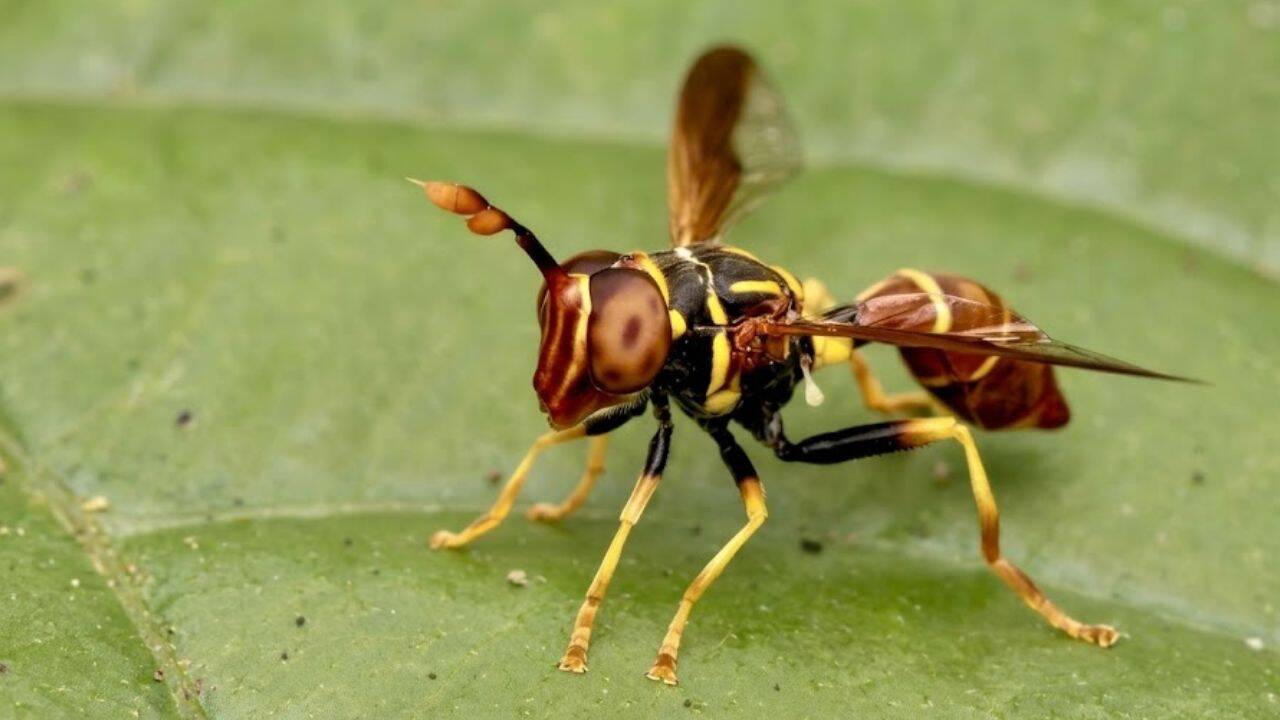
What he saw on his screen looked like just another bug. To the untrained eye, it was a speck of dust with wings, an insignificant visitor that landed on an outdoor surface long enough to be framed by a smartphone camera lens. Most people would have brushed it away, annoyed by the tiny intrusion, or ignored it entirely. Instead, Serulle paused. He captured the insect, preserving its fragile architecture in digital amber, and uploaded the photograph to an online platform where strangers gather to name the unnamed.
He had no idea he was holding a magnifying glass over a blank spot on the map of life.
Consider what happens next in the quiet machinery of modern taxonomy. For decades, the discovery of a new species required dusty museums, heavy leather-bound journals, and expeditions deep into equatorial jungles where researchers swat mosquitoes and press plants between sheets of blotting paper. That world still exists, rugged and essential. Yet a parallel universe has grown up alongside it, constructed from fiber-optic cables and crowdsourced curiosity. When Serulle posted his photo, it drifted into a digital ocean of images watched by amateur naturalists and professional entomologists alike.
One of those watchers saw the wings.
Science often pictures itself as a stern, orderly architect drawing blueprints in a quiet room. The reality is messier, stranger, and far more dependent on coincidence. Hoverflies, belonging to the family Syrphidae, are nature's great imposters. They dress as stinging wasps and angry hornets to trick predators into leaving them alone, while spending their adult lives hovering in mid-air like tiny, living helicopters before darting off with blinding speed. They are common, yet remarkably easy to misidentify. Entomologists studying the photograph noticed structural details that did not match any known cataloged species in the region. The coloration was slightly off. The venation of the wings told a different story.
What followed was a slow-motion collision between casual digital sharing and rigorous scientific validation.
Let us be clear about the invisible stakes here. Why does a single new species of hoverfly matter when forests are burning and glaciers are slipping into the sea? Because naming a creature is the first step toward caring whether it survives. You cannot protect what you do not know exists. Every insect occupies a niche, a tiny thread in the vast, complicated blanket of an ecosystem. This particular hoverfly lived its life entirely unnoticed by science, pollinating flowers, avoiding predators, and completing its life cycle while human beings argued over politics on the internet just feet away.
Nature does not announce its secrets with fanfare. It whispers them in code.
When researchers finally confirmed that Serulle’s photograph depicted a species entirely new to science, it sparked a quiet revolution in how we think about discovery. You do not need a multi-million-dollar grant or a pith helmet to contribute to our understanding of the natural world. You just need to pay attention. We live in an age of profound ecological anxiety. It is terribly easy to feel helpless, watching headlines about mass extinctions and collapsing habitats from the safety of an armchair. The narrative we are fed is one of terminal loss. Everything is disappearing. Everything is broken.
Yet, right outside the window, life persists in ways we have not yet cataloged.
Serulle’s hoverfly reminds us that the planet is not entirely mapped. There are still blank spaces left on the margins of our understanding, waiting not for an elite expedition, but for a stray glance, a patient camera, and someone willing to look closely at the small things.
The screen goes dark. The room is quiet again. Somewhere out in the dark, beneath the streetlights and the canopy of leaves, millions of tiny wings are beating against the wind, keeping time in a world we are only beginning to understand.