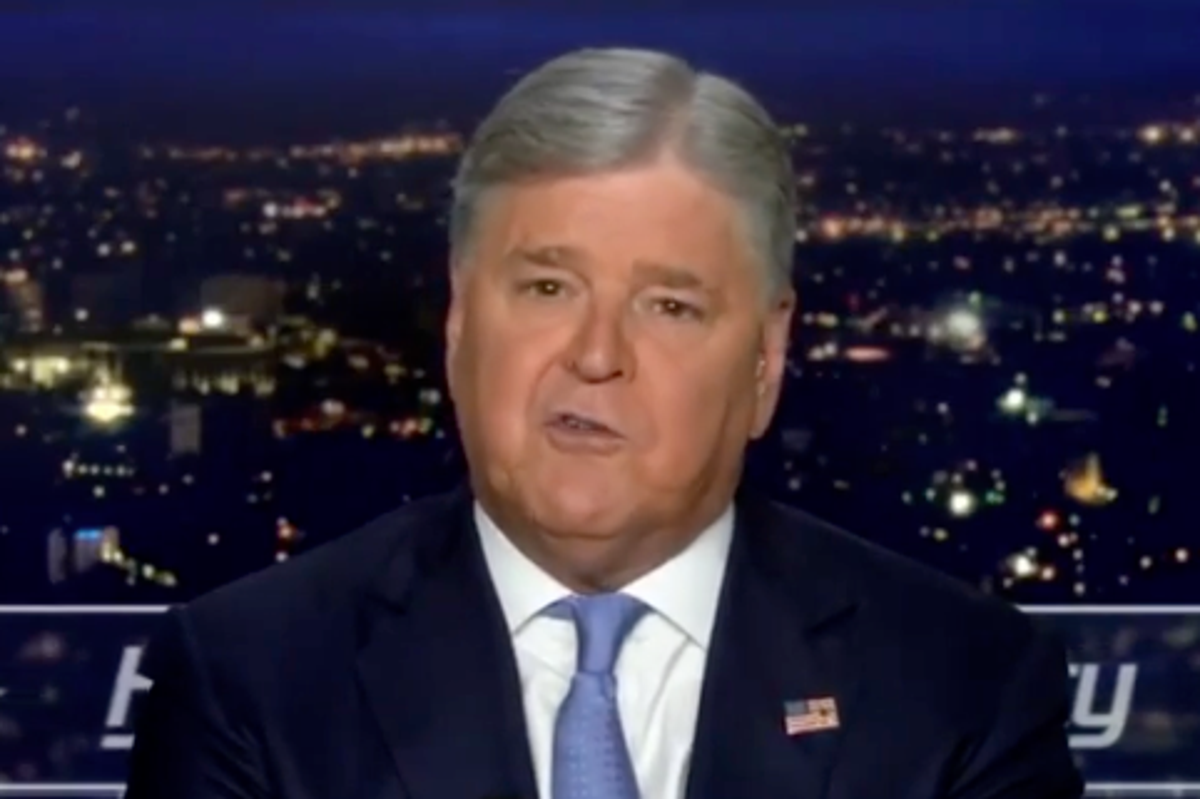
Every election cycle brings the same ritual. A major media outlet drops a breathless poll showing a deep-red stronghold suddenly tipping blue. The chattering class hyperventilates. Pundits adjust their projections. And veteran media figures like Sean Hannity push back, earning eye-rolls from the mainstream press for daring to question the sacred science of polling.
Except Hannity is usually right to be skeptical, and the media is wrong to treat internal or early state polling as an objective oracle.
The lazy consensus in modern political journalism treats any poll published by a recognized organization as gospel. If a numbers cruncher with a spreadsheet says a Texas Senate race is within the margin of error, reporters take it at face value. They ignore the mechanics, the weighting models, and the historical tendency of Texas polls to systematically overstate Democratic strength in high-turnout projection models.
Let us look at the mechanics. Polling is not a thermometer; it is a prediction engine built on assumptions. When a poll shows a tight race in a state like Texas, it relies heavily on likely voter models. Who is a likely voter in a state that has not elected a statewide Democrat in three decades? If you build a model that assumes high youth turnout or suburban erosion without historical precedent, you get a close race. Change the underlying assumptions, and the lead vanishes.
I have spent years watching campaigns burn millions of dollars chasing phantom trends created by skewed crosstabs. Consultants love panicked polling because it drives fundraising. Media outlets love it because it drives clicks. But reality operates on a different frequency.
Consider how baseline assumptions distort outcomes. Imagine a scenario where a pollster assumes a baseline electorate that mirrors a nationalized presidential election rather than a midterm or state-specific dynamic. Suddenly, urban and suburban samples swamp rural turnout realities. The math checks out on paper, but it bears zero resemblance to the actual ballot boxes cast on election day.
The Flawed Premise of Texas Turnout Models
The persistent myth of the turning Texas blue narrative relies on a fundamental misunderstanding of demographic shifts. Analysts look at migration patterns from states like California and New York and assume incoming residents bring their voting habits with them.
Data routinely disproves this simple causality. People fleeing high-tax, over-regulated states often move precisely because they are escaping those political environments. They are not arriving in Austin, Dallas, or the rural counties eager to recreate the policies they left behind. Yet, pollsters continue to weight samples under the assumption that every new arrival is a lock for the opposition party.
This is where expertise matters. Real political analysis requires understanding structural inertia. Texas has vast geographic and cultural depth. A poll sampled heavily in Harris County or Travis County will tell you a lot about Austin and Houston, but it will completely misread the Permian Basin or the Rio Grande Valley. When a high-profile media personality questions the validity of a statewide snapshot, they are usually responding to a glaring disconnect between the sample and the ground game.
The Cost of Consensual Blindness
There is a severe downside to this contrarian posture, and intellectual honesty demands acknowledging it. Skepticism of polls can curdle into confirmation bias. If you dismiss every unfavorable number as fake news, you miss genuine shifts in the electorate. Complacency kills campaigns just as surely as panic does.
Hannity and other commentators walk a fine line here. Discounting mainstream polling wholesale risks blinding yourself to genuine vulnerabilities. Incumbents lose seats when they ignore warning signs under the guise of institutional skepticism.
The middle ground is brutal objectivity. Do not trust the topline number. Look at the cross-tabs. Look at the partisan weighting. Look at the historical track record of the pollster in that specific geographic region. Most journalists are too lazy to do this. They want the narrative, not the data.
Dismantling the Industry Standard
The polling industry has an accuracy problem that goes far beyond partisan bias. Response rates for telephone surveys have plummeted into the low single digits. To compensate, pollsters rely on heavy weighting and online panels, which introduce entirely new vectors of error.
When a poll shows an outlier result, the default reaction should not be celebration or despair. It should be intense interrogation. Why is this sample different from previous cycles? What adjustments were made to the weighting algorithm?
Instead, we get breathless headlines designed to manufacture a horse race where none may exist. The media loves a competitive Texas because it drives national engagement. It keeps donors writing checks and viewers glued to cable news.
Stop treating public opinion surveys as prophecy. They are marketing documents dressed up as social science. If a prominent voice questions a counterintuitive outlier, do not dismiss it as partisan cheerleading. Look at the math. The math usually tells the real story.