A single honeybee weighs about one-tenth of a gram. It is almost nothing. Yet, when thousands of them pulse together in a wooden box on the South Lawn of the White House, they create a mechanical hum that can be felt in the soles of your shoes. This is not the sound of nature at rest. It is the sound of an industrial powerhouse fueled by nectar and instinct.
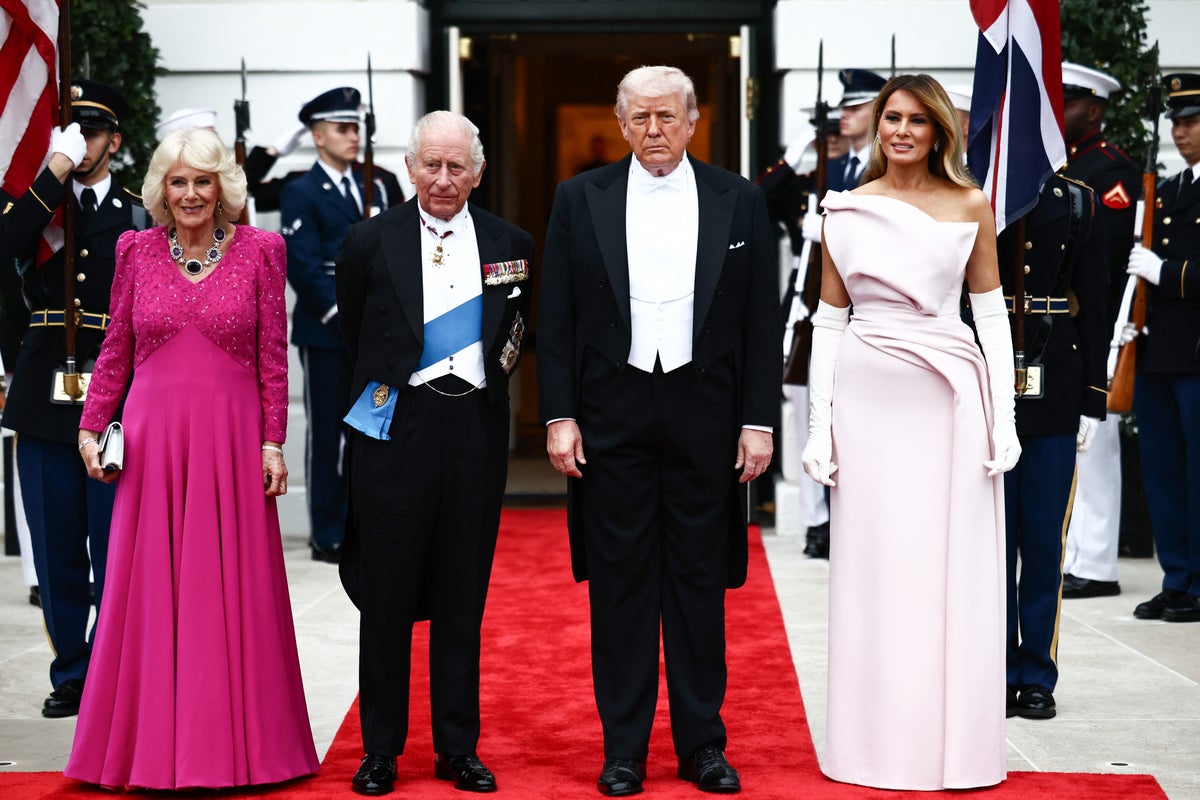
When King Charles III and Queen Camilla sat down for the shimmering formality of a State Dinner, the menu boasted a delicate infusion of honey sourced directly from those White House hives. On the surface, it is a charming culinary footnote. A "farm-to-table" gesture for a visiting monarch known for his environmentalism. But if you look closer, past the gold-rimmed china and the candlelight, you find a story of quiet continuity that transcends political administrations and ocean crossings.
The Architect in the Garden
In 2017, Melania Trump stood in the kitchen garden established by her predecessor. There is a specific kind of pressure that comes with maintaining the traditions of the "People’s House" while trying to leave a thumbprint on its history. She didn't just keep the garden; she expanded the apiary. She understood a fundamental truth about diplomacy: the most powerful gestures are often the ones that grow from the dirt.
Beekeeping is an exercise in controlled chaos. You wear the veil, you puff the smoke, and you pray the queen is healthy. By championing the South Lawn hives, the former First Lady wasn't just hobby-farming. She was securing a liquid currency. Honey is the only food that never spoils. Archaeologists have found pots of it in thousand-year-old Egyptian tombs, still edible, still golden.
When that honey was harvested, jarred, and tucked away in the White House pantry, it became a ticking clock of hospitality. It waited. It survived the transition of power, the changing of the guard, and the literal scrub-down of the West Wing. It sat in the dark, a concentrated essence of American wildflowers, waiting for the right moment to be served to a King.
The Invisible Labor of the Hive
Think about the sheer physics of the dessert served to the British royals. To produce just one pound of honey, a colony of bees must visit two million flowers. They fly over 50,000 miles. That is twice the circumference of the Earth for a single jar.
When the culinary team at the White House decided to feature this specific honey for the State Dinner, they were serving more than sugar. They were serving the collective labor of a million tiny lives that spent their entire existence working for the benefit of a community they would never truly see.
There is a mirror there for the diplomats and staffers who move through the halls of power. Most of the work that keeps a government—or a monarchy—afloat is invisible. It is the frantic flapping of wings that keeps the hive at a steady 35°C, regardless of the storm outside. The honey on the King's plate was the physical manifestation of that persistence.
A Language Without Words
Diplomacy is often viewed as a series of shouted debates and signed treaties. In reality, it is a game of whispers.
King Charles has spent decades talking to his plants and advocating for the soil. He is a man who finds more solace in the rhythm of the seasons than the rhythm of the polls. Serving him honey from the residence’s own hives wasn't just a choice of flavor; it was a sophisticated nod to his soul’s work.
Imagine the scene. The clatter of silver. The heavy scent of lilies. The King lifts a spoon. In that moment, the tension of international relations softens. He isn't just a head of state eating dinner in a foreign capital. He is a gardener recognizing the labor of another gardener.
This is the "human-centric" core of the event. We focus on the crowns and the motorcades, but the real connection happens in the shared appreciation of something small, sweet, and difficult to make. The honey acted as a bridge between the Trump era’s installation and the Biden era’s hospitality, gifted to a British monarch who values the land above all else.
The Stakes of the Small
Why does this matter? Why should we care about a few jars of honey in a world of high-stakes geopolitics?
Because we are losing the small things.
The honeybee populations are flickering. Pesticides, habitat loss, and climate shifts are silencing the hum in gardens across the globe. By placing this honey at the center of a State Dinner, the White House sent a signal. It was an admission of vulnerability. It was a statement that even the most powerful house in the world relies on the health of the smallest insects.
The "invisible stakes" here are environmental and existential. If the bees stop, the garden stops. If the garden stops, the table is empty. It doesn't matter how many gold plates you own if there is nothing to put on them.
The honey served to Queen Camilla and King Charles was a reminder that we are all part of a fragile, interconnected system. The same sun that hits the White House garden hits the meadows of Highgrove. The same biology governs us all.
The Lingering Aftertaste
As the guests departed and the candles were snuffed out, the hives on the South Lawn remained. They didn't know about the King. They didn't know about the First Ladies or the shifting tides of the American electorate. They simply continued their work in the dark, huddling together for warmth, vibrating with a purpose that has remained unchanged for millions of years.
The honey was gone from the plates, but its message lingered. It told a story of preservation. It proved that something started by one hand can be used by another to extend a hand in friendship.
In the end, the most enduring part of the evening wasn't the speeches or the toasts. It was the golden, viscous proof that even in the hardened heart of global politics, there is still room for the sweetness of the earth.
The bees are already waking up for the next harvest. They have no interest in the headlines. They only care about the nectar, the flight, and the survival of the hive. We would do well to watch them.