The floor of my apartment in Stockholm was vanishing. It wasn’t a landslide, or a flood, or some sudden act of God. It was denim. Layers of it. Sweaters, too, smelling faintly of cedar and mothballs. I looked at the pile and felt a sudden, sharp clarity: I was suffocating under the weight of clothes I didn't actually like.
We treat our wardrobes as static entities. We buy, we wear, we hoard, we forget. But clothes are living things. They have an origin, a brutal history of resource extraction, and a destination that most of us desperately try to ignore. When I finally dragged three bulging garbage bags down to the street, I felt a wave of guilt. I knew where this stuff went. It went to a landfill in the Global South or, at best, a processing facility where it was baled and shipped off, a ghost of my consumerist past haunting someone else’s continent.
I stopped. I didn't drop the bags. I went back inside.
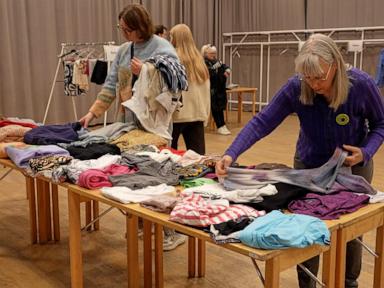
Across Sweden, a shift is happening. It isn't led by corporate giants or high-fashion houses. It is being led by people standing in drafty community centers, holding up a faded wool cardigan and asking, "Who wants this?"
The Arithmetic of Waste
Consider the math. It is ugly. Producing a single pair of jeans consumes roughly 2,000 gallons of water. That is enough to sustain a human for years. When we toss that garment after wearing it twice, we aren't just discarding fabric; we are throwing away the river that grew the cotton. We are dumping the energy that spun the yarn.
Yet, we remain addicted to the "new." We view the shopping bag as a prize, a dopamine hit wrapped in tissue paper. But the thrill fades the moment we get home. The item is relegated to the back of the drawer, a dusty monument to a bad decision.
Sweden has become an unlikely laboratory for undoing this cycle. The klädbytardag—the clothing swap day—is not just a clever way to clear space. It is a radical rejection of the belief that our worth is tied to the freshness of our seams.
A Hypothetical Tuesday
Imagine Elin. She is thirty-two, lives in a modest flat in Södermalm, and has a closet that looks remarkably like mine did. One Tuesday, she gathers six items she hasn't touched in a year. A silk blouse that never quite fit. A pair of heavy boots that pinched her toes. She takes these to a local swap.
She walks in carrying a burden. She leaves carrying someone else's treasure.
This isn't charity. It is a closed-loop system of human desire. Elin picks up a heavy corduroy jacket. It is broken in perfectly, the elbows softened by a decade of use. When she puts it on, it doesn't smell like a factory. It smells like someone else’s life, a story she is now inheriting.
This is the antidote to the conveyor belt of fast fashion. In the factory-driven model, we are merely points of consumption, endpoints in a supply chain designed to make us feel perpetually inadequate. In a swap, we are participants. We are curators. We are breathing life back into materials that were moments away from being shredded into insulation or dumped in a heap.
The Invisible Stakes
Why does this matter? Because the planet is screaming. The textile industry accounts for roughly 10 percent of global carbon emissions. It pollutes more than international flights and maritime shipping combined.
We pretend this isn't happening. We rely on the fiction that if we donate our clothes to a thrift store, they go to a good home. The reality is far grimmer. A vast majority of donated clothing is exported. In places like Ghana, the market is so flooded with Western "donations" that the local textile industry has collapsed. We aren't donating; we are dumping our waste on someone else’s doorstep and calling it benevolence.
The Psychology of the Trade
There is a psychological barrier to secondhand clothing. We are taught to view used items as "lesser." We fear the grime, the history of the previous owner, the lack of the pristine tag. But watch people at a swap. Watch their hands. They don't look for the brand name. They look for the weave. They hold the fabric up to the light to check the density of the thread. They touch the buttons.
They are looking for quality, not status.
When you participate in a swap, you aren't just trading physical goods. You are trading your relationship with the object. You stop seeing a garment as a commodity and start seeing it as a piece of craftsmanship. You begin to understand that a garment should last. You begin to hold your own clothes with more care, knowing that one day, they will have a second act.
The Quiet Rebellion
This is not a grand political movement with banners and marches. It is quiet. It happens in church basements, in university libraries, in cafes during the winter darkness. It is an act of small-scale insurgency against the idea that everything we own must be brand new.
When I look at my closet now, it is smaller. It is curated. The clothes I own have histories, and the clothes I no longer want have futures. I know that if I get bored of a jacket, I don’t have to throw it away. I can take it to the next swap. I can pass it on.
We have been sold a story of endless growth, a story that demands we consume at an impossible rate. But the earth does not grow at an impossible rate. It cycles. Things die, they break down, they provide the foundation for new life.
Our wardrobes should do the same.
The next time you stand in front of your mirror, staring at a shirt that doesn't fit, don't think about the bin. Don't think about the trash. Think about the person who might actually need that shirt. Think about the water it took to make it. Think about the fact that you have the power to stop the cycle, right now, with a single, simple gesture.
It starts with letting go. It starts with realizing that the best thing you can possibly wear is the thing that’s already been loved.