The coffee in the breakroom at Dover Air Force Base is always hot, but it never seems to warm the people standing around the pot. They move in a sort of practiced silence. It is the silence of those who have mastered the art of waiting for the phone to ring and the equal, more terrifying art of answering it.
When Operation Epic Fury began three months ago, the briefings were filled with the sharp, metallic language of modern warfare. Generals spoke of "strategic corridors," "kinetic objectives," and "neutralizing high-value assets." They mapped out the desert terrain in digital topographical overlays that made the world look like a video game. But the digital maps don’t show the dust that gets into the pores of a human face. They don’t capture the way a specific frequency of radio static can make a person’s heart hammer against their ribs.
Now, the tally has changed. Seven.
The seventh service member succumbed to their injuries this morning in a sterile hospital room far from the heat of the front lines. To the press, it is a "grim milestone." To a family in a quiet suburb, it is the end of the world.
The tragedy of a military operation often lies in its transition from a human endeavor to a statistical one. When the first soldier fell, the nation paused. By the third, the headlines moved from the front page to the sidebar. By the seventh, the event risks becoming a data point in a broader political argument about foreign policy and resource allocation. Yet, each number represents a recursive loop of grief that touches dozens of lives.
Consider the trajectory of a single fragment of shrapnel. In a purely tactical sense, it is a failure of armor or a success of an improvised explosive device. In a human sense, that fragment shatters a future. It cancels a wedding planned for July. It ensures a three-year-old will only know their father through grainy FaceTime recordings and a folded flag. The "invisible stakes" of Operation Epic Fury aren't found in the oil fields or the border crossings the military is fighting to secure. They are found in the empty chairs at Sunday dinners.
The seventh death is particularly heavy because it represents the tipping point of a "grinding" conflict. In military theory, there is a concept known as the "attrition gradient." It is a cold calculation of how much loss a force can sustain before its operational capacity begins to degrade. But how do you calculate the attrition of a mother’s hope? How do you graph the steady erosion of a community's resolve as the same black cars pull up to different driveways in the same neighborhood?
A soldier is more than a rank and a serial number. They are a collection of memories, a specific way of laughing, and a preference for a certain kind of cheap beer. When a service member succumbs to injuries, they take with them a library of unwritten books. They take with them a knowledge of how to fix an engine or how to tell a joke that makes a room explode in laughter.
Operation Epic Fury was meant to be a swift and decisive push. The maps were clear. The enemy's positions were well-documented. But the friction of war, as Clausewitz famously noted, is what makes the simple things difficult. In this case, the friction is the cost of human endurance. The seventh death is the sound of the friction rubbing the soul of a nation raw.
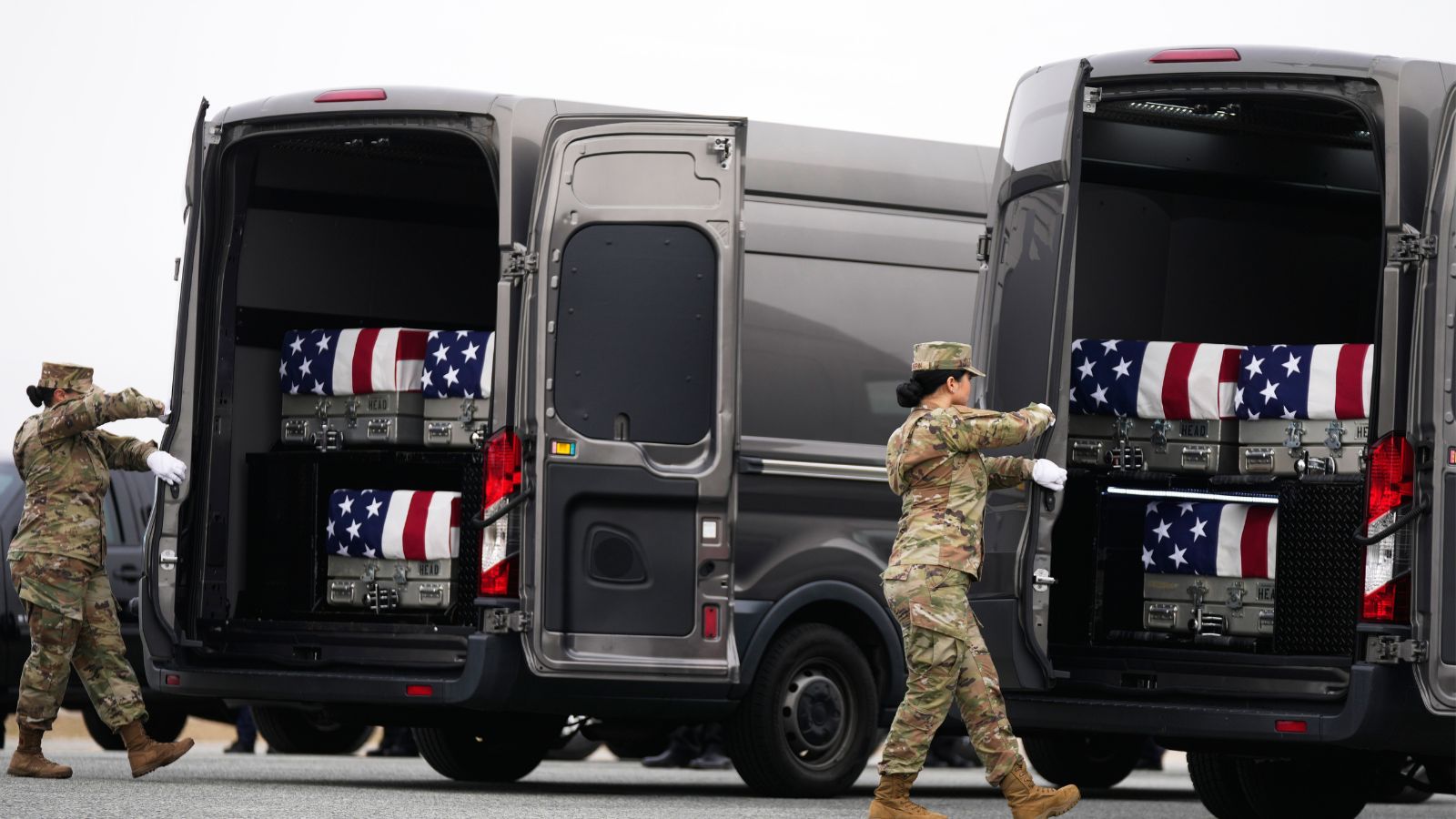
The "grim new milestone" isn't just about the number of caskets. It's about the seven voids that have been created in the fabric of the country. Each void is a gravity well, pulling in the light from those around it. The parents. The siblings. The fellow soldiers who were in the same humvee and who now carry a burden of survival that feels heavier than any rucksack.
We often use the term "supreme sacrifice" to describe this loss. It is a high-minded, noble phrase. It is designed to give meaning to the meaningless. But to the seven families who are now part of this particular fraternity of grief, the sacrifice isn't a abstract concept. It is the silence in the bedroom. It is the clothes that still smell like detergent and a faint hint of gunpowder. It is the realization that the world is moving on while their personal clocks have stopped.
The coffee in the breakroom at Dover is still hot. It will be hot tomorrow, and the day after. The people will continue to move in silence. They will continue to watch the screens and the maps, and they will continue to answer the phones. The seven are gone, but the eighth and the ninth are still out there, under a sky that doesn't care about milestones or operations or fury.
The seventh chair at the table will remain empty tonight. The meal will be served. The prayers will be said. But the silence that fills the space where a person used to be is the loudest sound in the room.