Dawn comes cold over the ridge of the Imjin River.
To stand on the southern side of the Demilitarized Zone is to feel a very specific kind of silence. It is not the quiet of a sleeping forest. It is the heavy, loaded stillness of two hundred thousand eyes staring across a four-kilometer strip of earth, waiting for a twitch. For a different look, consider: this related article.
Every spring and late summer, the routine returns. Across the global wire services, the headlines flash with predictable urgency. Allied battalions march. Fighter jets scream over the jagged peaks of Gangwon Province. The Ulchi Freedom Shield exercises begin, and with them, the ritualistic anxieties of the international community. Analysts pull up grainy satellite imagery on glowing monitors in Washington and Seoul, squinting at motor pools, counting artillery tubes, and asking the old, weary question: Just how strong is the North Korean military?
Numbers are easy to write down. Similar analysis regarding this has been shared by Al Jazeera.
On paper, the Korean People's Army presents a staggering silhouette. More than a million active-duty soldiers. Thousands of aging tanks. A submarine fleet that rivals major maritime powers in sheer hull count. Artillery barrels—thousands upon thousands of them—dug into the granite hillsides of the north, locked onto the sprawling, neon-lit sprawl of the Seoul metropolitan area, where half of South Korea’s population wakes up, drinks coffee, and goes to work every single day.
Scale.
That is what the charts try to convey. But numbers do not capture the smell of diesel exhaust burning in a damp concrete bunker fifty feet underground. They do not measure the hollow ache in the stomach of an eighteen-year-old conscript in Pyongsong who hasn't seen a full ration of rice in three weeks, staring at a rifle built in the previous century.
To understand what the annual drills actually mean, you have to look past the spreadsheets of military might. You have to look at the psychology of endurance.
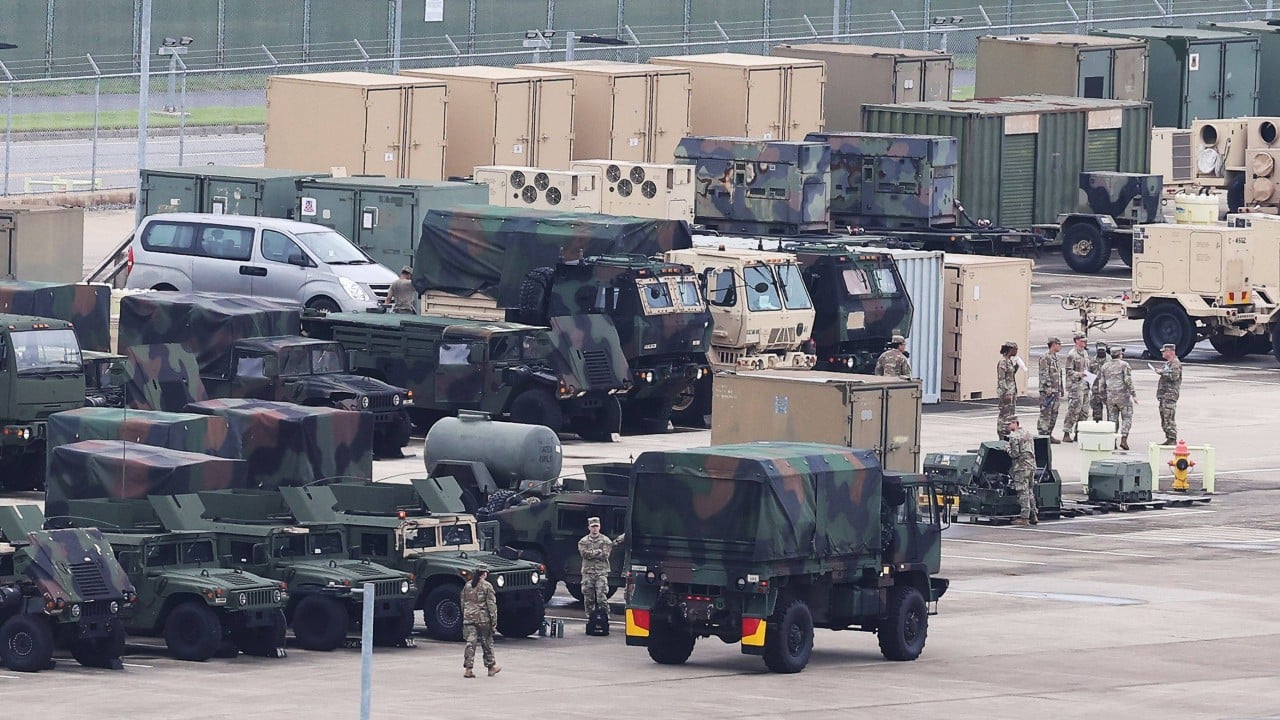
Consider a hypothetical intelligence officer sitting in a command bunker south of Seoul, watching the telemetry roll in as American and South Korean forces coordinate a joint amphibious landing on the eastern coast. To the satellite, it is a ballet of logistics. Landing craft surge onto gray beaches. Apache helicopters hover like dragonflies above the tree line. Cybersecurity teams simulate relentless, invisible assaults on electrical grids and command-and-control networks.
This is not merely practice. It is a language.
Geopolitics is often treated as a game of chess, but military exercises are more like a massive, high-stakes orchestra tuning its instruments before a performance no one wants to hear. Every missile defense simulation, every combined live-fire maneuver using HIMARS and K2 Black Panther tanks, sends a blunt message northward: We are ready.
And the north listens.
Thirty miles away, across the border in Kangwon province, a different kind of preparation unfolds in the dark.
For decades, Western analysts have made a critical error when assessing North Korea's military capabilities. They look at the rust. They see T-55 tanks that belong in a museum. They note the chronic fuel shortages that leave jet fighters grounded for months at a time. They laugh—nervously—at poorly produced propaganda reels showing soldiers breaking bricks with their bare knuckles.
And in doing so, they miss the terrifying truth of asymmetric adaptation.
Pyongyang knows it cannot win a conventional, high-tech war against an alliance backed by American satellite constellations, stealth fighters, and limitless industrial supply chains. If the conflict comes down to who can manufacture more microchips or precision-guided munitions, the North loses in a fortnight.
So they changed the rules of the board.
While the allies practice complex, multi-domain modern warfare, the north has poured its broken economy into the shadows. They built a sprawling subterranean infrastructure, burrowing deep beneath the granite mountainsides to hide artillery, factories, and entire squadrons of aircraft. They traded butter for enriched uranium. They engineered hyper-sonic glide vehicles and tactical nuclear warheads designed to slip beneath the radar arcs of Patriot and THAAD batteries.
The annual drills are designed to test the alliance against this exact nightmare.
When American B-1B bombers roar across the peninsula in a show of extended deterrence, they are not just burning jet fuel to scare a dictator. They are reassuring a terrified populace in Seoul that the American nuclear umbrella remains open.
Trust is a fragile architecture.
Ask any veteran of the South Korean armed forces who has spent a bitter winter night shivering on watch duty near Cheorwon. They will tell you that the threat is not an abstract line in a geopolitical journal. It is the hum of a generator, the bite of the wind off the Siberian steppes, and the quiet, persistent knowledge that the city behind them is within range of conventional artillery that could turn a Wednesday morning into an inferno.
When the exercises wrap up, the headlines fade. The analysts pack away their briefs. The B-1B bombers fly back to Guam.
The silence returns to the Imjin River.
The mist rises off the water, blurring the barbed wire and the watchtowers into a gray smear of morning fog. Across that invisible line, millions of people wake up to another day under the same sky, tied together by a shared history they never asked for, playing out a tense, dangerous stalemate that has lasted for three generations.
The drills end. The questions remain. And the ridge waits for the next dawn.