The morning air in Tehran smells of dry dust and roasted cardamom, but beneath the ordinary noise of traffic and shouting merchants, a heavier current moves. It is the weight of an ultimatum.
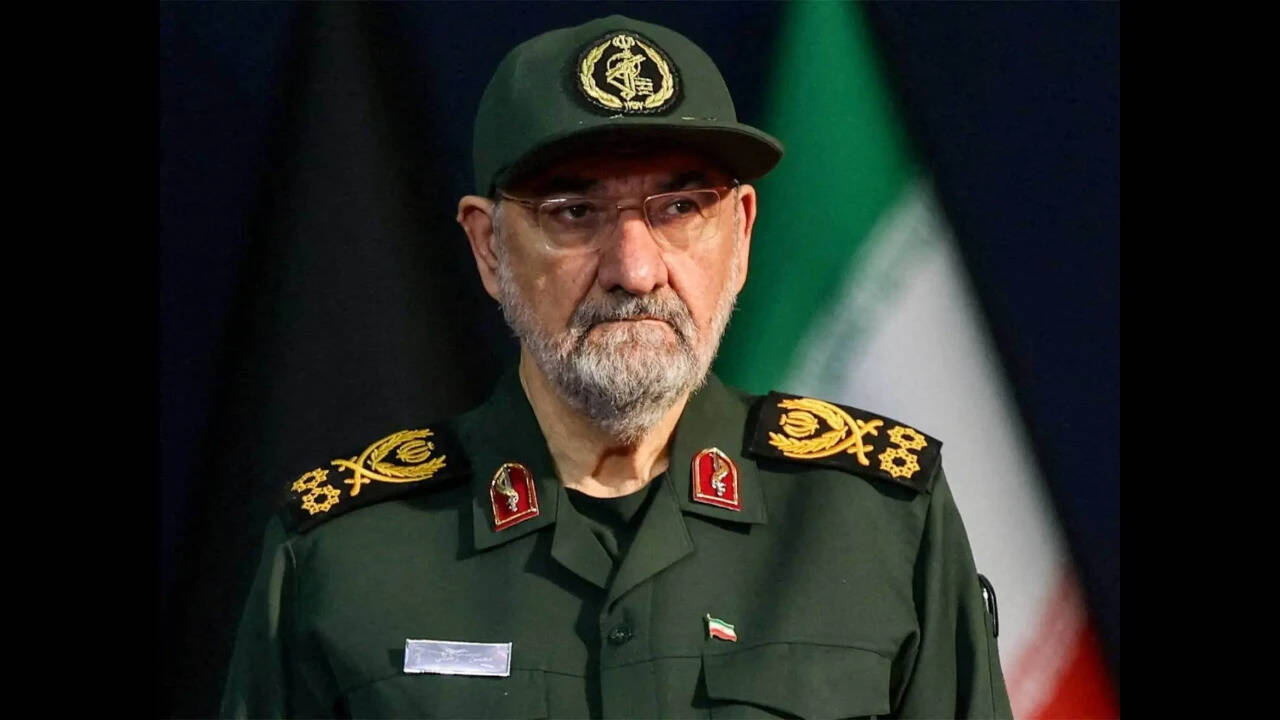
When Ali Akbar Ahmadian, the secretary of Iran's Supreme National Security Council, stepped behind the podium to address the diplomatic corps, he did not just speak to the room. He spoke to the horizon. His message was stark, stripped of diplomatic velvet. Economic measures taken by regional neighbors against Iranian interests would not be viewed as routine commerce or cautious policy. They would be viewed as an act of hostility, carrying a price that no border town or coastal port wants to calculate.
To understand why a warning about trade registers like a thunderclap, you have to look at a map not through the eyes of generals, but through the eyes of a grocer in Mashhad or a shipping agent in Bandar Abbas.
Borders in the Middle East are rarely just lines on paper. They are porous, breathing membranes of survival. Families span the divides. Livelihoods depend on the illicitly sweet hum of smuggled diesel, the legal exchange of pistachios for machinery, and the quiet flow of capital that keeps inflation from devouring an entire generation's savings. When governments start tightening economic screws—blocking accounts, halting cargo routes, or aligning with distant superpowers to squeeze a neighbor's ledger—they are not playing a board game. They are cutting off oxygen.
Imagine Tariq, a fictional port manager whose real-world counterparts lose sleep every night in the Gulf. Tariq watches cranes swing against a pale sky, moving containers that represent the difference between his workers feeding their children or watching cupboards go bare. For months, the whispers have grown louder. Pressure from Western capitals has trickled down into regional boardrooms. Banks that once cleared Iranian transactions with a blind eye are now slamming doors. Ships sit idle, their paperwork trapped in administrative purgatory.
Ahmadian's warning is the sound of a government backed into a financial corner deciding to push back with the only currency it has left: pure, unadulterated deterrence.
We often talk about geopolitics as if it were abstract chemistry. State A reacts with State B, producing a diplomatic crisis. But the test tubes are real people. When a security chief threatens retaliation against economic containment, he is acknowledging a brutal reality. Modern warfare is rarely fought solely with ballistic missiles screaming across the desert night. More often, it is fought in the quiet devastation of a collapsed currency, a blocked port, or a severed supply chain.
Consider what happens next when trade becomes a weapon.
If neighboring states choose to isolate Iran further to appease external demands, the retaliation will not necessarily manifest as a traditional military invasion. It looks like cyberattacks on critical infrastructure. It looks like disruptions in the Strait of Hormuz, where a significant portion of the world's oil supply bobs lazily on tankers vulnerable to sudden friction. It looks like proxy friction flaring up in capitals that thought they were safely insulated from the fire.
This is the central tragedy of the region's current architecture. Every nation is trying to secure its own house by setting fire to the fence it shares with its neighbor.
History teaches us that economic strangulation rarely forces a regime to collapse into compliance. Instead, it hardens the core, starves the civilian middle class, and turns economic ministers into war planners. The ordinary citizens—the ones trying to buy medicine, pay tuition, or keep a small textile workshop open—become collateral damage in a high-stakes poker game played by men who will never feel the pinch of a devalued rial.
The secretary's words were a blunt-force trauma disguised as a policy statement. They were designed to travel across Gulf waters and strike fear into the hearts of leaders in neighboring capitals who thought they could play both sides of the fence. You cannot strangle a nation's economy and expect it to smile through the suffocation.
As the sun sets over the Zagros Mountains, casting long, bruised shadows across the plateau, the warning hangs in the air like ozone before a storm. The tankers keep moving for now. The markets remain open, trading in anxiety and volatile numbers. But the margin for error has vanished. All it takes is one miscalculated embargo, one frozen asset too many, and the invisible war of ledgers and sanctions will step out of the shadows and demand its toll in blood and fire.