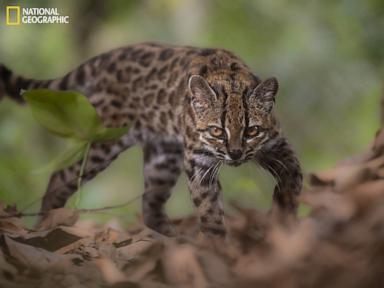
For over a century, biology textbooks preached a comforting certainty. Every major mammalian carnivore on Earth had already been cataloged, skinned, named, and slotted into classification charts by colonial naturalists or modern zoologists. Remote camera traps and high-resolution satellite imagery left virtually no square mile of the planet unmapped.
Then came a shadow in the Bolivian canopy. If you liked this post, you might want to read: this related article.
The announcement that a new feline species had been officially confirmed in the high-altitude cloud forests of Bolivia sent shockwaves through mammalogy circles. Headlines rushed to declare it the first new cat species discovery in a hundred years. That narrative misses the far more uncomfortable reality of modern field science. Discovering a new apex carnivore in the twenty-first century does not mean the animal suddenly materialized out of the mist. It means our institutional blindness, funding shortages, and bureaucratic inertia allowed an entire species to hide in plain sight while conservation frameworks collapsed around it.
Field biologists working in the montane forests of the Andes face a daily grind of logistical impossibility. These ecosystems are vertical mazes of dense bamboo, perpetual fog, and relentless rain. To find a elusive, nocturnal predator requires more than luck. It demands sustained capital, local indigenous knowledge, and years of boots-on-the-ground tracking in terrain that routinely destroys equipment and breaks bodies. For another angle on this event, refer to the latest coverage from Associated Press.
When researchers first began analyzing pelt anomalies and genetic samples that did not match known specimens of the Andean mountain cat or the Geoffroy's cat, the scientific establishment pushed back. Skepticism is the default defense mechanism of an academy that fears embarrassment. Taxonomists demanded more than photographic evidence. They required bone, tissue, and mitochondrial DNA. Securing those elements from an animal that occupies a vanishing habitat meant navigating a labyrinth of international permits, local political instability, and the sheer hostility of the wilderness.
The discovery forces a sharp reassessment of how we measure biodiversity loss. While conservation groups publish grim annual tallies of extinction rates, we are simultaneously discovering entirely new mammals in regions targeted by industrial agriculture and road expansion. The timing could not be more bitter. The forests sheltering this newly recognized feline are under immediate threat from illegal coca cultivation, unmanaged timber extraction, and shifting climate zones that are pushing cloud forest ecosystems higher up the mountain slopes. There is nowhere left for these cats to climb.
Understanding the biology of this cat requires abandoning simplistic assumptions about feline territoriality. Unlike the charismatic jaguars of the lowlands or the sweeping ranges of pumas, montane specialists are adapted to hyper-specific micro-climates. Their paws, fur density, and metabolic rates evolved for a narrow band of altitude where moisture remains high and prey density is naturally low. Fragment that corridor with a single mining road or a cleared cattle pasture, and the population fractures into non-viable genetic islands.
Local communities in the region had long whispered stories of a distinct, smaller forest ghost—an animal separate from the typical wildcats recognized by Western science. As is so often the case in conservation, institutional science ignored indigenous testimony for decades, treating oral history as folklore rather than data. The breakthrough happened only when researchers finally paired high-tech genetic sequencing with the geographical insights of local guides who knew precisely where these cats hunted.
The economic pressures driving deforestation in Bolivia do not pause for scientific breakthroughs. Global demand for commodities translates directly into chainsaws and fire in the foothills of the Andes. When a new species is announced, governments often rush to issue press releases celebrating national biodiversity while quietly cutting the budgets of park rangers who patrol the reserves. A name on a paper does not buy fuel for a truck or pay the salary of a ranger guarding a trailhead against poachers.
We are left with a paradoxical era in natural history. We possess the technology to sequence an organism's entire genome from a drop of blood on a leaf, yet we are losing ecosystems faster than we can inventory them. The new feline of the Bolivian forest is a magnificent anomaly, but it is also a warning flare. It proves that the natural world still holds secrets we never anticipated, even as those secrets are being systematically bulldozed out of existence. The real test is not whether we can find these animals in the mist, but whether we possess the political will to keep the mist from vanishing entirely.