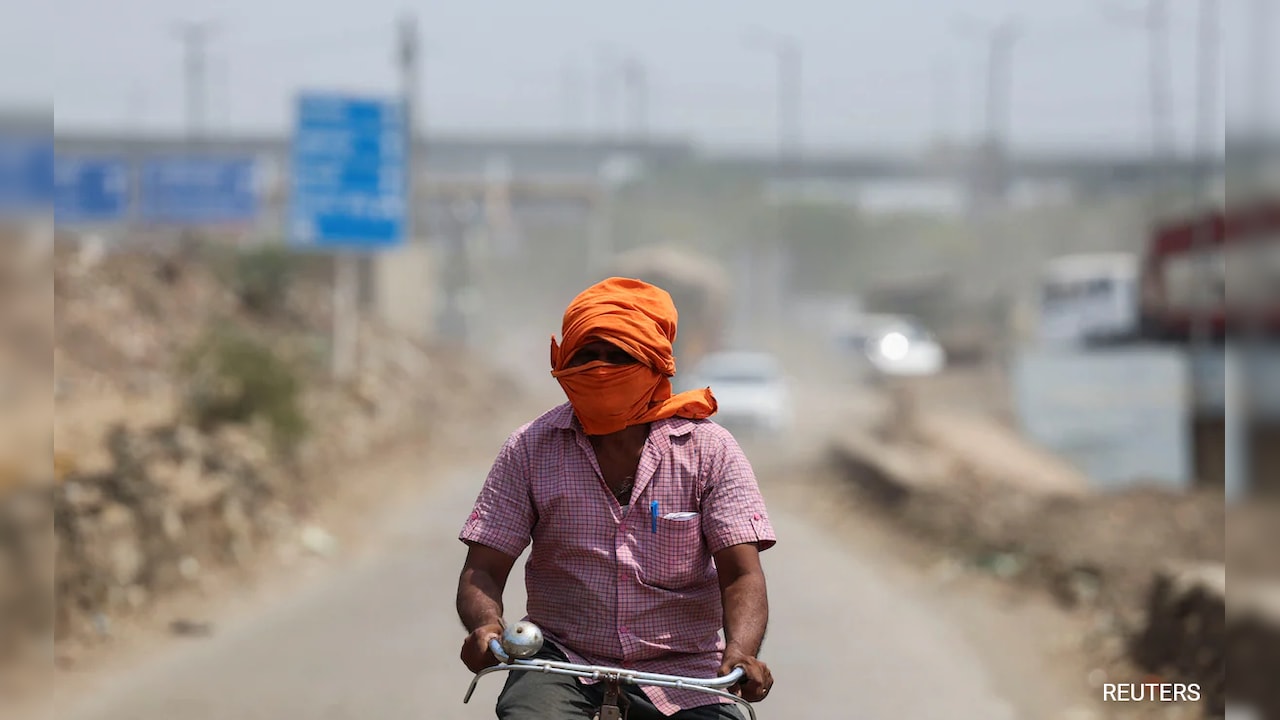
Ashok remembers the air before it turned to lead.
Decades ago, standing in the courtyard of his ancestral home in central India, the wind arrived with a promise. It smelled of wet earth and distant thunder. It swept across the dry plains, a violent, beautiful intervention that forced the sun to retreat behind heavy, bruised clouds. The heat broke. The earth drank. Life exhaled. If you enjoyed this article, you should read: this related article.
Lately, the wind arrives dry and hollow. It tastes like dust and scorched metal.
Across the globe, meteorologists and climatologists have stared at their satellite monitors with a quiet, growing bewilderment. As industrial output chokes the atmosphere, and records shatter with terrifying predictability from Phoenix to Athens, parts of the Indian subcontinent have occasionally looked strangely, stubbornly insulated from the absolute worst of the planetary fever. Headlines buzz with cautious confusion: Why is India cooler as the world burns? For another angle on this event, see the latest coverage from NPR.
It sounds like a paradox. It sounds like an exception to an unbreakable rule. But beneath the comforting myth of a cooler sanctuary lies a much more unsettling reality. The anomaly is not a shield. It is a symptom.
To understand the riddle, one must look at the sky not as a blank canvas, but as a battlefield.
The Weight of the Aerosols
Science rarely offers clean heroes, and in this story, the primary character is a villain in disguise.
Consider what happens when millions of chimneys roar to life, when crop stubble burns across vast agrarian expanses, and when vehicular exhaust blankets dense urban corridors. They release sulfur dioxide, black carbon, and a dense particulate cocktail known collectively as atmospheric aerosols.
(Note: When scientists speak of aerosols here, they do not mean the spray can in your bathroom; they mean microscopic particulate pollution suspended in the air.)
These particles do something insidious. They act like billions of tiny, floating mirrors. Instead of letting solar radiation strike the earth unobstructed, the aerosol layer reflects a portion of that energy back out into space. The result is known as global dimming.
For years, heavy industrial emissions across South Asia created a massive atmospheric sunshade. The sun beat down, but a fraction of its fury was intercepted before it ever touched the soil. To a satellite looking down from orbit, parts of the region showed a muted temperature rise compared to other landmasses experiencing unmitigated baking.
Ashok does not know the word aerosol. He only knows that the winter sun used to feel golden, and now it feels bleached. He knows the haze that lingers for months, blurring the horizon into a flat, gray smear. The air is thick enough to chew. People cough in their sleep. Schools shut down not because the thermometer hit a record high on a given afternoon, but because the air itself has turned toxic.
The mystery of the regional temperature anomaly begins to unravel the moment you ask what price is being paid for it. The coolness is purchased with poisoned lungs.
The Monsoon’s Broken Heart
Weather is never isolated. Pull a thread here, and the whole fabric tears elsewhere.
For centuries, the Indian summer monsoon has been the clockwork heart of the subcontinent. It relies on a delicate thermodynamic balancing act: the landmass heats up faster than the surrounding oceans, creating a low-pressure zone that sucks moisture-laden winds in from the sea.
Enter the sunshade.
When particulate pollution dims the sun and cools the land surface beneath it, that thermal contrast weakens. The low-pressure engine loses its vigor. The monsoon stutters. It becomes erratic, moody, and prone to violent extremes.
One week, a village sees no rain at all, the young shoots withering into brittle straw under a pale, filtered glare. The next week, the sky splits open, dumping a month's worth of water in forty-eight hours. Flash floods sweep away homes, livestock, and decades of accumulated savings.
This is the hidden trap of the regional heatwave mystery. The narrative of India being "cooler" masks a terrifying volatility. It treats climate change as a simple game of arithmetic, where a single lower average temperature on a monthly chart erases the human experience on the ground.
Ask anyone working the fields outside Nagpur or commuting through the concrete canyons of Delhi if they feel spared. They will laugh, a dry, humorless sound. They will point to the nights that refuse to cool down, where the concrete retains the day’s agony until dawn. They will talk about wet-bulb temperatures—that invisible threshold where humidity and heat combine to make it physically impossible for the human body to cool itself through sweat. When the wet-bulb limit is breached, the body becomes an oven from the inside out. No breeze can save you. No shadow is deep enough.
The Reckoning of the Clean Air Transition
There is another layer to this puzzle, and it introduces a sobering dilemma for the future.
Global agreements demand that nations clean up their act. Coal plants must filter their emissions. Stubble burning must cease. Vehicles must transition to cleaner standards. This is not just a moral imperative; it is a matter of immediate public health. Millions die prematurely every year across South Asia from respiratory illnesses linked directly to particulate pollution.
Yet, as the air gets cleaner, the atmospheric sunshade vanishes.
Climatologists have run the models with grim fascination. As South Asia successfully reduces its aerosol emissions to save human lives from air pollution, that hidden reflective shield will dissolve. The suppressed heat will suddenly catch up. The temperature anomaly will evaporate.
The region faces an impossible choice. Keep the pollution and suffer the slow, choking death of the lungs, or clean the air and unleash a brutal, immediate surge of trapped atmospheric heat.
It is a trap engineered by a century of global carbon emissions, falling disproportionately on populations who contributed the least to the planetary crisis.
The Last Shade
Back in the courtyard, Ashok sits in the fading light. The evening does not bring relief anymore; it only brings a slight reduction in the glare. He looks out over a landscape that has changed faster than human memory can adapt.
The headlines will keep searching for mysteries. They will look at satellite anomalies, ocean dipole currents, and high-pressure ridges, hunting for a neat explanation for why one place bucked the global trend. But the numbers on the screen miss the texture of survival. They miss the sweat stinging the eyes of the laborer who cannot afford to stop working at noon. They miss the child wheezing through another night of trapped heat and stagnant smoke.
There is no mystery left to solve. The ledger always balances in the end. The coolness was never a gift. It was an illusion, bought on credit, and the bill has finally arrived.


