The sea does not care about borders. It cares only about wind, tide, and the weight of what it carries.
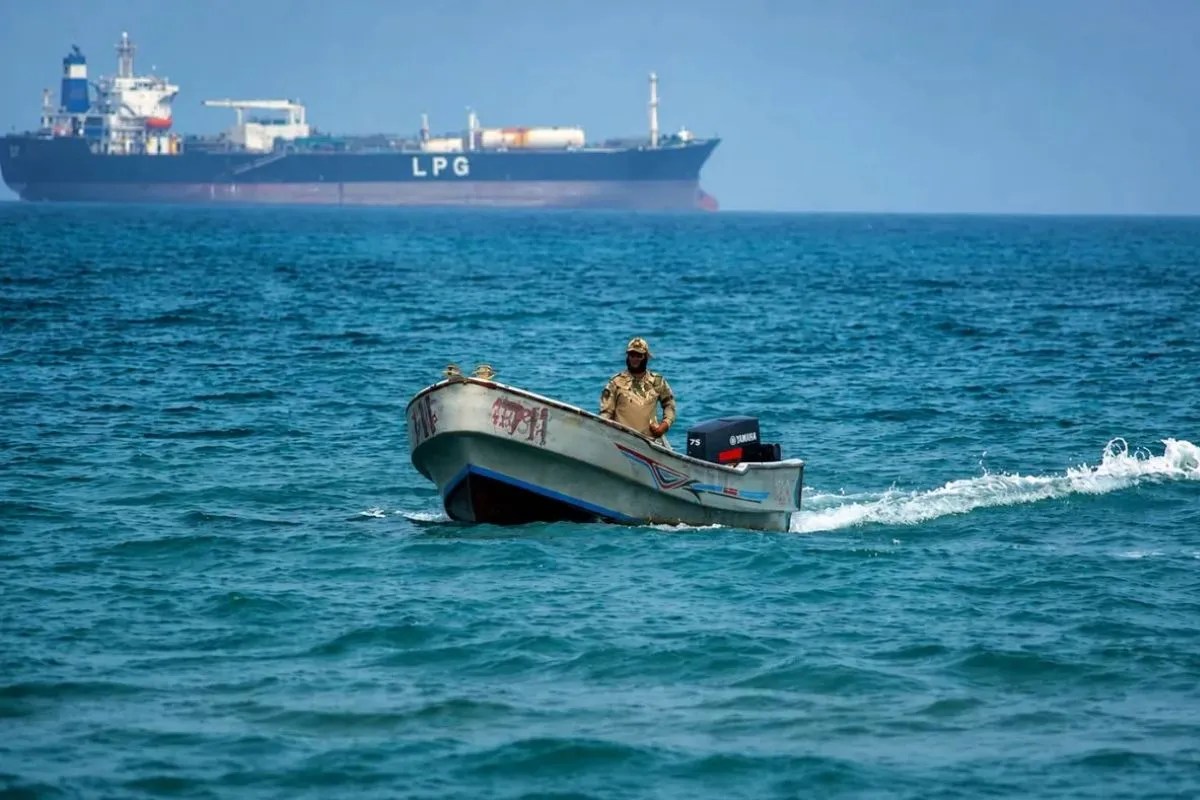
On a stretch of water where ancient trade routes cross paths with modern desperation, the horizon holds its breath. Imagine standing on the bridge of a commercial freighter, staring out into the vast, indifferent blue of the Arabian Sea near Yemen. The air is thick with salt and the low hum of the engine. For days, the crew has seen nothing but open water and the occasional distant shadow of a tanker.
Then, the shadows get closer.
Six armed men materialized out of the salt spray.
There were no warnings. No cinematic negotiations. Just the sudden, violent intrusion of reality into a routine voyage. In moments, the deck belonged to strangers with rifles and cold eyes. They did not come to negotiate. They came to take. Before the crew could sound a distress call that mattered, the vessel was seized. The course was brutally altered, turned away from its destination and pointed stubbornly toward the lawless coast of Somalia.
This was not a movie scene. This was a brutal reminder of the fragile thread holding global commerce together.
The Geography of Danger
Why here? Why now?
To understand the hijacking, you have to look at the map not as lines on paper, but as a choke point of human vulnerability. The waters off Yemen and Somalia form one of the most perilous maritime corridors on Earth. When political instability turns a nation into a vacuum, the sea nearby becomes a hunting ground.
For months, the region has been a tinderbox. Armed groups operating along the Yemeni coastline and pirate networks re-emerging from Somali havens have turned the Bab el-Mandeb strait and the surrounding Gulf into a high-stakes arena. Merchant ships, carrying everything from grain to electronics, are floating targets.
When a ship goes dark and gets dragged toward the Somali shoreline, a chain reaction begins thousands of miles away. Insurance rates spike. Supply chains shudder. Crews refuse to sign contracts for the route. And back home, families wait by phones that do not ring, wondering if their loved ones have become pawns in a distant geopolitical game.
Inside the Human Cost
Let us step into the shoes of the captain—a hypothetical composite based on dozens of similar maritime accounts, designed to illustrate a very real human truth. Let us call him Captain Vance.
Vance has spent thirty years at sea. He has weathered typhoons that bent steel masts like willow branches. He has navigated through dense fog where radar was his only friend. But nothing prepares you for the moment a group of armed intruders breaches the bridge.
It is a profound violation. A ship is a floating home, a micro-society built on trust, routine, and shared isolation. When that safety is shattered by violence, the psychological toll outlasts the physical danger. For the crew locked away in cramped quarters, every hour stretches into an eternity. The hum of the generator sounds like a countdown. Every shadow in the corridor looks like a threat.
We talk about supply chain delays in boardrooms with clinical detachment. We look at charts showing increased shipping costs as mere percentages on a graph. But behind every delayed cargo container is a crew sitting in the dark, staring at a bulkhead, wondering if they will see their children grow up.
The Broader Anatomy of Lawlessness
The seizure of this vessel off the coast of Yemen is a symptom of a much larger rot. When central governments collapse or are consumed by civil war, the maritime domain adjacent to them is left unprotected. International naval coalitions do their best, patrolling vast expanses of ocean with limited resources, but the sea is too big and desperation is too deep.
Somali piracy, once thought suppressed by years of concerted international naval patrols, has found a second wind. Why? Because the economic pressures ashore have not vanished; they have only worsened. When local fishermen find their livelihoods destroyed by illegal overfishing and economic collapse, the gun becomes an alternative currency. Pair that with the chaos of Yemen's ongoing conflicts—where armed factions operate with impunity—and you have a breeding ground for lawlessness.
It is a cycle born of neglect and nourished by instability. The six armed men who boarded that ship did not wake up wanting to be pirates or militants; they were products of an environment where survival requires predation.
The Long Shadow on the Horizon
As the hijacked ship slips closer to the Somali coast, the international community scrambles. Diplomatic channels open. Intelligence agencies track satellite beacons. Navies reposition assets.
Yet, for all our technology, for all our satellite imagery and radar tracking, the fundamental vulnerability remains. We live in a globalized world that relies almost entirely on the ocean to feed its economies, yet we treat the maritime commons as an afterthought.
The hijacking in the Arabian Sea is not an isolated incident. It is a warning flare. It tells us that as long as poverty, war, and political vacuum persist on land, the sea will bear the cost.
The sun dips below the horizon, painting the water in shades of bruised purple and gold. Somewhere out there, off a coast scarred by decades of conflict, a stolen ship anchors in the dark, its lights extinguished, waiting for a ransom that will buy more than just freedom—it will buy time until the next inevitable storm.