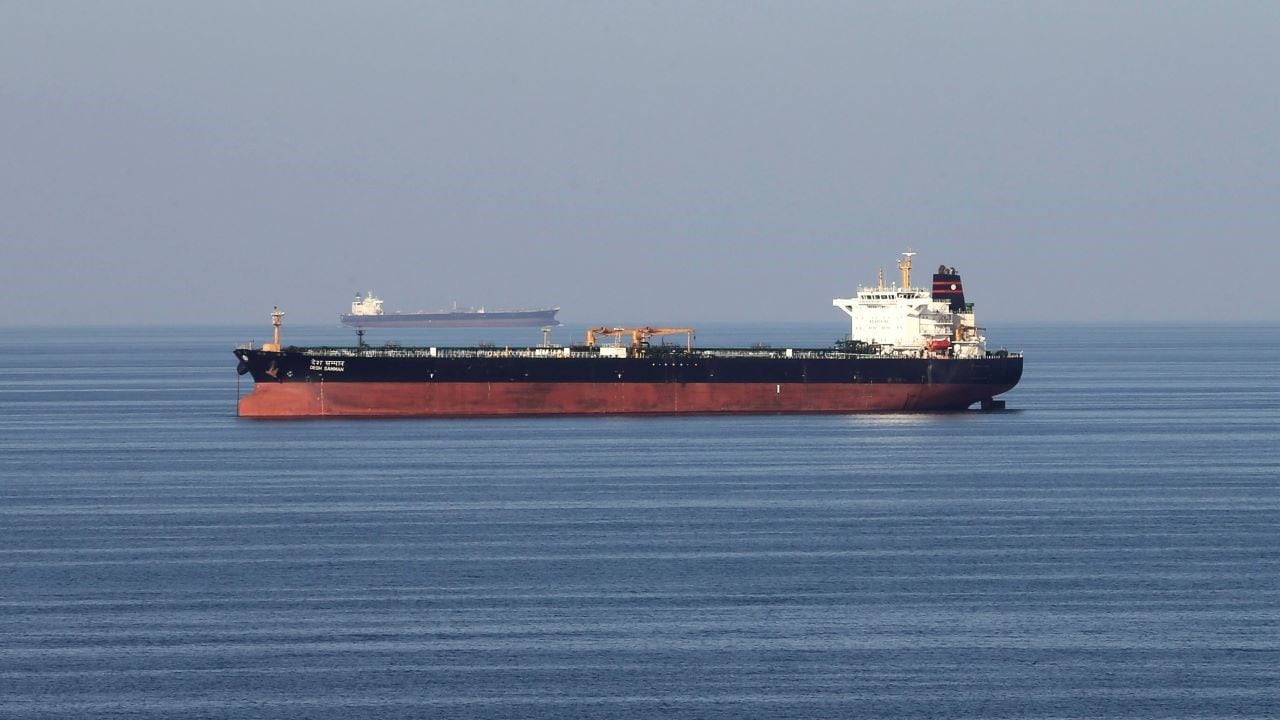
The steel walls of a product tanker are supposed to be a fortress. They are designed to withstand the crushing weight of the ocean and the volatile chemistry of the refined fuels they carry. But when a projectile slams into the hull in the predawn darkness near the Strait of Hormuz, those walls feel as thin as paper.
On Monday, the rhythm of global trade was shattered for the crew of the first Chinese-affiliated product tanker to be targeted in these waters. It wasn’t a tragedy of errors. It was a calculated message written in fire. For years, Chinese vessels were whispered to be the "ghosts" of the Gulf—immune to the geopolitical friction that saw Western ships seized or harassed. That immunity has evaporated.
The Illusion of the Ironclad Pass
In the shipping offices of Shanghai and the maritime hubs of Singapore, there was a long-standing, unspoken confidence. While the world watched Houthi rebels or regional factions intercept vessels linked to Israel, the United Kingdom, or the United States, Chinese-flagged or managed ships often broadcast their identity with pride. They were the neutral titans. They were the customers everyone needed.
This neutrality wasn’t just a diplomatic stance; it was a shield. It allowed the flow of energy to remain steady even as the surrounding geography became a tinderbox. But maritime security is a fragile architecture. When the first report hit the wires via Caixin, the reality for every merchant mariner changed.
The Strait of Hormuz is a choke point that handles roughly one-fifth of the world's liquid petroleum. Think of it as a jugular vein. If you pinch it, the entire global economy feels the lightheadedness of rising prices and supply shocks. When a Chinese ship is hit, the pinch becomes a puncture.
A Midnight Watch in the Hot Zone
Consider a third officer on watch. Let’s call him Chen. He is thousands of miles from home, standing on a bridge illuminated only by the dull red glow of radar screens and the faint shimmer of the Arabian Sea. His job is to track "targets"—other ships, fishing dories, navigation buoys.
But how do you track a threat that doesn’t show up on a transponder?
The attack on Monday wasn't a formal naval engagement. It was an ambush. The "product" in a product tanker—refined fuels like gasoline or jet fuel—is far more volatile than crude oil. An attack here isn't just a maritime incident; it is a potential floating inferno. As the alarm bells ring, the crew doesn't think about "geopolitical shifts." They think about the fire suppression systems. They think about the distance to the nearest lifeboat. They think about the fact that their flag, once a talisman of safety, is no longer a guarantee of passage.
The transition from "safe passage" to "target" happened in a heartbeat. This shift represents the decay of the "special status" China held in the region’s maritime security hierarchy.
The Fragile Logic of the Sea
We often treat global trade like a mathematical equation. X amount of fuel leaves Port A and arrives at Port B. We assume the lines on the map are permanent. They aren't. They are drawn in water and maintained by the belief that the cost of interference is too high.
Why attack a Chinese ship now? The logic is chilling. By striking a vessel belonging to a nation that has historically remained on the sidelines of these specific maritime skirmishes, the attackers are signaling that no one is safe. If the world’s largest trading nation can’t protect its tankers, the premium for every barrel of oil on the planet goes up.
Insurance companies are the first to react. They don't care about narratives; they care about risk. When a Chinese tanker is hit, the "war risk" premiums for the region don't just tick upward—they leap. This is the hidden tax on your morning commute and the heating in your home. We are all tethered to the vibrations of that hull in the Strait of Hormuz.
The Weight of the Cargo
The Caixin report was brief, as these things often are. It listed the time, the general location, and the affiliation. But it omitted the sheer psychological weight of the event.
For decades, the maritime industry has operated on the principle of "Freedom of Navigation." It sounds like a dry, legalistic phrase. In reality, it is the only thing standing between a functioning world and a chaotic scramble for resources. When a tanker is attacked, that principle is revealed to be a consensus that is rapidly being withdrawn.
The crew on that ship didn't sign up to be pawns in a regional power play. They signed up to move fuel. They are technicians, engineers, and cooks. When the projectile struck, the "human element" became the only thing that mattered. The fear in the engine room is the same regardless of the flag flying on the mast.
Beyond the Horizon
The real danger isn't just the damage to one ship. It is the precedent. If the Strait of Hormuz becomes a place where even the most powerful neutral players are fair game, the "ghosts" of the Gulf will have to find new routes.
Diverting a tanker around the Cape of Good Hope adds weeks to a journey. It burns thousands of tons of extra fuel. It delays the arrival of the chemicals needed for medicine or the gasoline needed for transport. The world gets bigger, slower, and much more expensive.
We have spent years convincing ourselves that the digital age has made geography irrelevant. We believe that because we can send an email in a millisecond, the physical movement of atoms is just as simple. Monday was a violent reminder that we are still a civilization built on the backs of steel giants moving through narrow, dangerous waters.
The smoke clearing from the deck of that tanker isn't just a local problem. It is a signal fire. It tells us that the old rules—the ones where certain flags bought you a quiet night—are being rewritten in real-time.
Somewhere in the Gulf, another crew is preparing for the midnight watch. They are checking their monitors, looking out into the dark, and wondering if the silhouette on the horizon sees them as a ship or a statement. The ocean is vast, but the paths through it are narrowing every day.
The silence that follows an explosion is the loudest sound in the world.