The Silence of the Open Sea
Out in the North Natuna Sea, where blue water stretches until it meets the hazy rim of the sky, the silence is deceiving.
To a casual observer on a passing cargo ship, the ocean looks empty, vast, and indifferent. But beneath that calm surface, and across the airwaves that hum through the navigation towers of offshore rigs, a high-stakes standoff plays out in real time. Metal against metal. Sovereignty against pressure.
For years, the waters around Indonesia’s Natuna islands have served as the front line of an invisible war of nerves. It is an area rich in natural gas, precisely where the sovereign economic rights of a nation collide directly with distant, sweeping territorial claims.
When offshore operations pause in places like this, it is rarely just about logistics or market conditions. It is about power. And when those operations restart, the message echoes far beyond the coordinates of the drill site.
Steel on the Horizon
Picture an engineer standing on the deck of a deepwater platform. Let us call him Hendra.
Hendra is not a diplomat. He does not draft international treaties or analyze maritime law in air-conditioned offices in Jakarta or Beijing. His job is practical and immediate: monitor pressure valves, manage drill bits, and ensure the safety of a crew operating miles from the nearest hospital.
Yet, when Hendra looks out toward the horizon, the horizon looks back.
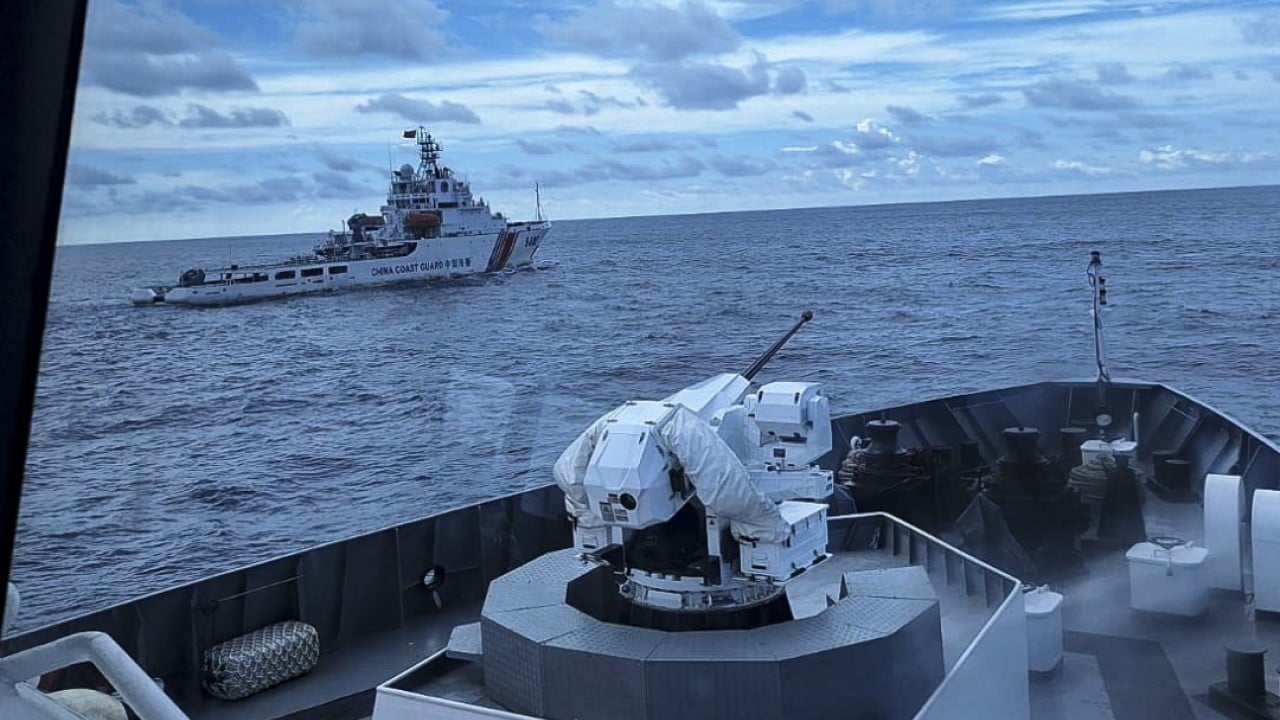
In these waters, it is not uncommon for foreign coast guard vessels to loom in the distance. They do not fire shots. They do not need to. Their presence alone is a statement—a heavy, silent reminder that someone else is watching, recording, and asserting ownership over the seabed below.
"You learn to live with the shadows on the water," a veteran offshore logistics worker once remarked about working in disputed maritime zones. "You focus on the pressure gauges, but your eyes always drift back to the horizon."
For a long time, the pressure off the Natuna coast was enough to pump the brakes on development. The gas field known as Tuna Block—a vital reserve holding hundreds of billions of cubic feet of natural gas—became a flashpoint. Neighboring superpowers made their displeasure clear. Official notes were sent. Coast guard hulls glided through the contested zone. The implied threat was obvious: tap these reserves, and face the consequences.
So, the machinery slowed. The noise faded. The project waited in limbo.
The Geography of Contradiction
To understand why a few underwater gas wells matter so much, one has to look at the map through two entirely different lenses.
- The Legal Framework: Under international law—specifically the United Nations Convention on the Law of the Sea—Indonesia holds undisputed Exclusive Economic Zone rights over the North Natuna Sea. The seabed belongs to the archipelago's economic sphere.
- The Overlapping Claim: Sweeping across nearly the entire body of water is a historic claim, marked by broad, sweeping lines on foreign maps, claiming historical rights over the same sea floor.
This is the central contradiction. On paper, the rules are clear. On the water, power creates its own geometry.
When a small or medium-sized nation wants to develop its own natural resources within its legal rights, it faces a harsh calculation. Is the energy security worth the geopolitical friction? Is the financial reward worth the risk of escalation?
For a period, caution prevailed. Energy companies calculated the risk, watched the foreign patrol boats, and held their breath.
The Decision to Turn the Valve
Then came the shift.
Decisions of this magnitude do not happen overnight in press releases. They build slowly in government corridors, energy boardrooms, and strategic summits. Indonesia chose to push forward. The green light was given to restart development in the Tuna Block.
Why now? Because energy is no longer just a commodity; it is survival.
Domestic demand for power is surging across Southeast Asia. Developing nations cannot afford to leave billions of dollars worth of clean-burning natural gas buried under the sand simply because a larger neighbor frowns upon it. To leave the gas in the ground is to accept a permanent economic tax paid to fear.
Restarting the project was a calculated declaration: rights that are not exercised are rights that are eventually lost.
Consider the sheer physical reality of what restarting a dormant offshore gas project entails. It is not like turning a key in an ignition.
- Rig Deployment: Massive semi-submersible rigs must be towed into position, anchored by steel cables thick as tree trunks into the shifting seabed.
- Supply Lines: A constant pulse of support vessels must brave open water, carrying pipe, fuel, food, and specialized crews.
- Security Patrols: Naval vessels must maintain a persistent, quietly defensive posture nearby, serving as a physical guarantee that work will continue uninterrupted.
Every pipe laid on the sea floor becomes a line drawn in the sand.
The Human Reality Beneath the Geopolitics
It is easy to analyze these developments through the cold lens of statecraft—as a game played with giant chess pieces across a map of Asia. But statecraft is ultimately lived out by human beings.
It is lived out by the supply boat captains steering through heavy swells, knowing that a foreign hull might cross their bow to send a message.
It is lived out by the roughnecks working 12-hour shifts in the stifling tropical heat, welding pipe while radar screens sweep the surrounding waves for uninvited guests.
It is lived out by local fishing communities in the Natuna islands, whose small wooden boats share the water with heavy industrial steel and naval grey hulls. For these fishermen, the restarting of energy projects brings a mixed sense of reassurance and anxiety. Reassurance that their nation is standing its ground; anxiety that the sea they depend on for their daily catch is becoming increasingly crowded with conflict.
The push to extract gas from the Tuna Block is a test case for the entire region. It asks a fundamental question that dozens of coastal nations are watching closely: Can international maritime rules hold firm against sheer geopolitical weight?
Moving Heavy Metal
The physical engineering required to pull gas from beneath hundreds of meters of ocean is extraordinary. The political engineering required to do it under the gaze of a rival superpower is even more complex.
When the drills begin to turn again in the North Natuna Sea, they break through layers of silt, rock, and history. The grinding sound of the drill head penetrates deep into the earth, anchoring a nation's claim not through speeches or diplomatic notes, but through infrastructure.
The geopolitical pressure has not vanished. Foreign patrol vessels still steam through the blue waters. Diplomatic channels remain taut. The quiet standoff continues day after day, wave after wave.
Yet the work goes on. The industrial pulse of the platform echoes across the open ocean, steady and deliberate, breaking the long silence of the sea.