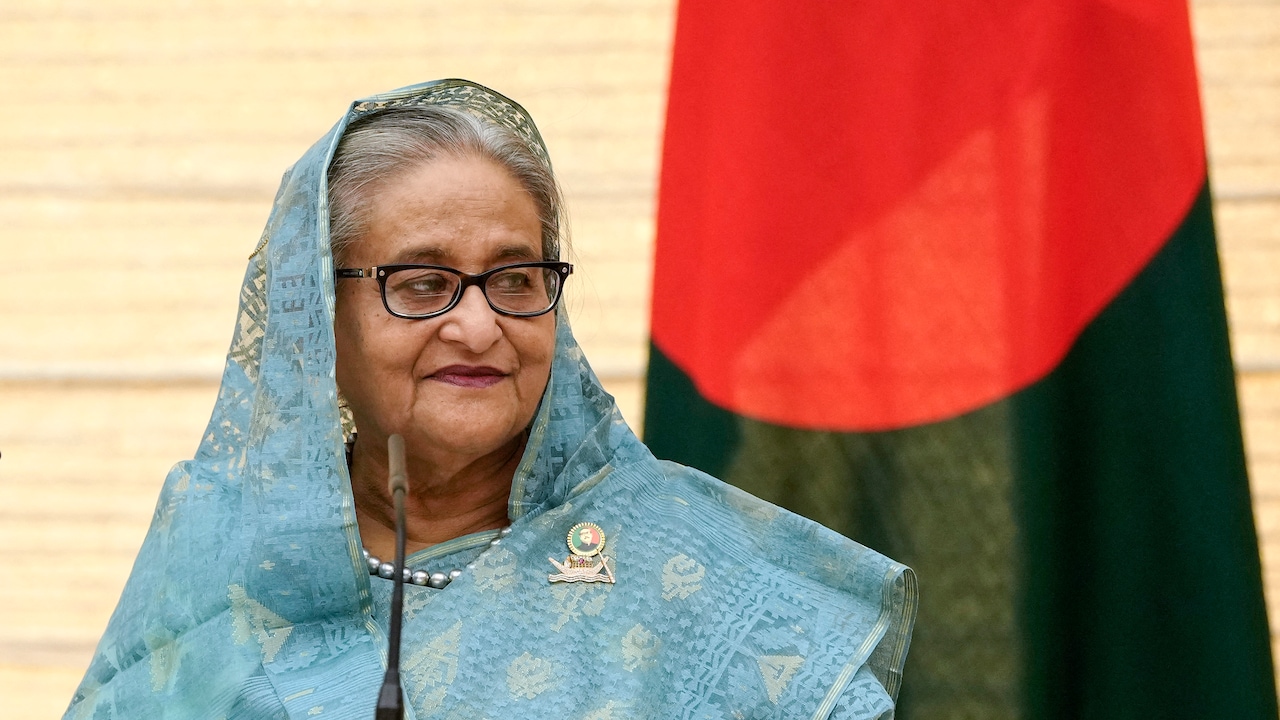
The political future of South Asia remains gripped by a single pressing question. When a deposed leader sitting in exile publicly declares an imminent comeback despite severe legal threats, people pay attention. Former Bangladesh Prime Minister Sheikh Hasina has made headlines by telling NDTV that her return to her home country is happening.
If you have followed the rapid deterioration of political stability in Dhaka since the August 2024 uprising, her recent statements raise massive questions about what comes next. Let's break down what is actually driving her narrative, how she responds to the mounting legal pressure, and why her base continues to matter.
Defiant Stance Against Legal Rulings
Hasina isn't backing down from the controversies surrounding her dramatic exit. Operating from her shelter in India, she faces grave legal challenges, including a death sentence handed down in absentia by the International Crimes Tribunal. Yet, her response to the media remains defiant.
She dismisses these rulings as entirely politically motivated. According to her public addresses and exclusive commentary, the current interim administration led by Muhammad Yunus is systematically dismantling democratic frameworks. She argues that the judicial actions against her and members of the Awami League are designed to clear the political board completely.
Instead of viewing exile as an end to her political career, she frames her absence as a temporary interruption. Her narrative leans heavily on the idea that her political survival is tied directly to the survival of the nation's foundational ideals.
Rethinking the 2024 Mass Protests
A major point of contention centers on how history will record the July and August 2024 protests that forced her out. Mainstream media and her opponents characterize the movement as a spontaneous, student-led democratic awakening against authoritarian governance.
Hasina vehemently rejects this framing. In her view, the protests were never a purely peaceful student gathering. She points to coordinated campaigns, structural violence, and external influence as the true drivers behind the regime change. By framing the uprising as a hijacked movement, she attempts to invalidate the legitimacy of the current interim leadership.
Whether people believe this counter-narrative depends heavily on where they stand politically. However, her refusal to accept the popular uprising as organic ensures a deeply polarized debate over accountability and state security.
The Resilience of the Awami League
Critics often assume that a party stripped of power and facing intense crackdowns will simply evaporate. Hasina argues the exact opposite.
She maintains that the Awami League is deeply embedded in the grassroots soil of the country. Having survived decades of bans, military interventions, and political turbulence throughout its history, the organization views persecution as a test of endurance.
- Grassroots Roots: She insists that local party structures remain active underground or under severe constraints.
- Ideological Identity: The party positions itself as the sole true guardian of the 1971 Liberation War spirit.
- Historical Precedent: Past bans on the party ultimately failed to permanently erase its political footprint.
Even with top leadership scattered or imprisoned, the institutional memory of a seventy-seven-year-old political machine does not vanish overnight.
Geopolitical Realities and Regional Stability
You cannot examine Hasina's potential homecoming without looking at the regional chessboard. Her refuge in India creates ongoing diplomatic friction with the current administration in Dhaka. New Delhi views its obligations through a lens of historical ties and regional stability, while interim leaders in Bangladesh monitor these developments with suspicion.
Furthermore, concerns regarding the safety of religious minorities—particularly Hindu communities—remain a central talking point in Hasina's messaging. She repeatedly warns that the suppression of her party opens the door to extremist elements, threatening the secular fabric of the nation.
The friction between New Delhi and Dhaka complicates any immediate timeline for her physical return. Security analysts note that an actual homecoming under current legal decrees would trigger immediate civil unrest, testing the limits of local law enforcement and military restraint.
The declaration of a dramatic return serves multiple purposes. It keeps her supporters energized, challenges the legitimacy of the interim government, and ensures her voice remains central to any future transition of power.
Expect the political pressure inside Bangladesh to escalate as the year progresses. Keep a close eye on how local courts handle political bans and whether international diplomatic pressure forces any compromises on upcoming electoral timelines.