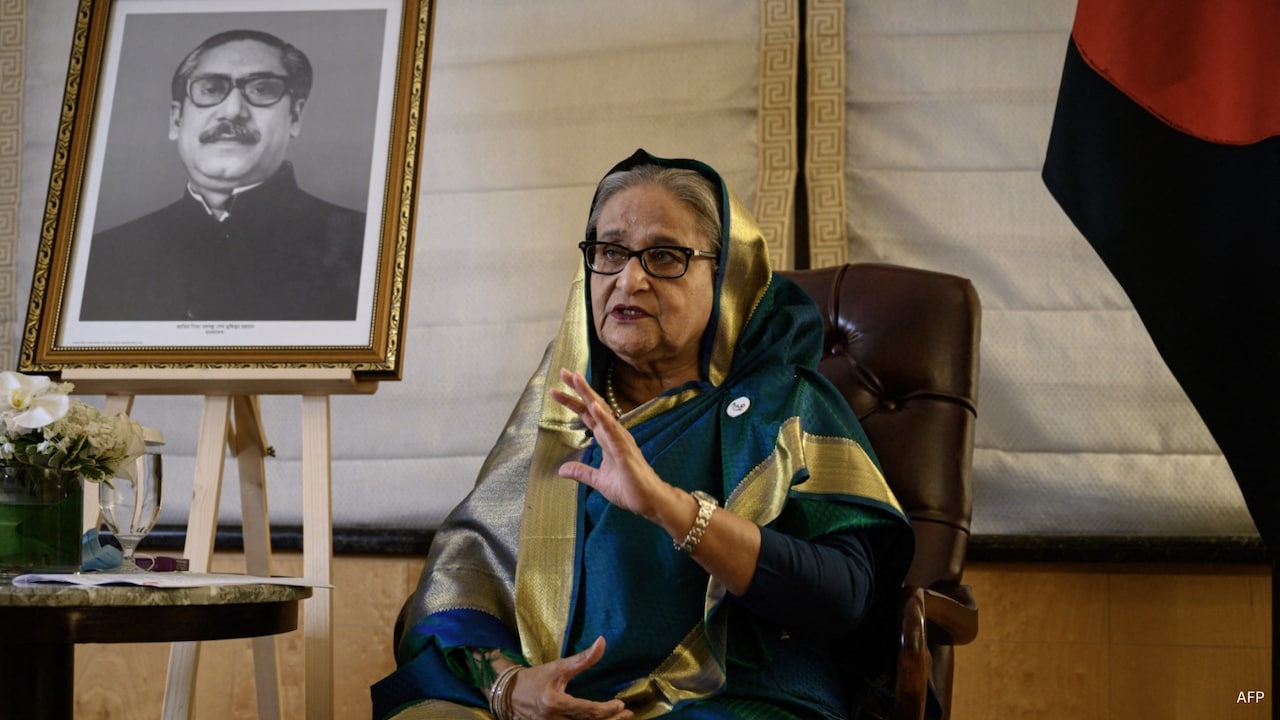
Power shifts overnight. Statues fall. Leaders flee. Sheikh Hasina boarded a military transport aircraft and left Bangladesh behind during a boiling crisis in August 2024. Most political analysts assumed that was the end of an era. They thought she would quietly slip into exile, fade into the history books, and leave her opponents to rebuild the state from scratch.
They misread her entirely.
When Hasina declared, "Whatever fate awaits me, I will return to my people," she wasn't just talking to a handful of loyalists. She was throwing down a gauntlet. If you want to understand where South Asia is heading, you have to look past the dramatic footage of crowds storming the Ganabhaban. You have to look at dynastic loyalty, generational grievances, and the deep roots of the Awami League.
Let's strip away the noise. What's actually happening here? Why does a deposed prime minister think she can bounce back from a historic uprising?
The Anatomy of an Exile
Exile isn't new to the Hasina family. History repeats itself in brutal ways. Back in 1975, a military coup wiped out almost her entire family, including her father and founding leader Sheikh Mujibur Rahman. She survived only because she happened to be traveling in Europe at the time. She spent six long years in exile in India before returning home in 1981 to take charge of a fractured party.
She knows how to play the long game.
When people ask if she can ever return to power, they forget how resilient political dynasties are in this region. The Awami League has spent decades building grassroots infrastructure. Millions of people trace their family's security, economic standing, or political identity directly to the party's tenure. You don't just erase that with a single protest movement, no matter how massive it was.
Yet, the anger that drove her out is entirely real. Let's not sugarcoat it. Student protests over government job quotas snowballed into a massive national reckoning over authoritarian governance, corruption, and shrinking democratic space. Hundreds of lives were lost during the crackdown. Police fired on crowds. The public's patience snapped.
When you govern with an iron fist for fifteen straight years, you create a lot of enemies.
What the Headlines Miss
Most international coverage focuses purely on the dramatic climax of August 2024. Tanks in the streets. Curfews. Helicopters. But foreign media routinely misses the day-to-day texture of local politics in Dhaka.
Economic anxiety drives everything. Inflation has been biting hard across South Asia. Young people graduate college with high hopes and find zero stable job prospects. When the state controls public sector employment through a rigged system, frustration boils over. The quota reform movement wasn't just about jobs. It was a pressure valve for a generation that felt completely locked out of the country's economic growth story.
Hasina's administration failed to read that room. They relied on heavy-handed policing instead of political reform. That tactical blindness is what ultimately brought her down.
Think about how political loyalty works in high-stakes environments. It's tribal. It's emotional. When Hasina vows to return, she's speaking directly to that emotional core. She's reminding her base that she is a survivor of unimaginable tragedy. To her supporters, she is the sole guardian of her father's secular, nationalist legacy.
The Interim Government Challenge
Right now, an interim administration led by Nobel laureate Muhammad Yunus is trying to steer the ship. They face an impossible balancing act. They need to prosecute human rights abuses, stabilize the economy, and rewrite the rules of engagement—all while keeping a restive military and competing political factions from tearing the country apart.
Fixing a broken institutional framework takes years, not months. The police force needs a complete overhaul. The judiciary has to prove its independence.
If the interim administration fails to deliver visible economic relief and fair democratic reforms, public nostalgia for the old days will kick in much faster than anyone expects. That is Hasina's opening.
Reading Between the Lines of Her Strategy
Why make such a defiant statement from abroad? Because silence is death in politics. If a leader goes quiet, their supporters scatter to find new patrons. By signaling that her story isn't over, she keeps her network alive. She forces her opponents to keep looking over their shoulder.
Legal battles are already piling up. Murder charges, corruption inquiries, and international pressure hang over her. Extradition treaties between neighboring countries are notoriously messy and driven by geopolitical chess moves rather than simple justice. India, where she sought refuge, has its own complex strategic interests to protect. They can't hand her over easily, nor can they openly back a political comeback without alienating the new leadership in Dhaka.
It is a diplomatic tightrope walk.
Moving Past the Clichés
Stop listening to commentators who treat politics like a Hollywood movie where the villain gets banished forever. Real life is messier.
Power vacuums never stay empty for long. The Bangladesh Nationalist Party and rising Islamist factions are currently wrestling for dominance in the streets and boardrooms. But fractured coalitions rarely hold together under pressure. When infighting starts, the opposition looks less like a stable alternative and more like a temporary arrangement.
That is when the calculus shifts back to the exiled leader.
You have to look at the numbers. The Awami League represents a massive slice of the popular vote. Even in defeat, a political machine of that size does not simply vanish. It goes underground. It reorganizes. It waits for the new government to stumble.
And governments always stumble.
The Road Ahead
What happens next depends entirely on whether the current authorities can deliver a credible, inclusive election. If ordinary citizens feel safe, prosperous, and represented, Hasina's threats of a return will ring hollow. Her voice will fade into background noise.
If the economy craters and political violence returns, her defiant words will start to look like prophecy.
Pay close attention to how the youth movement evolves. They broke the old status quo, but building a sustainable political alternative requires compromise, organization, and patience—qualities that are notoriously scarce in times of revolution.
History rarely moves in a straight line. The chapter on Sheikh Hasina is paused, but the ink is still wet.