When you think of Greece, you probably think of sun-drenched islands, turquoise waters, and ancient ruins baking in the summer heat. You don't think of snow. But look up from the beaches toward the spine of the country, and you'll find a massive network of peaks that locals know intimately. Or at least, they used to.
The high-altitude reality of Greece is shifting fast. The shrinking snowfall on Greece mountains isn't just a bummer for ski enthusiasts. It's an existential crisis for local businesses, a massive threat to the national water supply, and a psychological gut punch to communities that have lived alongside these peaks for centuries. The numbers are out, and honestly, they're terrifying.
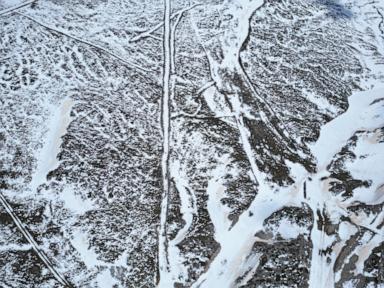
A major study led by researchers at the University of Cambridge, using advanced satellite tracking, revealed that snow cover across Greece's mountains has plummeted by 58% over the past four decades. That's more than half the snow gone since the mid-1980s. Even worse, the decline has picked up speed since the turn of the century. Winter is losing ground, starting later and ending earlier, leaving a wake of economic anxiety behind.
The Broken Ski Season and the Mountain Economy
Ski resorts in Greece have always operated on a razor-thin margin of error. Unlike the Swiss Alps, Greek peaks like Parnassos, Kalavryta, and Mount Olympus rely heavily on volatile Mediterranean weather patterns. Now, those patterns are turning entirely hostile.
Ski centers sitting below 1,900 meters saw their snow seasons shrink by roughly 36% in recent decades. Think about what that means for a small business owner in a mountain village like Arachova. You have a boutique hotel, a traditional taverna, or a gear rental shop. Your entire business model relies on a four-month window of winter tourism to sustain you for the whole year. When that window shrinks to a few sporadic weeks, the numbers simply don't add up anymore.
Resort operators are panicking. Some try relying on artificial snowmaking, but that requires freezing temperatures and massive amounts of water. Neither of those are readily available. When the temperatures stay stubbornly high, the snow guns just spray expensive mud. It's a losing battle. The financial strain is trickling down to seasonal workers, local agricultural producers, and regional tax revenues.
The Downstream Water Crisis
The economic damage doesn't stop at the ski lifts. The true danger of shrinking snowfall on Greece mountains lies in what happens when that snow melts—or rather, when it doesn't.
Mountains act as natural water towers. Snowpack functions like a slow-release battery for the environment. It accumulates during the winter and melts gradually through the spring and summer, steadily feeding groundwater reserves, rivers, and agricultural valleys. When precipitation falls as rain instead of snow, the water flashes through the landscape immediately. It causes flash floods in the winter and leaves nothing but bone-dry riverbeds by July.
Greece already battles severe summer water shortages, especially with the relentless influx of millions of tourists during the peak summer months. If the mountain snowpack continues to evaporate into history, the country faces a brutal crunch. Agriculture, which sucks up the lion's share of Greece's freshwater, will face strict rationing. Crops like olives, cotton, and fruits will suffer, driving food prices up and pushing farmers out of business.
The Psychological Toll on Alpine Communities
It's easy to look at this strictly through a financial lens, but the human element is incredibly heavy. Talk to elders in the mountain villages of Epirus or Macedonia. They speak of a profound sense of loss.
The cultural identity of these regions is deeply tied to winter. Local festivals, culinary traditions, and folklore are built around the rhythm of the snow. When winter turns into a lukewarm extension of autumn, it disorients the collective psyche of these towns. People feel disconnected from their own land. It breeds a quiet, simmering anxiety about the future. Young people see no viable path forward in their ancestral homes, accelerating the painful drain of rural populations toward Athens and Thessaloniki.
How to Adapt Before the Snow Disappears Completely
The era of relying on predictable winter sports in Greece is over. The data tells us it's not coming back. If mountain communities want to survive, they need to pivot immediately. Here are the practical, non-negotiable next steps for the region.
- Diversify into four-season adventure tourism. Mountain towns must stop marketing themselves solely as ski destinations. Shift the budget toward high-quality hiking infrastructure, mountain biking trails, and rock climbing routes. The climate is still gorgeous for outdoor activities; it's just not suitable for skiing.
- Invest in aggressive water harvesting infrastructure. Because the natural snow storage is failing, regional governments must build small-scale check dams and managed aquifer recharge systems to capture fast-moving winter rainfall before it runs off into the sea.
- Promote agritourism and culinary experiences. Use the unique mountain geography to draw food and wine travelers year-round. This keeps revenue flowing to local producers regardless of whether the peaks are white or green.
- Upgrade accommodation for remote workers. Turn empty winter chalets into long-term hubs for digital nomads who value fresh mountain air and reliable internet over ski passes.
The mountains are changing, and the old ways of making a living are melting away with the snow. Survival means facing the data head-on and rebuilding the mountain economy from the ground up.
:max_bytes(150000):strip_icc()/GettyImages-700832601-5bb602c0c9e77c002609fe08.jpg)