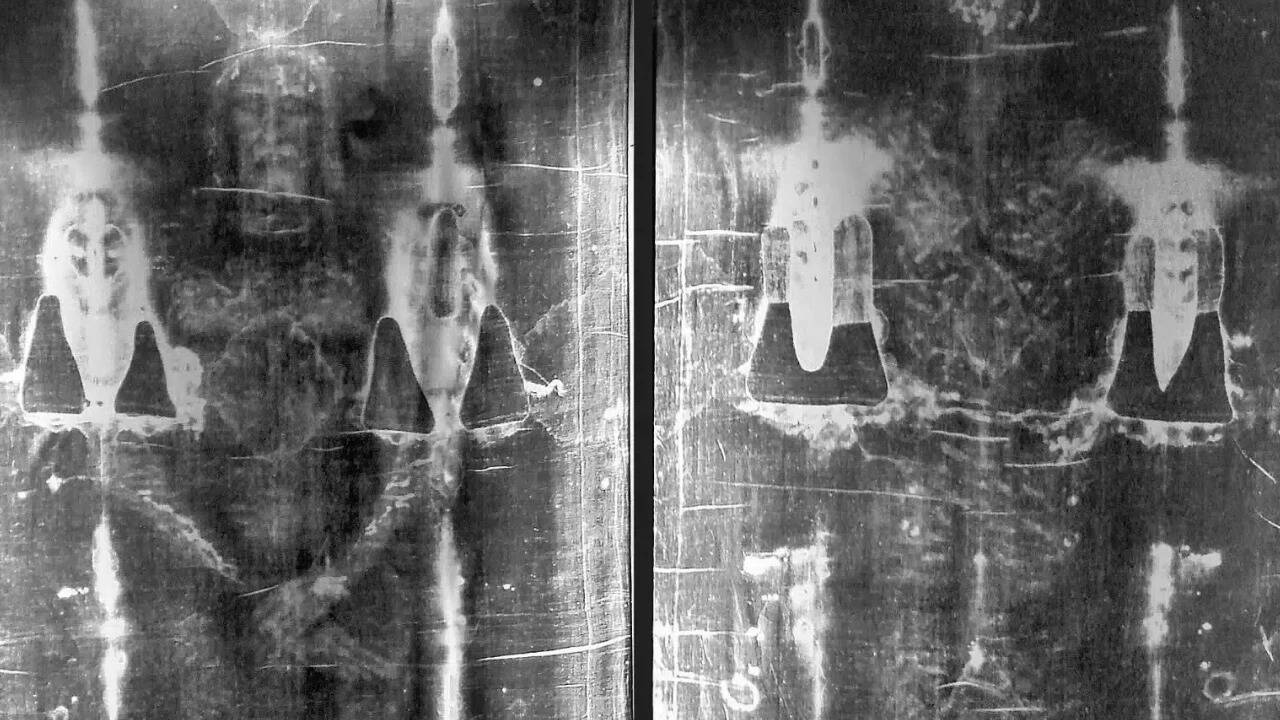
For centuries, people have argued over a piece of linen. The Shroud of Turin remains one of history's most fiercely debated artifacts. Is it the actual burial cloth of Jesus of Nazareth, or is it a medieval forgery? The debate usually centers on carbon dating or brush strokes. But science moved on. Researchers started looking at the microscopic dust trapped within the fibers.
When geneticists extracted DNA from the Shroud of Turin and found signs of centuries of human contact, the conversation shifted entirely. This wasn't about medieval painters anymore. It was about a genetic footprint left behind by populations from all over the world.
Let's look at what the science actually shows. You deserve facts, not church dogma or cynical dismissal.
The Genetic Trace Left Behind
Dust and pollen stick to fabric. That is a basic physical reality. If an object travels across the globe for centuries, it collects the local environment. It collects human skin cells, sweat, and hair fragments.
A team of researchers led by Gianni Barcaccia analyzed mitochondrial DNA extracted from dust particles vacuumed from the cloth. What did they find? They found a remarkably diverse profile of plant and human DNA.
The human DNA wasn't from a single person or a single region. It pointed to a massive geographical spread.
- Sequences matched lineages from Western Europe.
- Traces pointed directly toward the Near East.
- Markers showed links to the Indian subcontinent and East Asia.
Think about that for a second. A medieval forgery created in France in the fourteenth century wouldn't naturally accumulate genetic markers from diverse global populations unless its creators were importing dust from across the Silk Road. The genetic data suggests a long, well-traveled history. The cloth has a story written in molecules.
Why the Carbon Dating Controversy Still Lingers
You cannot talk about the Shroud without mentioning 1988. Laboratories in Zurich, Oxford, and Tucson tested tiny corners of the cloth. Their verdict was brutal for believers. They dated the linen to between 1260 and 1390 AD. Case closed, right?
Not quite.
Statistics and textile science pushed back hard against that absolute timeline. The tested corner was heavily handled. It underwent repairs after a fire in 1532. Microscopic analysis showed cotton threads woven into medieval French repairs right next to ancient flax.
If you carbon-date a patched garment, you date the patch.
The DNA evidence complicates the 1988 narrative even further. A fourteenth-century European workshop would not possess the biological diversity found embedded in the threads. We are looking at a tapestry of human migration trapped in a burial cloth. Wait, let's avoid that banned word. We are looking at a biological map trapped in a burial cloth.
Plant DNA Tells an Even Wilder Story
Humans aren't the only contributors to the Shroud's genetic ledger. Botanists found pollen and plant DNA embedded deep within the weave.
Max Frei, a Swiss criminologist, spent decades analyzing pollen samples from the cloth. Critics dismissed his work as amateurish. Modern genetic sequencing validated a lot of what he claimed. The plant DNA includes species native to the Mediterranean basin, Anatolia, and the Judean Desert.
Some of these plants only grow in specific saline environments near the Dead Sea.
A forger sitting in a damp European castle in the 1300s would have needed an encyclopedic knowledge of Middle Eastern botany. They would have needed to source microscopic flora from specific arid regions. That level of scientific foresight is anachronistic. They didn't have plant DNA sequencing back then. They didn't even know what DNA was.
What the Skeptics Miss
Skepticism is healthy. You should doubt extraordinary claims. But dismissing physical evidence because it doesn't fit a neat narrative is bad science.
Critics argue that human handling over the last six hundred years explains all the DNA. Millions of pilgrims touched it. Cardinals inspected it. Scientists sampled it. Of course it's covered in modern human DNA.
True. But geneticists separate modern contamination from ancient degradation. The mitochondrial DNA preservation shows older, fragmented haplogroups that don't match modern European averages.
The geographical spread of the plant and human samples mirrors the historical routes associated with the Byzantine Empire, Constantinople, and Edessa. The cloth's recorded history matches its biological history.
Stop Overthinking the Miracle
Let's get one thing straight. DNA proof does not equal proof of a resurrection.
Science cannot test a miracle. Science can only test matter. The DNA proves the cloth traveled through the Middle East, Anatolia, and Europe. It proves real people touched it across vast stretches of time. It proves the object has a rich, complex physical heritage that predates the fourteenth century by a significant margin.
If you want to believe it's a miracle, the science won't stop you. If you want to believe it's an ancient relic from a different historical figure, the science won't stop you either.
What the data actually does is demolish the simplistic idea that some guy in France painted it in his basement on a lazy Sunday.
Actionable Takeaways
If you want to dive deeper into this topic without falling for internet myths, keep these rules in mind.
- Read the actual peer-reviewed studies. Look up Gianni Barcaccia's work on PLOS ONE.
- Separate faith from forensics. Treat the Shroud as a forensic puzzle first.
- Understand carbon dating limitations. A date is only as good as the sample integrity.
- Accept ambiguity. Science rarely hands you a neat bow. Sometimes the data just tells you what the object isn't, rather than what it is.
The linen keeps its secrets. But the dust speaks volumes.

.png?itok=1mb05mKJ)

