The sea does not announce its thefts. It takes a grain of sand at high tide, a sliver of cliff after a winter gale, and it says nothing. For centuries, the deep floor south of American Samoa has kept its counsel. Down there, where sunlight is an impossible rumor and the pressure would crush a human ribcage like dry pine, the mud holds something older than kingdoms. It holds nodules. Black, metallic potatoes strewn across the abyssal plains, baked over millions of years by minerals drifting down from the surface like slow snow.
Nickel. Cobalt. Copper. Manganese. For a different perspective, consider: this related article.
Names of power. Names of the future.
To touch them, you do not need to dive. You need a pen, a map, and a government willing to look away from the horizon and down into the dark. Similar coverage regarding this has been published by TIME.
Listen.
Step into the shoes of a fisheries observer standing on the deck of a longliner five hundred miles off Pago Pago. The wind smells of salt and rusted wire. The Pacific here is not blue; it is an opaque, bruised violet that suggests bottomless depth. This observer, a man named Tiumalu whose grandfather traded copra out of a wooden outrigger, watches the horizon with a quiet ache. He has spent his life watching boats come from the north—ships flying flags of distant empires, carrying gear that smells of fresh paint and ambition. They come for tuna. They come for the surface.
Now, they are looking lower.
The United States government has quietly unfurled a map. Thirty-one and a half million acres. Read that number again. Thirty-one and a half million acres of ocean floor, an expanse larger than many states, designated for lease. A proposal born in quiet federal offices, far from the salt spray, designed to clear the path for deep-sea mining. The official documents call it resource security. They call it strategic independence from foreign supply chains.
They do not talk about the dust.
Imagine sitting in a submersible three miles down. Outside the thick acrylic viewport, the floodlights catch a landscape of astonishing stillness. Ghostly white crabs scuttle across fields of manganese nodules. Sponges that look like glass chandeliers anchor themselves to ancient basalt. It is a slow world. A creature down here might live for centuries, growing an inch every hundred years, trusting in the permanence of the dark.
Then comes the tractor.
(Note: This is a hypothetical scenario drawn from current industry prototypes.) Visualize a machine the size of a three-story house crawling across the ooze on massive rubber treads. It scoops up the nodules, separates the heavy metal from the mud, and pumps the slurry up a four-mile pipe to a ship waiting on the surface. What goes down must come back up. The waste—a plume of fine sediment, heavy metals, and pulverized rock—is discharged back into the water column.
It does not drop straight down. Currents catch it. It drifts. It forms a vast, suffocating cloud that chokes the mid-water column, blinding filter feeders, raining down upon the fragile corals that took ice ages to build.
We have been here before. Every industrial revolution begins with the same promise of cleanliness. Coal was going to warm the hearth without smoke. Oil was going to save the whales. Every time, we traded the visible wilderness for an invisible poison.
The proponents of this lease plan argue necessity. They point to the green transition. They tell us that electric vehicle batteries require cobalt, that wind turbines require nickel, and that if we do not dredge the seabed of the Pacific, we will be forced to buy these metals from nations with dubious labor records and zero environmental standards. It is a persuasive argument. It is wrapped in the flag of progress.
Consider what happens next if that argument wins.
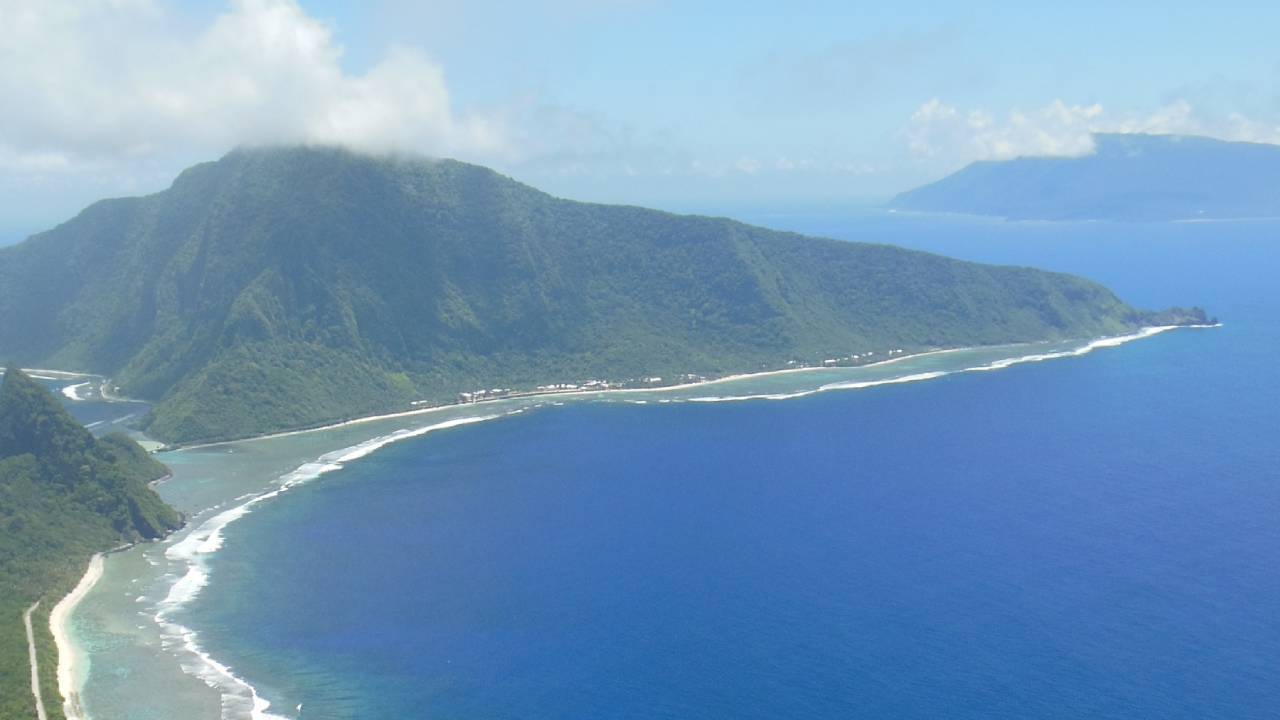
American Samoa sits at the edge of this vast expanse. Its people have a covenant with the ocean that predates written law. Fa'a Samoa—the Samoan way—is not merely a culture; it is an ecological philosophy rooted in stewardship. When the fish disappear, the culture frays. When the deep water is poisoned, the ghost travels up the food chain. Tuna do not respect lease boundaries. Sharks do not read federal registers.
To understand the scale of this, you have to abandon the map and look at the physics. The deep ocean is not a desert. It is the engine room of the planet. It sequesters carbon on a scale that terrestrial forests can only envy. It harbors microbial communities that pharmaceutical researchers are only beginning to understand, compounds that may one day cure diseases we currently accept as terminal.
And yet, the lease plan moves forward. Bureaucracy grinds with the inevitability of a glacier. Environmental impact statements are written, reviewed, filed, and stamped. Public comment periods open and close with the whisper of a turning page, unnoticed by the fisherman mending his net in Leone village or the child collecting shells at low tide.
There is a profound arrogance in how we treat the abyss. Because we cannot see it, because it does not breathe air or scream when wounded, we treat it as an empty attic where we can store our failures. We treat it as a warehouse waiting to be unlocked.
We forget that the deep ocean is the foundation upon which the rest of the marine world rests. Pull out the bottom card, and the whole house of cards shudders.
The sun sets fast in the South Pacific. One moment the sky is a furnace of bruised gold and crimson; the next, the dark rolls in like heavy velvet, swallowing the horizon. Out there, beyond the reef, thirty-one million acres of silence are waiting for a decision made in Washington. The machines are designed. The capital is waiting. The legal frameworks are being polished.
The sea does not argue back. It only waits to see what we will take next, and whether we will ever learn that everything we tear from the dark eventually demands a reckoning in the light.