The Sound of Six PM
For thirty-four years, the rhythm of Klaus’s life was dictated by the metallic thrum of the assembly line in Stuttgart. It was a comforting, industrial heartbeat. When the machines hummed, Europe prospered. You could walk out of a shift, buy a warm pretzel from the bakery down the street, and feel an unshakeable sense of permanence.
Now, the silence is deafening.
Klaus is a hypothetical composite of the thousands of European auto workers facing an uncertain future, but his reality is entirely accurate. Last month, his shift was cut. Next month, the plant might look into early retirement packages. The reason isn't a lack of desire for electric vehicles or green technology. The reason sits thousands of miles away, in the massive, highly subsidized mega-factories of Changzhou and Hefei.
Europe is waking up to a phenomenon economists call "China Shock 2.0." It sounds academic. It sounds distant. But for the people watching the conveyor belts slow down across Germany, France, and Italy, it feels like a sudden, freezing draft in a room that used to be perfectly warm.
The first China shock, which occurred in the early 2000s, dismantled Western textile and toy industries. This new wave is entirely different. It is not about cheap plastic or fast fashion. This time, the cargo ships arriving in European ports are filled with advanced electric vehicles, state-of-the-art solar panels, and high-capacity lithium-ion batteries.
The stakes have climbed from the dollar store to the bedrock of the Western industrial economy.
The Math Behind the Monsoon
To understand how a continent’s economic foundation begins to fracture, look at a single number: thirty.
That is roughly the percentage by which Chinese electric vehicles undercut their European counterparts in price. This is not achieved through simple efficiency or cheaper labor. The reality is a complex web of state-backed financing, free land allocation, and heavily subsidized supply chains.
Consider a metaphor. Imagine entering a neighborhood baking competition. You buy your flour, eggs, and sugar at market price. You pay your electricity bill. You price your cakes to cover those costs and make a modest profit. Now imagine a rival baker enters the contest. The local government gives them free flour. The city pays their electric bill. They do not need to make a profit this year, or next year, or even the year after that. Their only goal is to ensure they are the only bakery left standing on the block.
You cannot compete with that cake. No matter how hard you work.
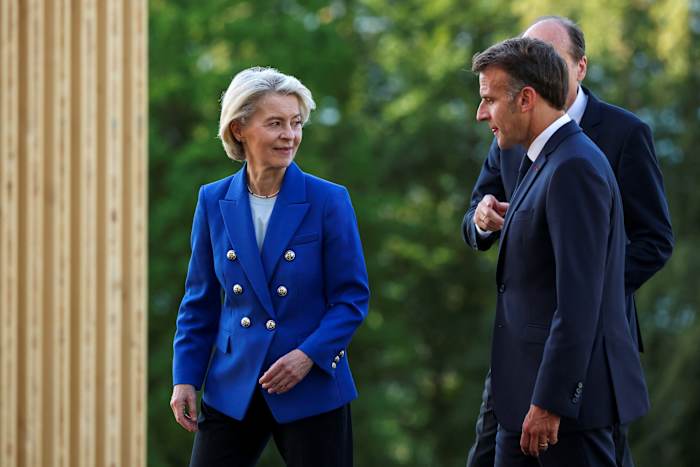
This is the exact structural imbalance that brought world leaders together at the recent G7 summit. Behind the closed doors of historic estates, the tone was far from diplomatic. It was panicked. The United States has already erected a firewall, slapping 100% tariffs on Chinese electric vehicles. But Europe is in a much tighter spot.
The European Union relies heavily on global trade. If Brussels slams the door too hard on Beijing, the retaliation could choke European luxury car exports to China—the very vehicles currently keeping companies like BMW and Mercedes profitable.
It is an economic tightrope strung over a canyon. One misstep leads to a trade war; another leads to industrial deindustrialization.
The Ghost Towns of Tomorrow
Walk through the docks of Rotterdam or Antwerp right now. You will see acres of pristine, gleaming electric cars stretching toward the horizon. They are parked bumper to bumper, glittering under the gray northern sky. Many of them are not being delivered to waiting customers. They are sitting there, acting as temporary storage because the influx of vehicles is moving faster than the distribution networks can handle.
This overcapacity is the core engine of China Shock 2.0.
Because China's domestic economy has slowed down—hampered by a real estate crisis and cautious consumer spending—its massive factories are producing far more goods than its own citizens can buy. The surplus has to go somewhere. It is being funneled into global markets at prices that defy traditional capitalistic logic.
The worry among European policymakers is that this tidal wave will permanently hollow out the continent’s manufacturing base. When a factory closes, the loss is rarely temporary. The institutional knowledge evaporates. The skilled engineers move away or retrain in other fields. The local supply chain—the small family-owned businesses that supply the bolts, the glass, the upholstery—collapses like a house of cards.
If Europe loses its automotive and green technology sectors, what replaces them?
The continent risks becoming an economic museum: a beautiful place to visit, rich in history, but entirely reliant on foreign powers for the essential technologies of the future. The transition to a green economy was supposed to be Europe's grand rebirth. Instead, it is transforming into a vulnerability.
The Irony of the Green Transition
There is a bittersweet paradox at the heart of this crisis. For years, European governments have urged citizens to embrace sustainability. They passed strict emissions laws, offered tax incentives for solar panels, and phased out internal combustion engines.
The citizens listened. They want to do the right thing for the planet.
But when a working-class family in Lyon or Manchester decides to buy an electric car, they face a stark financial choice. On one side of the dealership lot is a European-made electric hatchback costing forty thousand euros. On the other side is a sleek, feature-packed Chinese import costing twenty-five thousand euros.
Can you blame the consumer for choosing the cheaper option?
The very policies designed to save the environment are accelerating the decline of the local economy. The green transition is happening, but the economic rewards are being exported across the ocean. Europe finds itself funding its own industrial displacement.
At the G7 summit, the rhetoric focused heavily on "de-risking" and creating a level playing field. But fields are incredibly difficult to level when the foundation was poured decades ago. The Western world is trying to use traditional trade laws and anti-subsidy investigations to fight a highly coordinated, state-directed economic strategy. It feels like bringing a rulebook to a knife fight.
The View from the Assembly Line
Back in Stuttgart, Klaus doesn't think about macroeconomics, or G7 communiqués, or tariff structures. He thinks about his son, who is currently studying mechanical engineering.
A decade ago, that degree was a golden ticket. It guaranteed a stable, respected, middle-class life. Today, Klaus wonders if his son is studying to become the curator of a dying art.
The struggle over China Shock 2.0 is often framed in terms of GDP percentages, trade deficits, and geopolitical leverage. Those metrics matter, of course. But they are merely the shadows cast by a much larger, more human reality. This is a battle over the dignity of work, the sovereignty of innovation, and the question of whether a society can survive if it stops making things.
The coming months will decide the trajectory of the European continent for the next half-century. Tariffs will likely rise. Retaliations will surely follow. The corporate titans will hunker down in boardrooms, calculating their survival strategies.
But as the sun sets over the quieted factory floors, the true cost of this economic storm remains unquantifiable. It is measured in the quiet conversations around kitchen tables, the anxiety of workers looking at empty order books, and the slow, steady cooling of the engines that once drove the Western world.