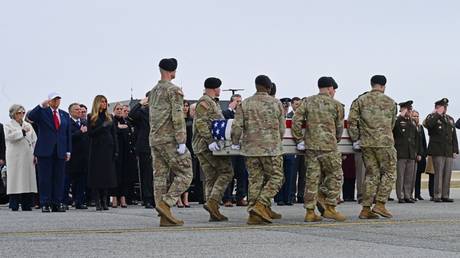
The Tally in the Dark
A single desk lamp cuts through the gloom of a windowless room. On the screen, spreadsheet cells stretch into the darkness, each row containing a name, a rank, a date, and a location. Outside, the world moves on, oblivious to the arithmetic taking place behind closed doors.
When official briefings take the podium, numbers turn light. They become abstraction. Aggregates. "Minor incidents," the voice at the microphone calls them. "Operational friction." Discover more on a connected topic: this related article.
Numbers are clean. Blood is not.
When conflict spreads across distant borders, the first casualty is rarely truth in some grand, philosophical sense. The first casualty is far simpler: the accounting. For months, reports have trickled out suggesting that the official body counts released by defense establishments do not match the reality on the ground. Between the official press releases and the private ledgers kept in field hospitals, a chasm opens up—a silence filled only by the anxiety of thousands of families waiting for a phone call that never comes. Additional analysis by Associated Press delves into similar views on the subject.
The Human Ledger
Consider a hypothetical sergeant named Marcus. He isn't a statistic. He is thirty-two years old, raised in an Iowa town where the cornfields meet the horizon, and he has a daughter who just learned to ride a bike without training wheels.
When an artillery shell hits near a forward operating base, Marcus isn't listed on the evening news. He isn't counted among the fallen because his heart is still beating when the MEDEVAC blades cut through the dust. He enters a grey zone—a classification of severe injury that official public updates often bypass or delay reporting until administrative reviews conclude weeks, sometimes months, later.
To the public, the war remains distant, surgical, almost bloodless. To Marcus’s family, the war has arrived in full force, concentrated into the sterile smell of an ICU halfway across the world.
This discrepancy isn't always an explicit conspiracy of silence; often, it is built into the bureaucratic machinery itself. Standard classification frameworks categorize combat casualties through strict, narrow definitions. Traumatic brain injuries, blast-induced internal trauma, and psychological degradation often fall outside the immediate casualty metrics presented in daily press briefings.
The difference between a wounded soldier and a casualty statistic is often just a matter of administrative timing.
By keeping the official numbers low, the machinery of statecraft maintains political maneuverability. Public support for foreign engagements is fragile, built on the perception of low risk and manageable costs. When those costs rise, the pressure to reframe the ledger becomes almost irresistible.
The Paper Trail of Silence
Historical precedents show that this pattern is far from new. During past conflicts, investigative journalists routinely uncovered discrepancies between battlefield logs and public declarations.
How does the gap open? It happens in three distinct phases:
- Delayed Reporting: Holding back updates on non-fatal but life-altering injuries until long after public interest in a specific engagement has faded.
- Narrow Definitions: Restricting the term "combat casualty" strictly to those killed in direct small-arms fire, excluding casualties from indirect fire, drone strikes, or post-blast trauma.
- Contractor Exclusion: Omission of private military contractors, support staff, and allied foreign personnel from official national tallies entirely.
When these mechanisms operate together, the official record presents an echo chamber of minimal impact. But off the record, the strain on military medical systems tells an entirely different story. Field hospitals run out of plasma. Evacuation flights run round the clock. Veterans' facilities quietly expand their trauma units.
The truth leaves physical tracks, even when the paperwork tries to cover them up.
The Price of Misdirection
Why does the exact count matter so much? Because a nation cannot weigh the true cost of war if it is given a false invoice.
When citizens are told that a conflict is clean, manageable, and cheap, their consent is bought under false pretenses. Policies are debated based on altered reality. Decisions to extend deployments or expand operations are made in rooms where the true human bill remains unread.
Trust is a fragile resource. Once a society learns that the official ledger has been trimmed to fit a political narrative, every statement from the podium begins to sound suspect. The erosion of trust doesn't stop at the borders of the warzone; it bleeds back into domestic life, poisoning the relationship between the governed and those who send them to fight.
In the end, every name omitted from a public tally is still a chair left empty at a dinner table. Every uncounted injury is still a life rewritten in pain. The spreadsheets may hold their secrets for a season, but the silence they create grows louder every day.