The air at 4,000 meters in the Qinghai-Tibet Plateau doesn’t just feel thin; it feels sharp. It is a place where the wind screams through steel lattice towers and the temperature drops with a speed that can turn a human hand brittle in minutes. For decades, the men and women tasked with maintaining China’s ultra-high-voltage power lines lived a life of nomadic peril. They were the "line-walkers," strapped into harnesses, dangled from helicopters, or forced to trek through snow-choked passes just to ensure a single insulator hadn’t cracked under the weight of the ice.
They were the pulse of the nation’s progress, but they were breakable.
A billion-dollar shift is currently underway across the Chinese mainland, and it isn't just about money. It is about the replacement of the heartbeat. State Grid Corp of China, the utility giant responsible for keeping the lights on for over a billion people, has committed $1.1 billion to a singular, staggering goal: the deployment of 8,500 autonomous robots. This isn't a slow rollout. It is a wholesale redefinition of how a civilization fuels itself.
The Cold Math of Survival
Consider a worker named Chen. He is hypothetical, but his reality is shared by thousands. In the old model, Chen’s day began at 4:00 AM. He would carry forty pounds of gear up a mountain slope that would wind a professional athlete. His job was to spot a hairline fracture in a ceramic disc or a bird’s nest built too close to a 1,100-kilovolt line. If he missed it, a city three hundred miles away might flicker and die. If he slipped, his family would receive a folded flag and a pension.
The logic behind the $1.1 billion investment isn't found in a brochure about "innovation." It is found in the brutal efficiency of a machine that doesn't breathe.
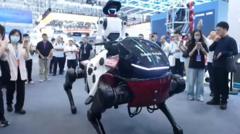
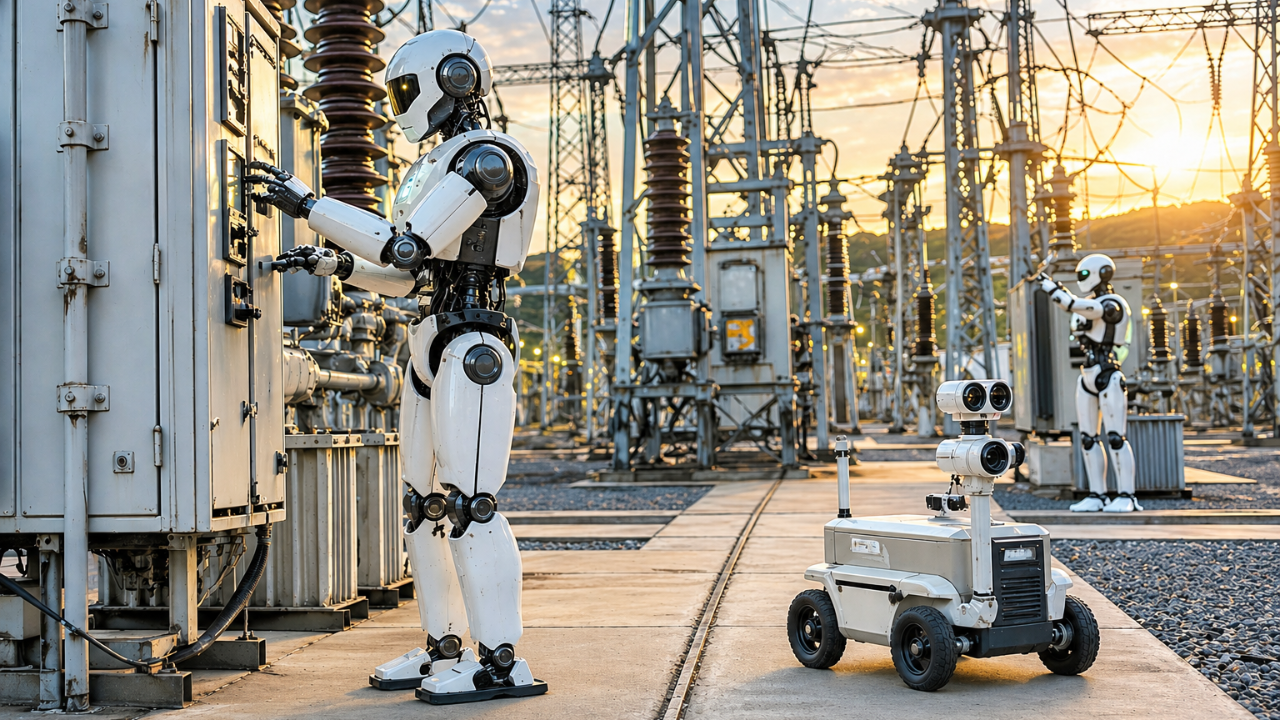
These 8,500 robots are split into two distinct tribes. The first are the climbers—sleek, articulated machines that resemble mechanical spiders. They crawl along the silver veins of the power grid, using high-definition thermal imaging to "see" heat signatures that indicate a failing component long before a human eye could detect a glow. The second tribe consists of the sentries—wheeled or tracked units that patrol the massive, cathedral-like indoor substations where the raw power of the Yangtze River is stepped down for domestic use.
The Invisible Stakes of a Flickering Bulb
We often take the grid for granted. We treat electricity like oxygen—invisible until it is gone. But China’s grid is a different beast entirely. It is the most complex machine ever built by human hands. Because the nation’s energy sources (the wind of the north and the water of the west) are thousands of miles away from its hungry coastal cities, the power must travel at incredibly high voltages.
At these levels, electricity doesn't just flow; it vibrates with a terrifying intensity. A minor malfunction in an isolated mountain pass can cascade into a blackout that costs a province billions in lost productivity.
By deploying these 8,500 units, the State Grid is attempting to remove the "human lag." A robot doesn't get tired at the end of a twelve-hour shift. It doesn't lose focus because it is thinking about its daughter’s school recital. It scans, it logs, and it predicts. The "predict" part is the real story. These machines are feeding data into centralized AI hubs that can now forecast a failure before it happens.
Think of it as moving from reactive surgery to preventative genetic mapping.
The Cost of the Mechanical Gaze
There is a certain coldness to this transition. When you replace 8,500 human functions with 8,500 machines, the soul of the work changes. We are witnessing the end of the "blue-collar" era of energy. The people who once climbed the towers are being moved behind screens. They are becoming the pilots, the data analysts, and the mechanics for the machines that took their places in the wind.
The scale of this $1.1 billion push is difficult to visualize. Imagine every major substation from Shanghai to Urumqi suddenly populated by unblinking eyes. These robots operate in environments that would be lethal to us. They roam through high-ozone zones and navigate through electromagnetic fields that would scramble a human nervous system over long-term exposure.
They are the perfect workers for a world that cannot afford to pause.
A Quiet Transformation
The transition isn't loud. There are no grand ceremonies for the retirement of the climbing harnesses. Instead, there is just the whir of a motor and the soft click of a camera shutter in the middle of a blizzard.
Critics might argue that such heavy reliance on automation creates a new kind of vulnerability—a digital one. If the "brains" of these 8,500 robots are compromised, the grid could be turned against itself. It is a valid fear. The shift from physical risk to cyber risk is the trade-off of the modern age. We swap the danger of a falling man for the danger of a corrupted line of code.
But for the utility directors in Beijing, the math is settled. The cost of human life and the cost of human error are simply too high when the stakes are the stability of the world's second-largest economy.
The New Line-Walkers
As the sun sets over the humming transformers of a Zhejiang substation, a small, boxy robot rolls silently along its predetermined path. It pauses, pivots its sensor head toward a transformer, and flashes an infrared beam. In milliseconds, it confirms that the temperature is within 0.5 degrees of the norm. It sends a "green" status to a server farm miles away and moves on.
It doesn't feel the humidity. It doesn't hear the deafening buzz of the high-voltage lines. It simply exists to ensure that when a child in a high-rise apartment flips a switch to do their homework, the light comes on without hesitation.
The era of the hero on the wire is fading. In its place is a billion-dollar army of sensors and steel, working in the dark, ensuring that the only thing we ever have to feel about our power grid is nothing at all.
The machine has taken charge, and it is the quietest revolution in history.