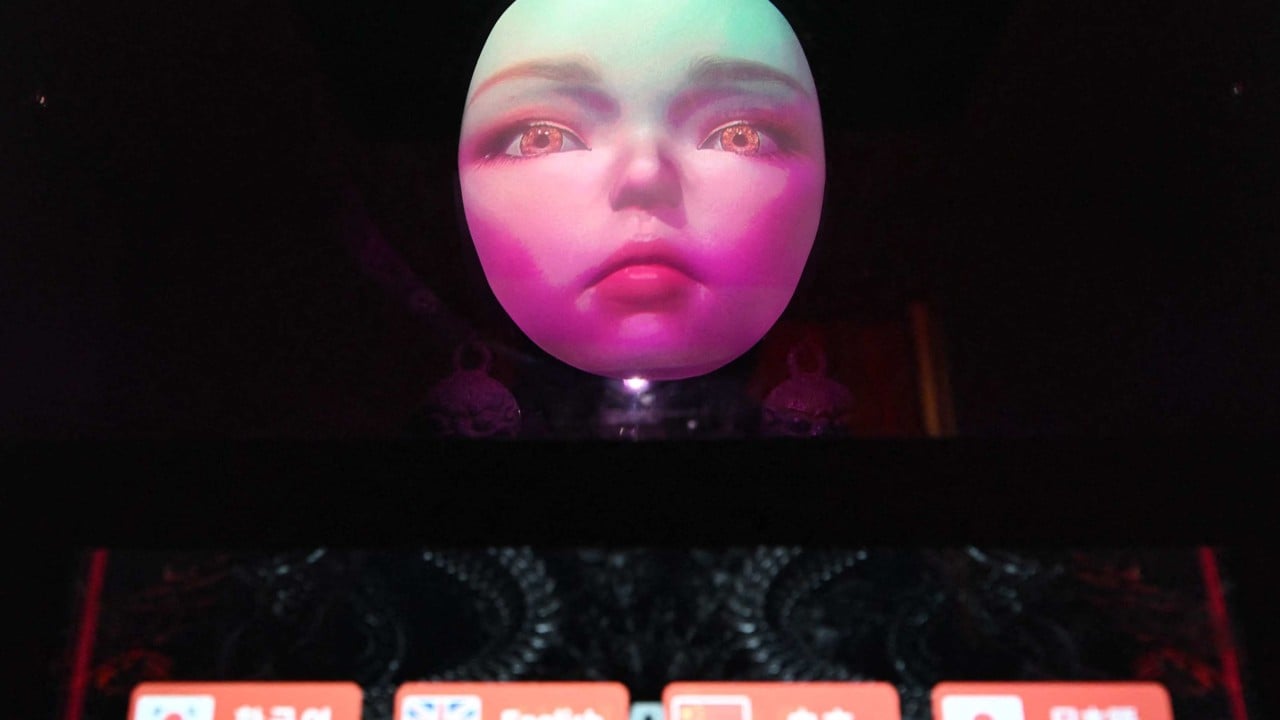
In the neon-soaked districts of Gangnam and the quiet alleys of Seongsu-dong, a startling merger is occurring between ancient animism and modern machine learning. South Koreans are not merely using AI to optimize supply chains or polish resumes; they are using it to talk to the divine. This isn’t a gimmick. It is a multi-billion dollar industrial shift where thousands of years of shamanic tradition—Musok—are being encoded into mobile apps and chatbots.
The drive behind this isn't just curiosity. It is survival. South Korea remains one of the most hyper-competitive societies on the planet, with a suicide rate and economic pressure cooker that leaves citizens desperate for any edge. When the traditional job market fails and the housing bubble expands, people turn to the spirits. Now, those spirits live in the cloud. Recently making waves lately: The Ghost Inside the Machine.
The Algorithmic Altar
Traditional Korean shamanism relies on the mudang, a priestess who acts as an intermediary between the human and spirit worlds. Historically, this involved physical rituals, vibrant costumes, and rhythmic percussion. Today, that intermediary is often a Generative Predefined Transformer.
Dozens of Korean startups are now integrating AI into fortune-telling platforms like Jeomzip and Myeongun. These platforms don't just provide randomized horoscopes. They ingest "Saju"—the Four Pillars of Destiny—which calculates a person’s fate based on the year, month, day, and hour of their birth. While a human shaman might spend decades mastering the complex cyclical calendars and elemental interactions of Saju, an AI can process these permutations in milliseconds. Further details into this topic are detailed by Mashable.
The result is a strange paradox. Users are seeking out the most ancient form of spiritual guidance through the most modern means available. They want the comfort of destiny, but they want it delivered with the speed of a fiber-optic connection.
Why Data Beats the Crystal Ball
Critics argue that automating spirituality hollows out the cultural soul of the practice. They are missing the point. For the average office worker in Seoul, the "authenticity" of a smoke-filled room is less important than the accuracy of the prediction.
Data is the new incense.
AI-driven shamanism offers something a human mudang cannot: anonymity and massive data correlation. In a society where mental health struggles carry a heavy stigma, talking to an AI shaman provides a safe space. You can confess your deepest financial anxieties or relationship failures to a chatbot without fear of judgment or social ruin.
The Business of Fate
From a venture capital perspective, the "Shaman-Tech" sector is a goldmine. The traditional fortune-telling market in South Korea was estimated to be worth over $3 billion even before the AI boom. By moving this offline industry to mobile platforms, companies are capturing a demographic that previously felt alienated by traditional rituals—Generation Z and Millennials.
- Scalability: A single popular shaman can only see so many clients a day. An AI model can handle millions of concurrent consultations.
- Monetization: Micro-transactions for "luck-enhancing" digital talismans or premium deep-dives into specific life events create a recurring revenue stream.
- Retention: By linking fate to daily data—like health metrics from a smartwatch—apps can provide real-time "spiritual warnings" that keep users engaged.
The Ghost in the Code
We have to look at the mechanics of how these models are trained. They aren't just reading Wikipedia entries on Korean folklore. Developers are scraping centuries of divination texts and modern shamanic transcripts to create "personality profiles" for the AI.
When you "consult" a digital shaman, you aren't just getting a cold calculation. You are interacting with a synthesized persona designed to mimic the linguistic patterns of a traditional priestess. The AI uses sentiment analysis to gauge your level of distress and adjusts its "spiritual advice" accordingly.
Is it manipulation? Perhaps. But it is also a mirror.
The AI isn't actually seeing the future; it is analyzing the vast patterns of human behavior and reflecting them back to the user. If the AI tells you that your business will succeed in the third quarter, it is likely basing that on a combination of Saju principles and the optimistic tone of your input data. It tells you what you need to hear to keep moving in a high-pressure environment.
The Economic Anxiety Engine
The rise of AI shamans is a direct symptom of South Korea’s "Hell Joseon" phenomenon—a term used by the youth to describe their country as a hopeless, infernal society. When the path to traditional success is blocked by nepotism and a shrinking middle class, the "rational" world stops making sense.
If hard work no longer guarantees a house, then maybe the stars have the answer.
This is where the investigative lens uncovers a darker truth. The tech industry is capitalizing on the nation’s collective trauma. These apps thrive during periods of economic instability. Every time the KOSPI dips or the birth rate hits a new record low, traffic to AI fortune-telling sites spikes.
We are seeing the commodification of hope.
Digital Superstition and Corporate Strategy
It isn't just individuals who are looking to the digital spirits. There is a long-standing, albeit quiet, tradition of South Korean CEOs consulting shamans for major business decisions. This has now migrated into the boardroom in the form of predictive analytics wrapped in spiritual language.
Imagine a scenario where a corporation uses a custom-built AI to weigh the "spiritual favorability" of a merger date alongside market projections. It sounds absurd until you realize that many of the largest conglomerates in the country have histories of involving fortunetellers in their hiring processes. AI just makes this practice look more like "data science" and less like superstition.
The danger lies in the lack of accountability. If a human shaman gives bad advice, they can be fired or discredited. If an AI shaman, programmed with the biases of its developers and the fatalism of ancient texts, tells a user to quit their job or invest their life savings, who is responsible?
The Hallucination of Destiny
The primary technical hurdle for these platforms is the "hallucination" problem inherent in Large Language Models. In a standard chatbot, a hallucination is a factual error. In a spiritual chatbot, a hallucination is a prophecy.
Users tend to give AI-generated spiritual advice more weight because they perceive the machine as being objective. They forget that the machine is just a statistical engine. If the AI predicts a tragedy, the psychological impact on the user can be devastating.
Regulation and the Spiritual Wild West
South Korean regulators are currently struggling to keep up. Should these apps be categorized as entertainment or as a form of unlicensed psychological counseling? There are currently no laws governing the "spiritual accuracy" of an algorithm.
This regulatory vacuum allows developers to experiment with increasingly aggressive psychological triggers. Some apps have started using push notifications to warn users of "bad energy" during their commute, essentially gamifying anxiety to drive app opens.
The New Shamanic Class
We are witnessing the birth of a new social hierarchy. At the top are the "Techno-Shamans"—the engineers and data scientists who tune the models that dictate the fates of millions. Below them are the traditional mudang who are being forced to adapt or die. Many have started their own YouTube channels or partnered with app developers to license their "spiritual brand."
The traditionalists argue that the sinbyeong—the "divine illness" that a shaman must suffer before being called to the profession—cannot be simulated. They believe the connection to the spirits requires a biological vessel.
But the market disagrees. The market wants a shaman that is available 24/7, costs five dollars a month, and doesn't require a blood sacrifice in the backyard.
Breaking the Cycle of Fatalism
The irony of the AI shaman is that it uses the ultimate tool of human progress—artificial intelligence—to reinforce the ultimate tool of human stagnation: fatalism. By telling people that their lives are pre-written in the code of the universe, these platforms can inadvertently discourage agency.
Why fight for political change or labor rights if your Saju says this is your year to suffer?
As this technology spreads beyond South Korea to other cultures with strong divinatory traditions, we will see a global shift in how humans process uncertainty. We are moving toward a world where we no longer look at the stars or the gods for answers, but at the glowing rectangles in our palms.
The machine is ready to tell you your future. You just have to make sure you aren't paying for a destiny that was manufactured in a server farm.
Investigate the permissions on your fortune-telling app. If it asks for access to your location, your contacts, and your microphone, it isn't reading your fate from the spirits. It is reading your fate from your data. And in the 21st century, there is no difference between the two.
Demand transparency from the developers. Ask how the models are weighted and what happens to the data of the millions who are searching for a sign. The future isn't written in the stars; it is being written by a software engineer in a high-rise in Seoul who is just as anxious as you are.
Stop looking for a digital savior and start looking at the code.