Silence.
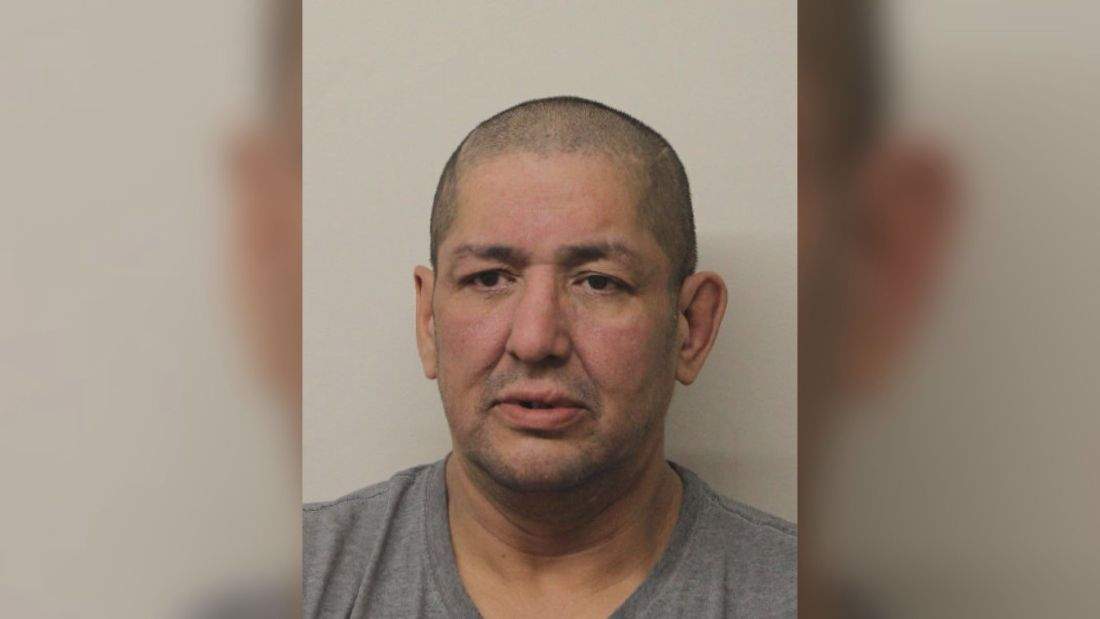
Out here on the Canadian prairies, silence isn’t the absence of noise; it is a physical weight that presses against your bedroom window at three in the morning while the wind howls across fifty miles of uninterrupted wheat fields and frozen gravel. When a phone screen suddenly illuminates the dark with an emergency alert—shrill, metallic, and unapologetic—that silence shatters into something cold and unrecognizable. The Royal Canadian Mounted Police have issued a dangerous person alert, announcing that a suspect wanted for second-degree murder is actively at large somewhere in Saskatchewan. You might also find this connected article interesting: The Loudest Man in the Room Finally Goes Quiet.
Most people read that headline from the safety of a crowded city apartment, scrolling past it between coffee sips and morning emails, treating a manhunt like a distant weather report. They see the sterile police jargon—second-degree murder, armed and dangerous, do not approach—and their brains file it away under abstract tragedy.
I know better. As reported in latest coverage by NBC News, the effects are notable.
Years ago, I lived through a forty-eight-hour lockdown in a rural prairie town when a violent fugitive vanished into the surrounding grid roads. I still remember the specific, metallic taste of adrenaline in the back of my throat as I walked through my darkened farmhouse checking deadbolts that suddenly felt like cardboard. I remember staring out across the pitch-black yard toward the tree line, realizing that the nearest RCMP detachment was forty-five minutes away on a good day, and that distance isn't measured in miles when someone has nothing left to lose. It is measured in heartbeats.
When a second-degree murder suspect disappears into the vast expanse of Saskatchewan, the story isn't just about a crime committed in a single terrible moment. It is about what happens to an entire province when trust evaporates overnight, turning every pair of headlights on a lonely highway into a question mark.
The Anatomy of a Prairie Manhunt
To understand why a manhunt in Saskatchewan feels fundamentally different from one in Toronto or Vancouver, you have to understand the geography of isolation. Imagine dropping a single pebble into an ocean the size of France, and then asking a handful of lifeguards to find it before the tide shifts. That is the logistical nightmare facing rural policing across the province's 650,000 square kilometers.
In a dense urban center, a suspect runs into a web of surveillance. Traffic cameras, subway turnstiles, ring doorbells, and crowded sidewalks create a digital and human net that closes quickly. On the prairies, the opposite happens. Once a vehicle turns off the Yellowhead Highway onto a gravel grid road, the modern world drops away. Cell service flickers and dies. Streetlights vanish. A suspect can drive for hours without passing a single soul, disappearing into abandoned farmyards, dense aspen bluffs, or northern boreal forests where visibility drops to ten feet.
This geographical reality changes the psychology of everyone living inside the alert zone.
Consider a hypothetical family living twenty miles outside a small Saskatchewan town—let’s call them Sarah and David, though their reality is shared by thousands of real households tonight. In a normal week, their back door stays unlocked so neighbors can drop off borrowed tools or fresh baking. Their keys hang on a hook right beside the mudroom entrance, and the pickup truck sits in the driveway with a full tank of gas, ready for an early morning run to the grain elevator.
Tonight, every single one of those symbols of rural trust becomes a liability.
Sarah stands at the kitchen sink, watching the gravel driveway. David walks the perimeter of the barn with a heavy flashlight, suddenly hyper-aware of how easy it would be for someone desperate, cold, and running out of fuel to slip into a shed and wait until dawn. They aren't panicking—prairie people rarely panic—but a quiet, exhausting vigilance settles into their bones. Every crunch of gravel, every bark from the farm dog, every shadow cast by a passing cloud forces a calculation: Is that the wind, or is someone out there?
What Second-Degree Murder Actually Means
When the RCMP releases a public bulletin naming a suspect wanted for second-degree murder, the phrasing itself often breeds confusion, rumor, and misplaced fear. People hear the word murder and immediately picture a calculated, cinematic predator hunting strangers at random.
That isn't how the law works, nor is it usually how these tragedies unfold.
Under the Canadian Criminal Code, first-degree murder requires planning and deliberation—a cold, calculated decision made ahead of time. Second-degree murder is different. Think of it like the difference between an arsonist who buys gasoline and matches days in advance to burn down a building, and a person who, in a blind, explosive rage during a heated argument, grabs a heavy object and strikes a fatal blow. There was no master plan. There was intent to kill or cause life-threatening harm in the heat of the moment, without premeditation.
Why does this distinction matter to the public while the suspect is still on the loose? Because intent shapes behavior.
A fugitive running from a spontaneous, violent act is rarely operating on a brilliant criminal blueprint. They are usually propelled by sheer panic, adrenaline, and desperation. Criminologists and seasoned investigators have observed this behavioral pattern for decades: when the initial surge of rage fades and the reality of a life sentence sets in, the fugitive’s primary objective isn't typically to seek out new victims at random. Their overwhelming drive is escape, concealment, and survival.
Yet that desperation is precisely what makes them so dangerous.
A cornered, panicked individual makes catastrophic decisions. They steal vehicles when their gas tank hits empty. They break into isolated cabins for food, warm clothing, or firearms. If a homeowner surprises them in a garage or an unlit hallway, a person who has already crossed the ultimate moral threshold once can cross it again in a fraction of a second simply to keep running. The danger isn't that they are hunting you; the danger is that you might accidentally step between them and the horizon.
The Invisible Weight on Small Communities
Standard news reports focus entirely on the chase—the roadblocks, the canine units, the police helicopters scanning thermal signatures over the tree line. What those reports miss is the suffocating emotional toll on the communities caught in the middle, especially when the crime occurred within a tight-knit town or First Nation where everyone knows both the victim and the accused.
In small Saskatchewan communities, tragedy is never anonymous.
When a fatal violence erupts, the shockwaves don't stop at the yellow crime scene tape. The victim wasn't just a statistic; they were someone’s cousin, someone’s teammate on the local rec hockey league, someone whose mother works at the co-op grocery store. And in a heartbreakingly cruel twist of rural life, the suspect is often woven into that exact same social fabric. Families who have shared Thanksgiving dinners or sat together in the bleachers at winter tournaments suddenly find themselves divided by an unbridgeable chasm of grief and terror.
I remember talking to a woman in a small northern community months after a similar manhunt had ended. She told me the hardest part wasn't the fear while the suspect was running; it was the eerie, suffocating silence in the grocery store aisles afterward. Nobody knew what to say to the suspect’s grandmother, who was standing in the produce section looking ten years older than she had the week before, crushed under a weight she didn't create.
When the RCMP warns the public not to approach a suspect, they are also quietly fighting against the deep, human instinct to intervene—whether out of anger, loyalty, or misguided bravado. History across the prairies shows us how quickly good intentions turn fatal when untrained citizens decide to form their own search parties or confront someone they think they can "talk down." Grief makes people reckless. Fear makes people trigger-happy.
Navigating the Fog of Rumor and Uncertainty
If there is one thing I have learned from watching emergency alerts unfold in real time, it is that misinformation travels faster than any police cruiser.
Within twenty minutes of an RCMP media release, local Facebook groups and group chats explode with unverified sightings. Someone swears they saw the suspect’s truck speeding east toward Yorkton. Five minutes later, someone else insists they saw him walking on foot near Prince Albert, three hundred kilometers away. Photos of random, innocent drivers are snapped at gas stations and shared online with breathless captions warning neighbors to lock their doors.
It is terrifying, confusing, and deeply human. When official updates are scarce—because the RCMP cannot broadcast their tactical movements without tipping off the very person they are hunting—human beings fill the vacuum with speculation. We tell ourselves stories to feel like we have some control over an uncontrollable situation.
But false sightings do real damage. Every time a tip comes in claiming a suspect was spotted at a rural intersection, officers have to peel away from legitimate leads, set up perimeters, and verify the claim. In a province where resources are already stretched thin across massive detachments, chasing ghosts costs precious hours.
What does practical, grounded vigilance actually look like when an alert is active in your region?
- Treat every unverified social media post as static. Rely exclusively on official RCMP updates, provincial emergency alert channels, and verified news outlets rather than neighborhood rumor mills.
- Eliminate easy opportunities without giving in to paranoia. Lock your doors, close your garage, and never leave keys inside parked vehicles or farm equipment—desperate fugitives look for the path of least resistance, not a fortified target.
- Observe from a distance rather than investigating. If you notice a cut fence, a missing jerrycan of fuel, or an unfamiliar vehicle tucked behind a shelterbelt, stay inside, keep your distance, and call 911 immediately with exact grid coordinates or landmarks.
- Give officers clear, specific details if you see something. Note the direction of travel, vehicle color, make, license plate digits, and time of sighting rather than trying to follow the vehicle yourself.
The Long Wait for Dawn
Eventually, every prairie manhunt reaches its tipping point.
The human body can only run on pure adrenaline for so long before cold, hunger, fatigue, and isolation begin to erode a fugitive’s judgment. A stolen vehicle runs dry on a dead-end lease road. A credit card ping lights up a terminal at a highway truck stop. A sharp-eyed resident notices tracks in the fresh frost leading toward an abandoned granary and makes a quiet phone call from behind locked doors.
When the sirens finally converge and the handcuffs click shut, the headlines move on within twenty-four hours. The alert expires. The roadblocks come down, and the orange pylons are loaded back into the trunks of police cruisers. To the rest of the country, the story is over.
Yet out in the small towns and along the windswept grid roads, the silence takes a long time to feel safe again.
For weeks afterward, people still pause for an extra second before stepping onto their back porch at night. Parents still glance toward the edge of the yard when the kids walk out to catch the morning school bus. The locks on the mudroom doors stay turned a little longer than they used to, a quiet reminder of how fragile our sense of security really is when the dark rolls in across the plains.
Tonight, somewhere out beyond the glow of the highway lights, headlights sweep across an empty stretch of gravel, cutting briefly through the dark before the prairie swallows them whole again.


