Silence.
When a ceasefire is announced in a war zone, people watching from afar imagine that silence equals safety, as if turning off the artillery somehow turns back on the water mains, the bakeries, and the surgical wards.
Yet according to a September 2026 report by the United Nations Independent International Commission of Inquiry on the Occupied Palestinian Territory, the machinery of destruction in Gaza did not stop when the guns quieted; it merely changed shape.
To understand how a war can continue after a truce is signed, look away from the diplomatic cables and focus instead on the invisible architecture of daily survival.
The Architecture of a Quiet Crisis
Consider a hypothetical mother in northern Gaza—let us call her Layla—waking up on the first morning of a declared truce. The drone hum overhead has faded, and for the first time in months, she steps outside without flinching at the sound of incoming shells. She walks toward a distribution point carrying two empty plastic jerrycans, expecting the sudden absence of airstrikes to translate into clean water and infant formula.
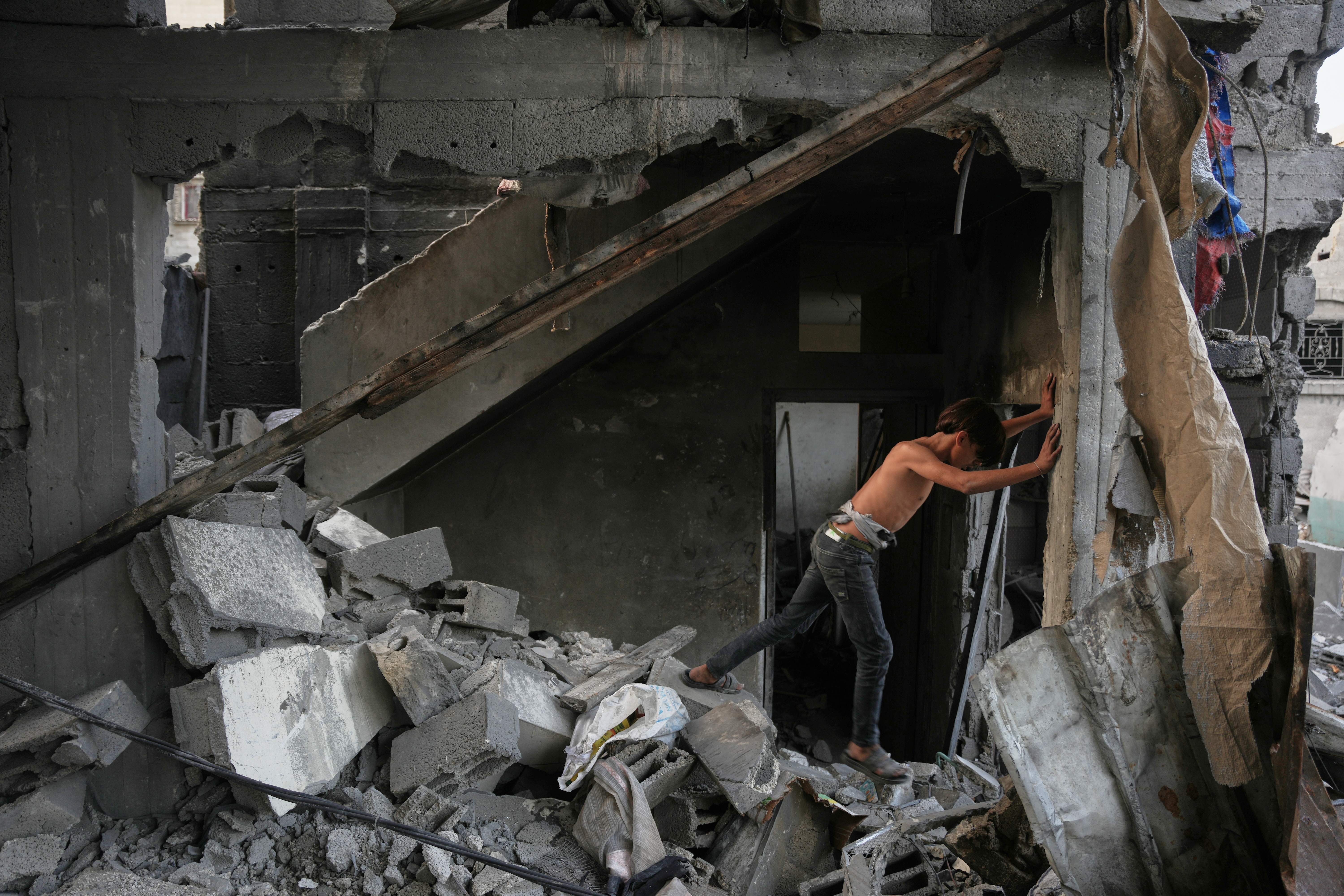
Instead, she finds the same rusted, dry municipal pipes, the same cratered roads blocking aid convoys, and a clinic down the street operating without anesthesia or electricity.
This is the precise gap between a political ceasefire and lived reality that the UN commission sought to document. In international humanitarian law, violence is not measured solely by the tonnage of explosives dropped from the sky. Under the 1948 Genocide Convention, deliberately inflicting on a group conditions of life calculated to bring about its physical destruction—in whole or in part—carries the exact same legal weight as direct military bombardment.
Think of a house whose roof has been torn off in a storm. Stopping the wind does not save the family inside if the walls are still collapsing, the well is poisoned, and no one is allowed to bring in timber or nails. The storm may be over on paper, yet the exposure remains lethal.
What the UN Commission Actually Found
In its findings released in the autumn of 2026, the UN Independent International Commission of Inquiry—chaired by former UN High Commissioner for Human Rights Navi Pillay—concluded that Israeli authorities continued to commit acts amounting to genocide in the Gaza Strip even after a truce took effect.
The investigators did not rely on rumor or isolated anecdotes. They cross-examined satellite imagery, border crossing logs, medical supply manifests, and testimonies from physicians and humanitarian coordinators working inside the enclave. Their conclusion rested on a stark pattern: while active kinetic warfare slowed during the truce window, the systemic deprivation of essentials required for human survival persisted.
Specifically, the commission pointed to four interlocking failures during the post-truce period:
- Obstruction of Humanitarian Aid: Critical shipments of food, clean water purification tablets, and medical equipment faced prolonged delays, arbitrary rejections, and severe bottlenecks at crossing points.
- Collapse of Healthcare Infrastructure: Hospitals damaged during earlier phases of the conflict were denied the fuel, spare parts, and specialized personnel needed to resume basic emergency care.
- Forced Displacement and Uninhabitable Zones: Hundreds of thousands of displaced civilians remained barred from returning to their neighborhoods, trapped in overcrowded encampments lacking sanitation.
- Continued Lethal Incidents: Despite the formal cessation of hostilities, localized military fire and unexploded ordnance continued to claim civilian lives near buffer zones.
To many observers, the word genocide feels jarring when applied to administrative delays at a border checkpoint or a shortage of diesel fuel for a hospital generator. We are conditioned to associate the term with sudden, catastrophic massacres. Legal scholars, however, emphasize that slow-motion destruction—starvation, untreated disease, and the systematic erasure of the conditions necessary for reproduction and recovery—has historically been one of the most devastating tools of mass atrocity.
The Other Side of the Ledger
Israel’s government and military leadership have fiercely rejected the commission’s findings, dismissing the report as legally flawed, politically biased, and detached from the realities of asymmetric warfare.
From the perspective of Israeli officials and defense analysts, the narrative looks fundamentally different. Following the October 7, 2023 attacks by Hamas, Israeli leaders maintained that their military campaign—and the strict security inspections that accompanied the subsequent truce—were matters of national self-defense aimed at dismantling an entrenched militant infrastructure.
In official statements responding to the UN inquiry, Israeli representatives argued several key points:
- Security Screening Imperatives: Border inspections and restrictions on "dual-use" items—such as pipes, fertilizers, and certain communications gear—were deemed necessary to prevent Hamas from rebuilding tunnels and rocket arsenals during the pause in fighting.
- Logistical Bottlenecks Inside Gaza: Israeli officials contended that hundreds of aid trucks cleared inspection and sat waiting on the Gaza side of the crossings, blaming distribution failures on damaged roads, looting by armed gangs, and coordination breakdowns among UN agencies.
- Institutional Bias: Israel has long boycotted the Commission of Inquiry, arguing that its open-ended mandate singles out Israel unfairly while ignoring the actions of Palestinian armed groups, including the continued holding of hostages and the embedding of fighters within civilian areas.
Understanding this counterargument is essential if we want to grasp why the conflict remains locked in an intractable stalemate. Two completely irreconcilable frameworks are operating at once. One side sees a deliberate, systematic effort to make Gaza unlivable; the other sees legitimate security measures complicated by the chaos of a shattered territory.
How Law Measures Intent in the Dark
When you sit down to read a 40-page UN legal report, the hardest part is not the catalog of suffering—it is the question of intent.
In criminal law, proving murder requires more than proving someone died; it requires proving the perpetrator meant for it to happen. Proving genocide on an international scale demands an even higher threshold: dolus specialis, or specific intent to destroy a national, ethnic, racial, or religious group.
How do investigators peer inside the minds of policymakers when no one signs a memo admitting to mass destruction?
They look at the convergence of words and deeds. The UN commission paired its physical evidence from the truce period with public statements made by senior Israeli political and military figures over the course of the war—statements that dehumanized the population or framed the entire enclave as an enemy entity. When rhetoric suggesting total erasure is followed by policies that predictably starve a population of water and medicine during a supposed ceasefire, investigators argue that intent can be inferred from the pattern itself.
Critics of the UN report push back hard on this methodology. Legal defenders of Israel argue that cherry-picking inflammatory rhetoric made in the heat of war—while ignoring official military directives emphasizing civilian evacuation and aid facilitation—distorts the legal standard. They point to rulings and ongoing deliberations at the International Court of Justice (ICJ), noting that final judicial determinations of genocide take years of rigorous evidentiary testing rather than a single commission’s assessment.
It is messy. It is deeply contested. And for anyone trying to make sense of the headlines without picking a tribal side, it can feel paralyzing.
The Invisible Stakes of a Hollow Truce
Step back from the legal brief for a moment and return to the ground level, because the consequences of a broken truce extend far beyond the borders of Gaza.
When a ceasefire fails to deliver the basic conditions of life, it destroys the credibility of diplomacy itself. Think about what happens to a community—or an entire generation—when they are told that peace has arrived, yet their children still go to sleep hungry and their clinics still run out of antibiotics. Trust in international institutions evaporates. The word truce becomes synonymous with a trap.
At the same time, look at the global precedent being set. Since 1945, the international order has rested on a fragile promise: that even in the darkest wars, certain lines cannot be crossed, and that when fighting stops, the preservation of human life takes immediate precedence. If a ceasefire can be used simply to freeze a population in a state of slow collapse—out of sight of television cameras that have moved on to the next crisis—then the laws of war become little more than decorative ink.
During the height of active bombing, Gaza dominated every front page and evening broadcast. Once the truce was declared, the cameras packed up. The story was filed under resolved or stalemate. Yet as the UN report laid bare in September 2026, the sharpest spike in preventable deaths—from waterborne illnesses, untreated chronic conditions, and acute malnutrition—often occurs in the quiet weeks after the shelling stops.
A Lantern in the Rubble
Imagine a hospital ward in Khan Younis at three in the morning during the truce.
There are no air-raid sirens tonight. No fighter jets scream across the clouds. Inside the corridor, a surgeon examines a twelve-year-old boy whose infected leg wound could be saved with a standard course of intravenous antibiotics and a routine debridement procedure.
The hospital has three vials of the antibiotic left for forty patients. The backup generator sputters and dies because the fuel allocation promised under the truce agreement was held up at a checkpoint forty kilometers away. In the sudden dark, the surgeon switches on the flashlight of a dying mobile phone.
Outside, the night is completely still. No bombs are falling. No truce has technically been broken by a rocket or an airstrike. Yet in the narrow beam of that phone light, the war is still winning.