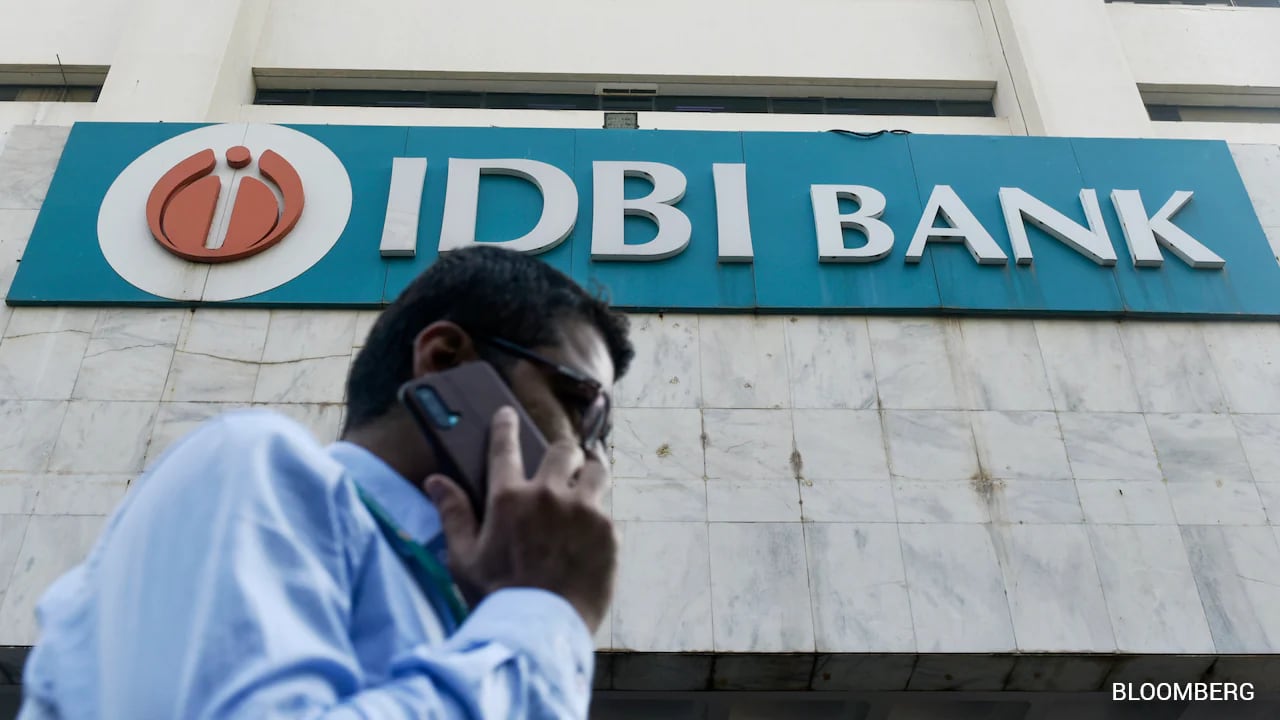
Fluorescent lights hum over marble floors that have seen better decades. Outside, monsoon rain hammers against glass storefronts in Mumbai, turning traffic lights into blurred streaks of amber and crimson. Inside a mid-sized bank branch, a man in a damp cotton shirt counts worn rupee notes with practiced, unhurried fingers.
Stressed. Learn more on a similar subject: this related article.
That is the word people used for years whenever IDBI Bank came up in conversation. Not just in boardrooms or financial columns, though there was plenty of ink spilled there, too. Stressed was what it felt like to stand in a queue wondering if rules were changing behind closed doors, or to watch a once-proud institution wrestle with bad loans, shifting regulations, and the heavy weight of turning around a giant ship in choppy water.
Now consider a number that stops a room cold: six billion dollars. Fairfax Financial Holdings, led by Prem Watsa—an investor whose name has long been tied to patient, contrarian value bets—stepping into the orbit of IDBI Bank at that scale. When a deal of that size circles an asset that spent years wearing the label of "work in progress," it is rarely just a balance sheet exercise. It is a mirror held up to confidence, risk, and where serious global capital thinks India is actually heading. More journalism by MarketWatch delves into similar views on the subject.
I have spent years watching cross-border capital move through emerging markets, sitting in rooms where spreadsheets look neat on projectors while reality outside is loud, messy, and stubbornly human. Numbers tell you what happened yesterday. They rarely tell you why someone decided to stay for the next ten years when everyone else wanted an exit.
What Six Billion Dollars Actually Means When A Bank Is Carrying Scars
To understand why a six-billion-dollar figure around IDBI Bank draws eyes from Toronto to Mumbai, you have to strip away the jargon and look at what a bank truly is. A bank is not a factory making widgets or a software app shipping code updates. A bank is a promise kept over time. Every deposit sitting in an account is someone else's future—school fees, medical buffers, wedding savings, a small shopkeeper's working capital.
When an institution goes through years of restructuring, recapitalization, and strategic sale talks, confidence gets bruised. Even when regulators step in, clean up balance sheets, and set guardrails, perception lags behind policy. People remember the headlines from the rough years long after the accounting starts to mend.
Let me offer a metaphor here to make the mechanics plain: buying a stressed bank is not like buying a house that needs fresh paint. It is like buying an old bridge over a wide river while cars are still driving across it. You cannot shut down the traffic, you have to inspect every steel girder in the rain, and you have to convince every driver that the tolls collected today will keep the structure standing twenty years from now.
Fairfax is not a stranger to patience or to India. Over the years, the firm has built a reputation for buying where others hesitate, holding longer than trendy funds care to wait, and treating capital as something that compounds best when noise fades. A move of this magnitude tied to IDBI Bank signals more than opportunistic bargain-hunting. It signals conviction in the long arc of Indian banking—retail credit demand, digital payment rails, branch reach, and the sheer scale of an economy that keeps adding millions of households to the formal financial map.
Still, let me be honest about what I find confusing or uncertain in moments like this. Big cross-border financial transactions in regulated sectors move through layers of approvals, valuation adjustments, governance rules, and shifting market moods. Even seasoned observers sometimes read the exact same term sheet and see two different stories: one of a transformative anchor investor bringing discipline and capital, and another of complex execution hurdles that test every assumption. Doubting neat narratives is healthy. Markets rarely hand out easy victories at six-billion-dollar scale.
A Hypothetical Afternoon In A Branch That Refuses To Stand Still
To see how abstract finance touches real lives, let us step into a hypothetical scenario—clearly imagined, though built out of everyday realities I have witnessed across Indian towns and cities.
Picture Kavita, a hypothetical branch manager in a bustling tier-two city—say, Pune or Nagpur—where small manufacturers, logistics operators, and salaried families share the same waiting area. On a humid Tuesday morning, a textile trader named Ramesh sits across from her desk. His business has survived supply chain shocks and fluctuating cotton prices, and now he needs working capital to fulfill a seasonal order before festive demand peaks.
For years, borrowers like Ramesh and bankers like Kavita lived inside a cautious ecosystem. Memories of past non-performing assets made everyone more careful—sometimes overly so. A loan application was not just a commercial calculation; it was a test of patience, paperwork, and nerve.
Now imagine news filtering through financial television and WhatsApp groups about a massive global commitment around IDBI Bank. To Ramesh, a headline about six billion dollars does not sound like an investment banking fee structure. It sounds like stability. It sounds like capital depth. It sounds like a bank that might have stronger backing, sharper risk systems, and a clearer long-term runway to support businesses that actually make things and move goods.
To Kavita, sitting behind her monitor as customers come and go, stability is everything. When leadership and ownership questions drag on for years, staff feel the uncertainty in subtle ways—hesitation in approvals, endless wait-and-see chatter, the quiet fatigue of explaining why things take time. When a serious strategic commitment arrives, the air in the room changes. Suddenly, the question shifts from "Will we get through this transition?" to "What can we build once the dust settles?"
Hypothetical as Kavita and Ramesh are, their stakes are real. Banking lives at the intersection of macro capital and micro trust. Without trust, deposits shrink and credit freezes. With it, a shopkeeper orders extra inventory, a family takes a home loan, and a local economy breathes easier.
Why Global Investors Keep Coming Back To India's Financial Core
If you zoom out from a single institution, you see a broader pattern in global finance. Whenever Western growth slows or rate cycles rattle bond markets, capital goes hunting for durable engines of demand. India has sat near the top of that list for years, not because every quarter is smooth, but because demographic scale, digital infrastructure, and domestic consumption create a gravity hard to ignore.
Yet owning a slice of that growth is never simple. Foreign investors often run into questions that sound technical on paper but feel deeply practical in execution:
- How fast can credit expand without repeating past excesses?
- How do governance standards and minority shareholder protections play out over a full economic cycle?
- What happens when global interest rates shift or currency swings test patience?
Investors who thrive in markets like India usually share one trait: they treat time as an ally rather than an enemy. Fast money panics at the first headline squall. Patient capital asks whether the underlying customer base will be larger, richer, and more connected a decade from now.
Think about how Indian banking has evolved over the past two decades. Digital payments transformed everyday transactions from cash-heavy friction to instant smartphone taps. Financial inclusion brought hundreds of millions of people into formal accounts. At the same time, stricter recognition of bad loans and tighter oversight forced banks to confront uncomfortable truths instead of sweeping cracks under the rug. Cleaning house hurts in the short run. It makes the foundation stronger for everyone who comes after.
When Fairfax shows appetite for a deal of this scale around IDBI Bank, it reads like a vote that the heavy lifting has real value—and that the next chapter is about scale, governance, and steady compounding rather than mere survival.
The Quiet Friction Behind Every Headline Number
Let us not romanticize big deals, though. Anyone who has watched mergers, strategic stakes, or bank privatizations unfold knows that announcements are only the opening act. The real work happens in the quiet months that follow—in compliance filings, boardroom negotiations, technology integration, culture alignment, and pricing discipline.
Culture is the part spreadsheets always underestimate. Two organizations can agree on valuation multiples and still clash over how fast decisions get made, how risk is priced, or how customer service is measured. In banking, where legacy habits run deep and regulatory scrutiny is constant, blending outside strategic expertise with domestic institutional knowledge takes humbleness on both sides.
There is also the human side inside the walls of the bank itself. Employees who stayed through years of restructuring have lived through rumors, policy shifts, and endless speculation. For them, a headline figure is personal. It raises hopes for clarity and career stability, alongside natural questions about what changes and what stays familiar. Good leadership speaks plainly to those fears instead of hiding behind corporate polish.
Consider what happens next when a high-stakes financial story captures public attention: everyone has an opinion, yet few people wait to see the fine print. Some cheer too early, treating a major deal as an instant cure-all. Others turn cynical too quickly, assuming big numbers always hit big snags. The truth usually lives in the middle—slow, unglamorous, and earned quarter by quarter.
What This Moment Reveals About Ambition And Patience
Look again at that contrast between a stressed legacy lender and a six-billion-dollar commitment from a seasoned global investor. That tension is the heartbeat of modern emerging-market finance.
On one side sits history—all the weight of past cycles, policy shifts, and tough lessons learned the hard way. On the other side sits ambition—the willingness to put serious money behind long-term potential even when short-term headlines look complicated.
Money alone does not fix everything. Governance matters. Risk management matters. Treating customers fairly on a rainy Tuesday afternoon in a crowded branch matters most of all. Yet capital of this scale, paired with long-horizon conviction, changes the conversation. It tells the market that India's financial assets are not sideshows; they are central to how global wealth looks for durable growth.
Rain still falls on Mumbai streets. Branches still open their doors at dawn. Somewhere, a small business owner is still waiting on a decision that will decide whether he hires two more workers this season or holds back.
A six-billion-dollar number looks huge on a screen. Its real test is quieter: whether years from now, the people counting notes at the counter and the families trusting their savings to the bank feel safer, stronger, and heard.