Two feet. That is all it takes to turn a two-ton steel SUV into a buoyant, helpless coffin.
You do not believe that when you are staring at a flooded underpass in rural Alabama at five in the afternoon. You have had a long shift. Your groceries are melting in the trunk, your daughter is waiting at daycare three miles past the overpass, and the pavement ahead looks like a shallow, muddy puddle. You see the white lines of the road glinting beneath the brown surface. You see the tire tracks of the pickup truck that made it through ten minutes ago. You tap the accelerator.
Then the front end floats.
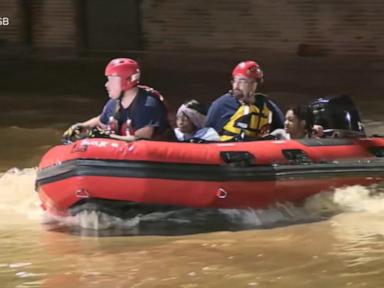
In recent days, emergency dispatchers across the American South have fielded hundreds of versions of this exact panic. Torrential rains—dumping upwards of eight to twelve inches of water across stretches of Mississippi, Alabama, Georgia, and Louisiana in less than forty-eight hours—have overwhelmed drainage systems built for a drier century. Local news broadcasts have looped the standard aerial footage: swift-water rescue teams in bright yellow drysuits wading waist-deep through suburban intersections, plucking stranded drivers from the roofs of submerged sedans.
We watch these clips from the dry comfort of our living rooms and ask the same quiet, judgmental question: Why did they drive into the water?
The answer has nothing to do with stupidity and everything to do with human psychology, infrastructure decay, and a terrifying misunderstanding of basic physics.
The Illusion of Control
To understand why people drive into floodwaters, you have to understand how the human brain processes familiar terrain.
Consider a hypothetical commuter—let’s call him Marcus—driving home along a stretch of highway outside Jackson, Mississippi, that he has navigated twice a day for eleven years. Marcus knows every pothole, every curve, every yellow caution sign. When a sudden squall turns the afternoon sky the color of a fresh bruise, Marcus does not see an encroaching natural disaster. He sees an inconvenience.
Our brains rely on cognitive maps to save energy. When we travel a route hundreds of times, we stop actively assessing the environment and start relying on memory. Even when water covers the asphalt, Marcus’s brain superimposes his memory of the dry road beneath it. He knows the dip under the railroad trestle is only slight. He cannot see that a clogged storm drain has turned that slight dip into a five-foot basin.
Water is a master of optical illusion. A flat, brown surface hides depth entirely. Without vertical reference points—like a submerged curb or a half-swallowed mailbox—the human eye cannot gauge whether water is three inches deep or three feet deep. By the time Marcus’s headlights dip below the waterline, the physics of buoyancy have already taken over.
According to the National Weather Service, just six inches of fast-moving water can knock an adult off their feet. Twelve inches will carry away most compact cars. Twenty-four inches will sweep away heavy trucks and SUVs. Water weighs roughly sixty-two pounds per cubic foot; as a vehicle displaces that water, an upward buoyant force pushes against the undercarriage, lifting the tires off the pavement. Once rubber loses contact with asphalt, steering wheels become decorative, brakes become useless, and a multi-thousand-dollar machine becomes driftwood.
The Sound of a Rising Creek
I learned this lesson not from a meteorological chart, but from the floorboards of a 1998 Honda Civic in southern Louisiana.
Years ago, caught in a stalled tropical system that dumped rain so thick the windshield wipers seemed to be slapping against a brick wall, I made the exact calculation Marcus makes. The water on the access road looked shallow. The streetlights reflected off it like a calm mirror. I eased forward, feeling the engine sputter as water splashed into the air intake, and then felt a sensation I will never forget: a sudden, weightless lurch to the left.
The car did not crash. It simply drifted, silent and effortless, toward a drainage canal.
In that moment, panic does not arrive as a scream; it arrives as a sudden narrowing of the world. The electric windows failed within seconds as the water shorted the battery. The doors would not budge—not because the locks were jammed, but because hundreds of pounds of external water pressure held them sealed shut against the frame. You cannot out-muscle a wall of water. You have to wait for the cabin to fill enough to equalize the pressure, or you have to shatter the glass before the nose pitches downward.
I got out through a back window that hadn't quite shorted out yet, wading through chest-high water that smelled of diesel, wet pine, and stirred-up river silt. Looking back at the roof of my car disappearing beneath the surface, the sheer speed of the transition was what lingered. Thirty seconds separated a routine drive home from a fight for air.
Invisible Infrastructure, Visible Failures
When we blame individual drivers for flood rescues, we conveniently ignore the ground beneath their tires.
Across the Deep South, communities are grappling with a brutal meteorological shift colliding with aging civil engineering. Warm air holds more moisture—roughly seven percent more for every degree Celsius of warming—turning standard seasonal thunderstorms into stalled, moisture-heavy deluges. Rain does not fall evenly anymore; it falls in violent, concentrated bursts that drop a month’s worth of precipitation in a single afternoon.
Meanwhile, the concrete landscapes of rapidly growing Southern suburbs have replaced absorbent wetlands and pine forests with impermeable parking lots, strip malls, and subdivisions. Rainwater that once soaked slowly into red clay now sheets instantly off asphalt and funnels into storm drains designed fifty years ago for half the volume.
The result is flash flooding that does not wait for a hurricane warning. It happens on a Tuesday afternoon in a grocery store parking lot.
When swift-water rescue teams deploy in towns across Alabama and Georgia during these emergencies, they are rarely pulling people out of raging rivers. They are pulling them out of suburban cul-de-sacs, flooded highway cloverleafs, and low-lying apartment complexes.
The High Cost of a Five-Minute Rescue
Every time a rescue boat launches into a flooded intersection, a silent, expensive ledger begins to tally the cost.
First, there is the immediate danger to the rescuers. Swift-water rescue is among the most hazardous operations a fire department can undertake. Floodwater is not clean rainwater; it is an opaque soup concealing open manhole covers where water pressure has blown off the iron lids, downed power lines humming with lethal voltage, submerged fencing, and raw sewage. When a firefighter steps into waist-deep floodwater to reach a stranded motorist, they are risking their life to undo a decision that took three seconds to make.
Second, there is the drain on municipal resources. A single water rescue can tie up an engine company, a specialized marine unit, an ambulance, and law enforcement officers for hours. While six first responders are tethered to ropes trying to extract one driver from a stalled sedan, cardiac arrests, house fires, and highway collisions elsewhere in the county wait in a growing queue.
Then there is the quiet devastation that begins after the cameras leave.
For the families whose cars are totaled in these flash floods, the emergency does not end when they step onto dry pavement. In a region where public transit is scarce or nonexistent outside major metro centers, losing a vehicle means losing the ability to get to work, take children to school, or buy groceries. Comprehensive auto insurance—the only coverage that pays for flood damage—is often an unaffordable luxury for hourly workers living paycheck to paycheck. A single flooded underpass can trigger a cascade of lost wages, missed rent, and financial ruin that lasts years.
Breaking the Reflex
If we want to stop watching the same rescue footage every rainy season, we have to change how we navigate the roads when the sky opens up. The National Weather Service slogan—"Turn Around, Don’t Drown"—has been printed on road signs for decades, yet drivers continue to bypass barricades every single storm. Slogans fail when they collide with urgency.
Survival requires replacing our intuition with hard rules before the rain even starts.
Treat darkness and water as an absolute barrier. If you cannot see the painted lines on the road or the top of the curb, you do not know how deep the water is. Period. No meeting, no shift, and no errand is worth betting your life on the depth of a puddle.
Respect the barricade. Road-closed signs are not suggestions put out by overly cautious bureaucrats; they are markers placed where roadbeds have already washed out or currents have reached lethal speeds. Driving around a barricade is not a shortcut—it is an invitation to a rescue operation.
Carry a simple escape tool within arm's reach. A spring-loaded window punch and seatbelt cutter costs less than fifteen dollars. Kept in the center console—not the glovebox, and never the trunk—it eliminates the terrifying trap of shorted electric windows. Remember that side windows are made of tempered glass designed to shatter into small pebbles when struck at the corner, whereas windshields are laminated and nearly impossible to kick out.
Know the escape sequence. If a vehicle enters deep water and begins to float, do not waste precious seconds calling 911 while the car sinks. Unbuckle your seatbelt immediately. Lower the window while the electrical system still has power—you usually have between thirty and sixty seconds before the battery shorts out. If the window will not roll down, break it. Get out onto the roof, and only then call for help.
What the Water Leaves Behind
Eventually, the storm systems push east toward the Atlantic. The creeks recede back within their banks, leaving behind a high-water mark of dried mud and tangled pine needles six feet up the trunks of oak trees.
Tow trucks spend the next forty-eight hours hauling silent, waterlogged sedans out of ditches, their interiors smelling faintly of mildew and river mud. Dispatchers catch up on sleep. Drysuits are hung up to air out in firehouse bays across the South.
And somewhere on a newly dried stretch of highway, the yellow lines reappear beneath a thin film of silt, waiting for the next afternoon sky to bruise, and the next driver who thinks they know the road.

