The coffee in the cup holder was still warm. That is the detail that sticks—the mundane, domestic stillness of a Tuesday afternoon commute suddenly punctured by the impossible. One moment, you are thinking about grocery lists or the slight vibration in your steering wheel. The next, the world dissolves into a rhythmic, mechanical violence that defies the peaceful canopy of the New England trees lining the asphalt.
It happened on a stretch of road that thousands of people treat as a boring necessity. But on this day, the boring became a battlefield.
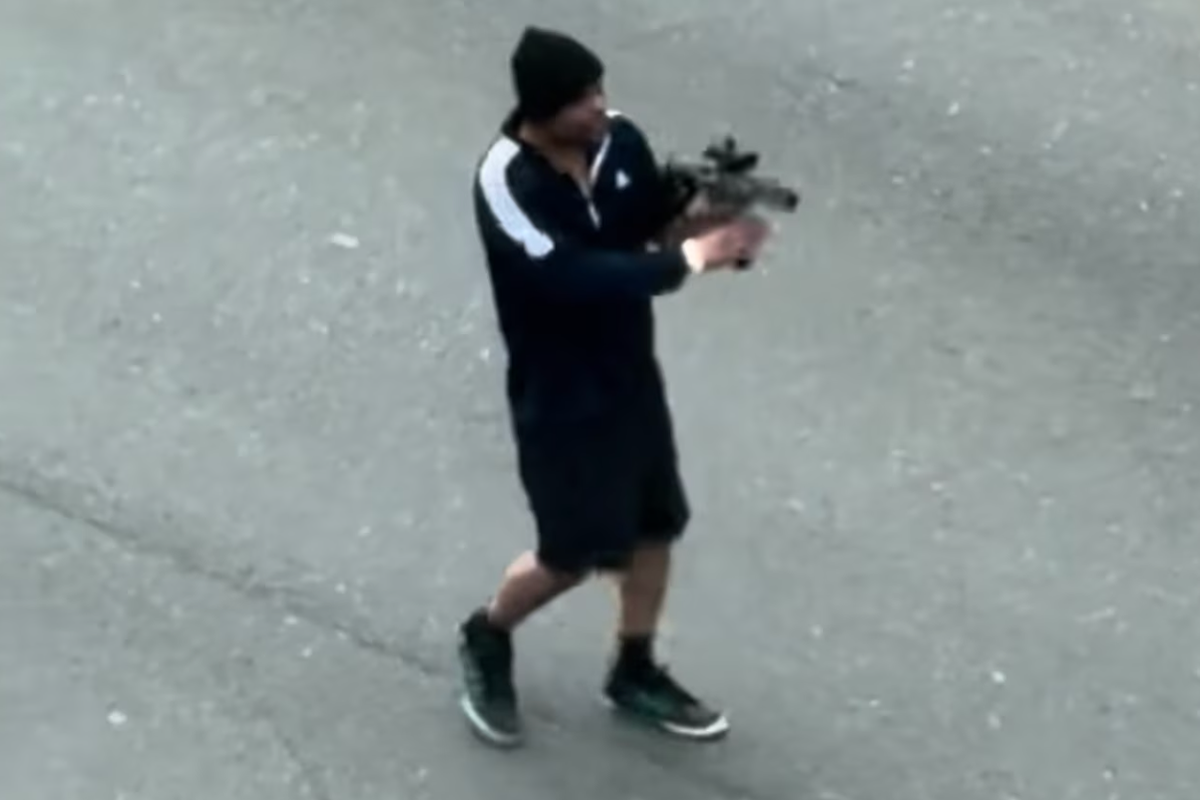
A man stood there with an assault rifle. He didn’t just fire; he hunted the flow of traffic. He emptied magazine after magazine into the passing metal skins of sedans and SUVs, sixty rounds in total, turning a public thoroughfare into a lottery where the prize was survival.
The Anatomy of a Second
Sixty rounds is a specific number. In a laboratory or a firing range, it is two boxes of ammunition. In a living, breathing community, it is sixty individual opportunities for a life to end.
Imagine the sound. It isn't like the movies. It is a dry, cracking snap that ripples through the air, followed by the terrifying thwack of lead meeting safety glass. When a high-velocity round hits a windshield, the glass doesn’t just break. It turns into a crystalline web, a veil that suddenly separates the driver from the road, the present from a potential funeral.
Two people are currently fighting for their lives in a hospital bed because of those sixty seconds. They aren't "victims" in the abstract sense. They are people who had plans for dinner. They are people who have dogs waiting by the front door and unread text messages sitting on their glowing phone screens. One moment they were citizens; the next, they were surgical puzzles for trauma teams to solve.
The physics of an assault rifle in a crowded space is a nightmare of variables. A bullet hits a door frame and ricochets. It loses its shape but keeps its heat. It tumbles. It finds the softest thing in the car. This isn't just "gunfire." It is the systematic shredding of the social contract that says we can drive to work without being hunted.
The Invisible Stakes of a Random Act
We often try to find a "why." We look for the manifesto, the grudge, the catalyst. We want a reason because reasons are comfortable. If there is a reason, we can avoid the trigger. We can tell ourselves, I don’t go to those places or I don’t know those people.
But when a gunman opens fire on a highway, the target is the very concept of public safety. It is an attack on the collective psyche. The stakes aren't just the two people in critical condition; the stakes are the thousands of drivers who will now flinch when they see a car pulled over on the shoulder. It is the mother who grips the steering wheel a little tighter while her child sleeps in the backseat, wondering if the shadow by the guardrail is a stranded motorist or a threat.
The police response was a frantic ballet of sirens and adrenaline. Officers rushed toward the sound of the cracking air, knowing exactly what sixty rounds can do to a human body. They found a scene of mechanical carnage—shattered windows, slumped figures, and the smell of burnt powder hanging heavy in the humid Massachusetts air.
The Weight of Metal
There is a coldness to the hardware involved. An assault rifle is a masterpiece of ergonomics designed for one specific outcome: the efficient delivery of force. When that force is directed at a Honda Civic, the mismatch is grotesque.
Consider the mechanics of the reload. To fire sixty rounds, the shooter had to pause. He had to drop a spent magazine, reach for a fresh one, and slide it home. That click—the metallic slide of a fresh rack of ammunition—is a moment of profound, calculated intent. It is the moment where "snap judgment" becomes "sustained assault."
It wasn't a flare-up of temper. It was a cycle of violence that repeated until the ammunition ran out or the will did. In this case, the intervention of the state was the only thing that could stop the rhythm. The suspect was taken into custody, but the lead he dispersed remains scattered in the door panels, the upholstery, and the flesh of his neighbors.
The Long Walk Back
The news cycle will move on. By tomorrow, the traffic will be flowing again over that same patch of road. The glass will be swept up. The yellow crime scene tape will be balled up in a dumpster.
But the two people in the ICU are not moving on. For them, the sixty rounds are still firing. Every beep of the heart monitor is a reminder of how close the metal came to the center of their world. Their families sit in plastic chairs in waiting rooms that smell like industrial cleaner, staring at the floor, trying to understand how a commute turned into a catastrophe.
They are living in the "after."
We like to think of our lives as solid, predictable things. We build houses, we save money, we plan vacations. We treat the ground beneath us as if it were granite. Then, sixty rounds of lead prove that it is actually just thin air and luck.
The gunman didn't just break the law. He broke the silence of a Tuesday afternoon and replaced it with a sound that his victims will hear for the rest of their lives, even in the quietest rooms.
The road is open now. The cars are moving. But the air over that stretch of Massachusetts highway feels different, heavier, as if the echoes of those sixty cracks are still vibrating in the leaves of the trees, waiting for the next person to drive by and remember that safety is a fragile, beautiful illusion.
The coffee is cold now. The cup is still in the car, surrounded by glass shards that look like diamonds in the afternoon sun.