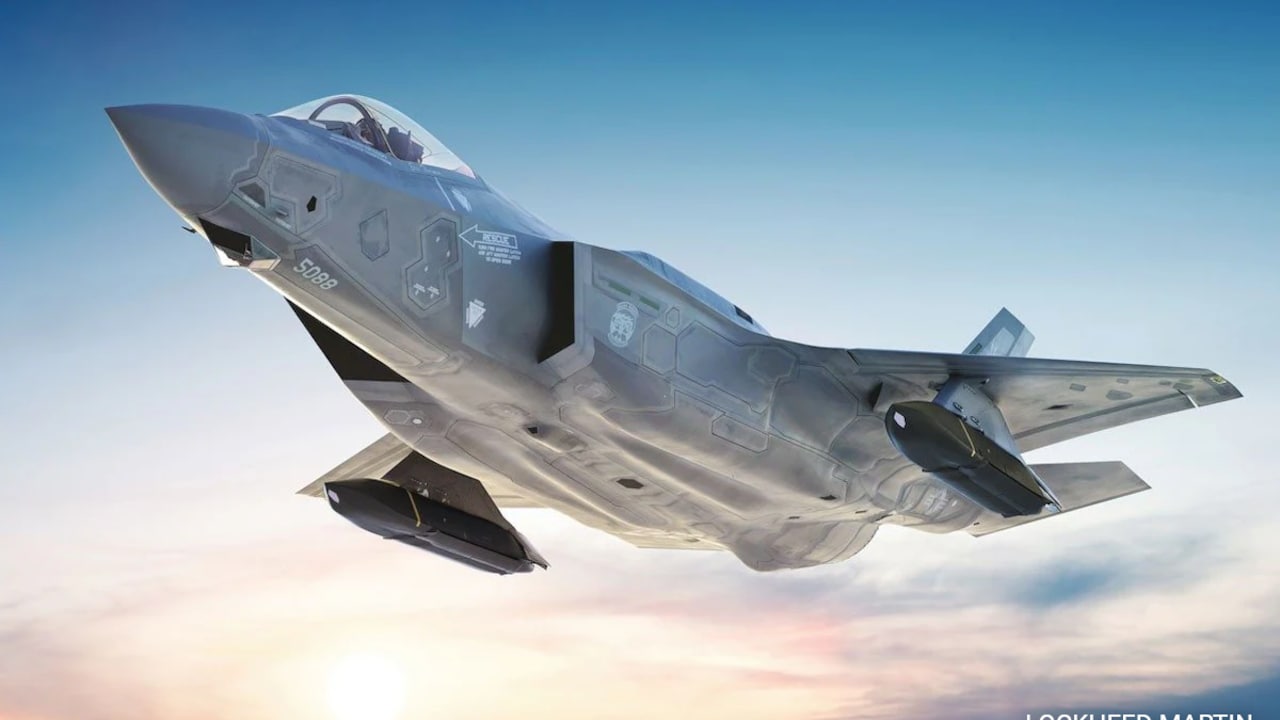
The roar of a fighter jet isn't just noise. It is a physical weight. It presses down on your chest, rattles the glass in your windows, and vibrates through the soles of your shoes long after the silver streak has vanished into the clouds. For decades, the alliance between Western powers and Turkey was built on that very sound—the shared acoustic signature of American-made steel policing the volatile edges of Europe and the Middle East.
Then came the silence.
When Washington locked Turkey out of the F-35 Lightning II program, it wasn't just a contractual dispute over military hardware. It was a geopolitical eviction notice. The move severed a deep-running artery of industrial and military trust, leaving a critical NATO ally stranded in a technological no-man's-land. But international relations, much like nature, abhor a vacuum. The recent diplomatic signals indicating that the United States might reconsider selling the fifth-generation stealth fighter to Turkey represent far more than a standard arms deal. It is a high-stakes gamble on the future of the North Atlantic alliance, wrapped in a story of pride, pragmatism, and the sheer, undeniable gravity of shifting global power.
The Invisible Fortress in the Air
To understand why a single aircraft can cause such a massive diplomatic earthquake, we have to look past the titanium skin and the multi-million-dollar price tag. We have to look at what the machine actually does.
Consider a hypothetical radar operator sitting in a darkened bunker somewhere along a disputed border. Let's call him Aslan. For years, Aslan’s job was straightforward: watch the green sweep of the radar screen, track the blips, and identify the signatures. Older aircraft are loud, visually and electronically. They announce themselves.
The F-35 does not announce itself. It is less of an airplane and more of an invisible, flying supercomputer. It collects, distills, and shares vast oceans of data across an entire battlefield in real time. For a military like Turkey's—which sits at the literal crossroads of Europe, Asia, and the Middle East—possessing this capability isn't about vanity. It is about survival. Without it, a modern air force rapidly becomes an expensive collection of vintage museum pieces.
When the United States severed the deal, Turkey didn't just lose a fleet of jets. They lost their seat at the table of the century's defining aerospace project. Turkish factories that had been meticulously machining central fuselage parts and cockpit displays were suddenly cut from the supply chain. The economic ripples tore through specialized industrial zones in Ankara and Istanbul, turning high-tech ambition into quiet frustration.
The Ghost in the Missile Battery
The fracture didn't happen in a vacuum. It was triggered by a single, defiant choice: Ankara’s purchase of the Russian S-400 missile defense system.
The American perspective was rooted in a deep, systemic fear of technological contamination. Imagine plugging an unauthorized, unsecured USB drive into a highly classified government server. That, in essence, is what military strategists feared would happen if the F-35 operated in the same airspace as a Russian-made missile system designed specifically to track and destroy Western aircraft. The concern was that the S-400's advanced radar would quietly analyze the stealth profile of the F-35, mapping its vulnerabilities and sending that invaluable data straight back to Moscow.
For Washington, it was an absolute binary. You could have the shield, or you could have the sword. You could not have both.
Turkey, meanwhile, viewed the ultimatum through a lens of national sovereignty. From their perspective, the West had dragged its feet on providing comparable Patriot missile batteries during a period of intense regional instability. Ankara chose to look elsewhere, asserting its right to defend its borders on its own terms. The resulting fallout was swift, bitter, and total. The jets Turkey had already paid for were locked away in hangars on American soil, their canopies covered, their engines cold.
The Language of Pure Pragmatism
Geopolitics, however, has a way of melting even the most rigid ideological stances. The world changed rapidly, and with that change came a harsh realignment of priorities.
The shift in tone from the highest levels of American leadership did not happen because old grievances were suddenly forgotten. It happened because the map of global conflict underwent a violent rewrite. The outbreak of large-scale warfare in Eastern Europe and escalating tensions across the Black Sea forced both Washington and Ankara to re-examine the mathematics of their relationship.
Turkey controls the Bosporus and Dardanelles straits—the literal gatekeepers of naval access to the Black Sea. Its military is the second-largest in NATO. In a world growing increasingly fractured and unpredictable, an isolated, resentful Turkey is a luxury the Western alliance simply cannot afford.
The sudden willingness to reconsider the F-35 sale is the language of pure, unadulterated pragmatism. It is an acknowledgment that in the grand calculus of global strategy, a flawed, complicated partnership is infinitely better than a strategic void. The realization dawned that while the S-400 remains a significant technical hurdle, the structural integrity of NATO's southern flank is a far larger, more pressing concern.
The Long Road Back to the Flight Line
Reversing a diplomatic freeze of this magnitude is not as simple as signing a new piece of paper. The logistics are staggering, and the political hurdles are immense.
First, there is the question of the hardware itself. The technical integration of an air force requires years of specialized training, infrastructure upgrades, and doctrinal shifts. Turkish pilots who were sent home from American training bases years ago would need to be replaced by a new generation of aviators, starting their instruction from scratch.
More importantly, the distrust runs deep. Lawmakers on Capitol Hill remain deeply skeptical of Ankara’s long-term strategic alignment, while Turkish officials are wary of American reliability as a defense partner. Every step forward will be scrutinized, debated, and picked apart by domestic audiences in both nations.
Yet, the momentum is shifting. The conversation has moved from a flat refusal to a conditional inquiry. The question is no longer if the relationship can be repaired, but what the price of that repair will be.
The Skyline Shift
Walk through the outskirts of Ankara today, near the massive aerospace complexes that dot the landscape, and you will find an industry that has spent the last few years trying to innovate its way out of a corner. Turkey has poured immense resources into developing its own domestic fighter programs and advanced drone fleets, determined to never be entirely dependent on a foreign power again.
But domestic innovation takes time—often decades. The immediate future still belongs to the fifth-generation platforms that dominate the skies today.
The potential return of the F-35 to Turkey isn't just about adding airframes to a hangar. It is a symbol of a turbulent world forcing ancient allies back into a room together, kicking the tires of a broken relationship, and trying to find a common frequency again. The skies over the Mediterranean and the Black Sea are growing crowded, restless, and dangerous. The drone of a jet engine may be loud, but the silence of a fractured alliance is far more deafening.