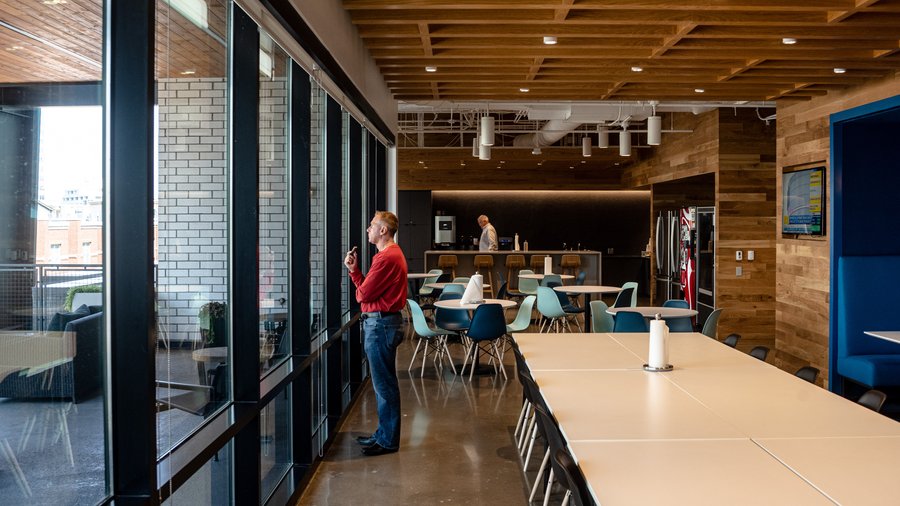
The phone on Marcus desk has not rung since Tuesday.
It is a heavy, black instrument, a relic of an office that usually hums with the frantic energy of midsummer hiring. In past Julys, his desk was buried under stacks of resumes. Fresh graduates, career changers, people looking for a second act—they all lined up, eager to trade their labor for a paycheck and a foothold. But this July feels different. The air in the room is thin. Quiet.
Numbers often arrive on a Wednesday as cold ink on a screen. Forty-four thousand.
That is the tally. That is the number of net new jobs private companies managed to add to their payrolls over the course of thirty-one sweltering days, according to the latest figures from ADP. Economists had penciled in something closer to one hundred thousand. Wall Street had braced for numbers twice that high. Instead, the engine sputtered.
To read that statistic on a financial terminal is one thing. To sit across a mahogany table from a man whose expansion plans have just been frozen in ice is another entirely.
Marcus runs a mid-sized logistics firm in the Midwest. He knows how to read a balance sheet, but more importantly, he knows how to read the room. He looks at his hiring managers, shakes his head slowly, and whispers the two words that are currently echoing through boardrooms from Chicago to Charlotte.
Not yet.
The Anatomy of a Hesitation
We talk about the economy as if it were a weather pattern—an atmospheric front moving across the map, completely detached from human hands. We watch employment reports like meteorologists tracking a distant storm, waiting to see if it will rain or shine.
Yet, every single digit in that forty-four thousand figure represents a heartbeat. It represents a real person staring at a blank calendar, waiting for an offer letter that lingers in draft mode.
Consider what happens inside a typical small business when the cost of capital climbs and consumer patience wears thin. The owner looks at next months rent, looks at the utility bill, and looks at the payroll ledger. The math stops working. It is not that businesses suddenly stopped needing people. Warehouses are still cluttered, supply chains still fracture, and customer service queues still stretch out into infinity. The need is screamingly obvious.
The willingness, however, has evaporated.
This is the invisible architecture of a slowdown. It is not a sudden cliff. It is a slow, grinding friction. Employers are pulling back not out of panic, but out of a profound, bone-deep weariness. Every hire is a bet. When the dice feel loaded, the smartest move at the table is to keep your hands in your pockets.
What the Numbers Do Not Show
When ADP releases its monthly tally, it tries to capture the vast, sprawling ecosystem of private enterprise. It counts the barista pouring oat milk lattes in Seattle, the welder joining steel beams in Houston, and the software developer writing backend code in Austin.
But averages lie. They smooth over the sharp, jagged edges of reality.
Services-producing industries dragged the most, while goods-producing sectors held their breath. Large corporations continue to trim the fat, digesting the massive headcounts they bloated themselves with during the post-pandemic hiring frenzy. Meanwhile, Main Street businesses—the small shops and local enterprises that form the true bedrock of American employment—are simply stuck. They are caught between rising wages that employees desperately need to keep up with inflation and flatlining revenues from customers who are finally starting to blink.
I remember watching my grandfather run his hardware store through the rough patches of the late nineteen-seventies. He did not care about gross domestic product reports or federal interest rate projections. He cared about whether the truck from the wholesaler was going to show up on time and whether Mrs. Gable was going to be able to pay her store account at the end of the month.
When the news broke about July, I thought of him.
The forty-four thousand figure is not a sign of an immediate collapse. It is something quieter. It is a yellow light blinking steadily at a deserted intersection. Everyone sees it. No one wants to hit the gas.
The Ripple Effect
Pause for a moment and trace the arc of a single unmade job offer.
In a normal cycle, a manufacturing plant in Ohio would bring on twenty new assembly workers in July to prepare for the autumn retail rush. Those twenty people would receive steady paychecks. They would buy groceries, fill their gas tanks, maybe finally replace that worn-out transmission, and take their kids out for ice cream on a Friday night. That money circulates. It ripples outward.
When those twenty jobs are canceled or postponed, the silence spreads. The grocery store sells twenty fewer rotisserie chickens. The mechanic loses a repair job. The ice cream shop trims an hour off a teenagers shift.
Multiply that twenty by thousands across the country, and you begin to understand why a meager July jobs report is more than just a bad day for Wall Street traders. It is a heavy blanket thrown over the embers of consumer momentum.
Economists will spend the coming weeks dissecting whether this is a temporary summer lull—a seasonal anomaly caused by unusual weather patterns or shifting holiday schedules—or the early warning sign of a more stubborn cooling trend. They will debate revisions. They will argue over standard errors and historical trends.
None of that matters to Marcus.
Looking at the Empty Desk
Back in his office, Marcus turns his computer monitor off. The blue light fades, leaving only the amber glow of the desktop clock reflecting in the glass.
He knows that eventually, the work will pile up so high that he will have no choice. The trucks will run out of drivers, the orders will sit unfulfilled, and the pressure will break the dam. People will be hired. The numbers will tick back up in some future month, and the analysts on television will smile and talk about resilience.
But right now, the room is quiet.
The forty-four thousand workers added in July are not just a statistic in a morning briefing. They are the threshold of a nation pausing to catch its breath, wondering which way the wind is going to blow next.
Outside the window, the summer heat shimmered against the asphalt, distorting the horizon into a wavy, uncertain line.
The phone remained silent.