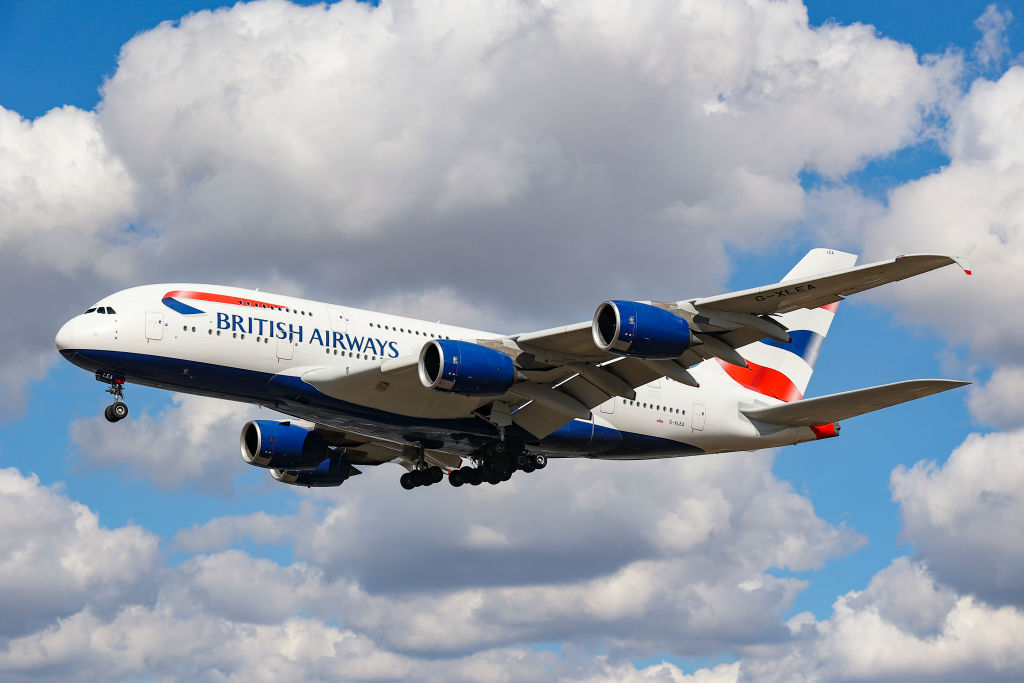
The headlines always read like a freak accident. "Cellphone catches fire on British Airways flight bound for Las Vegas." The narrative is entirely predictable: an unfortunate passenger, a rogue lithium-ion battery, a sudden burst of smoke, and a heroic crew deploying fire containment bags to save three hundred souls over the Atlantic.
It is a comfortable lie.
The media treats these events as anomalous tech glitches. Regulatory bodies treat them as isolated compliance failures. Both are dead wrong. The lazy consensus insists that flying is safer than ever and that a smoldering iPhone is just a rare cost of doing business in the digital age.
Here is the brutal reality: every commercial flight you board is a pressurized tube packed with hundreds of highly volatile thermal runaway hazards, managed by systems that rely on passengers reading a tiny placard. We are not dealing with rare technical anomalies. We are dealing with a systemic design flaw in modern travel.
The Myth of the "Accidental" Cabin Fire
The airline industry loves to focus on the containment, not the source. When a device slips into the gap of a business-class seat and gets crushed, causing the lithium-ion battery to enter thermal runaway, the aftermath is a flurry of press releases about cabin crew training.
This misses the entire point.
Thermal runaway is not a random malfunction; it is a predictable chemical chain reaction. When a lithium-ion cell is compromised through physical damage or manufacturing defects, the internal temperature skyrockets in milliseconds. The electrolyte decomposes, generating flammable gases like carbon monoxide and hydrogen. Once it hits roughly 150°C, the process becomes self-sustaining. It feeds its own fire.
The Mechanics of Thermal Runaway:
- Mechanical Abuse: A phone drops into the seat mechanism. The passenger moves the seat, crushing the battery casing.
- Internal Short Circuit: The separator between the anode and cathode fails.
- Thermal Spike: Localized heating ignites the liquid electrolyte.
- Propagation: The heat transfers to adjacent cells, triggering an unstoppable chain reaction.
I have spent years analyzing aviation safety protocols and hardware lifecycles. Airlines want you to believe that checking your large power banks and keeping your phone in your pocket solves the issue. It does not. The regulatory framework is fundamentally reactive. They banned the Samsung Galaxy Note 7 only after it became a global punchline. What about the millions of degraded, swollen batteries currently sitting in the back pockets of passengers on every single Boeing 777 flying today?
An old battery is an unstable battery. As these devices age, microscopic lithium metal structures called dendrites form inside the cell. These dendrites can pierce the internal separator without any external trauma. You do not need to crush your phone to start a fire; sometimes, simply plugging it into an unstable in-seat USB port is enough to initiate the cascade.
The "People Also Ask" Delusion
If you look up aviation battery safety, the search results are crowded with sanitized answers designed to keep you buying tickets. Let us dismantle the premise of these flawed questions.
Are lithium-ion batteries safe on planes?
No. They are tolerated. There is a massive difference. The Federal Aviation Administration (FAA) and the European Union Aviation Safety Agency (EASA) permit these devices because banning them would effectively destroy the business travel market. Imagine telling a corporate executive they cannot bring their laptop on an eight-hour flight. The industry accepts the statistical probability of a cabin fire as an acceptable risk margin.
Why can't I put my power bank in checked luggage?
Because if a fire starts in the cargo hold, the automated fire suppression systems—typically Halon 1301—cannot easily extinguish a lithium battery fire. Halon works by interrupting the chemical reaction of a standard fire, but a lithium battery produces its own oxygen as it burns. It feeds itself. The logic is simple: if it catches fire in the cabin, at least the crew can dump water on it or throw it in a containment bag. You are the designated fire warden for your own row.
How often do planes catch fire from phones?
More often than you are told. The FAA tracks reports of smoke, fire, extreme heat, or explosion involving lithium batteries. The charts do not lie: the trendline moves aggressively upward every single year. This is not because the tech is getting worse; it is because the density of batteries per passenger is skyrocketing. The average traveler carries a phone, a tablet, a laptop, wireless headphones, and a smart watch. Multiply that by 200 passengers. That is nearly a thousand potential ignition points on a single aircraft.
The Containment Illusion
The current defense strategy relies entirely on cabin crew intervention. Crew members are equipped with thermal containment bags—essentially high-tech oven mitts designed to withstand temperatures up to 1,000°C.
Here is what the airline training videos leave out: the sheer panic of a smoke-filled cabin at 35,000 feet.
When a battery goes into thermal runaway, it does not just burn. It pops, blasts sparks, and releases toxic, blinding smoke. Finding a phone that has slipped deep into the internal track of a motorized lie-flat seat while toxic gas is filling the upper deck of an Airbus A380 is not a clean, clinical procedure. It is chaos.
If the crew cannot locate the source within the first sixty seconds, the heat can easily compromise surrounding materials. The aluminum alloys used in aircraft interiors are tough, but the toxic smoke alone can incapacitate a cabin long before the fuselage structural integrity is threatened.
[Battery Failure] ──> [60-Second Critical Window] ──> [Toxic Gas Saturation]
                               |
                               └──> [Successful Containment Bag Deployment]
To be absolutely clear, this contrarian view has a downside. If we want absolute safety, we must ban personal electronic devices from air travel entirely. No phones. No laptops. No exceptions. But society will not accept that trade-off. We prefer the illusion of safety over the inconvenience of being disconnected.
Stop Relying on the Crew. Protect Yourself.
Since the regulators will not fix the underlying structural risk, passengers must stop acting like passive cargo. Relying on an underpaid flight attendant to handle a chemical fire two feet from your face is a terrible strategy.
- Never Move Your Seat If You Drop Your Phone: This should be a mandatory pre-flight briefing element, not a footnote. If your device slips into the gap, do not touch the electronic seat controls. Call the crew immediately. The mechanical scissors inside those seats will slice a lithium-ion pouch like paper.
- Inspect Your Tech Before You Pack: If your phone case is bulging, even slightly, it is not a cosmetic issue. It means the battery gas pouch has inflated. That device is a live grenade. Leave it behind.
- Buy a Dedicated LiPo Safe Bag: Serious drone hobbyists know this rule; casual travelers do not. If you travel with multiple high-capacity external batteries or camera gear, store them in a fireproof lithium-polymer safe bag inside your carry-on. Do not trust the airline's overhead bin to protect your gear from shifting loads.
The British Airways incident bound for Las Vegas was not a fluke. It was an inevitability. As long as we demand infinite battery life wrapped in ultra-thin consumer packaging, we are inviting volatile chemical reactors into our skies. The industry knows the math. Now you do too.
Stop treating your phone like a harmless accessory. At 35,000 feet, it is the most volatile piece of equipment on the aircraft.