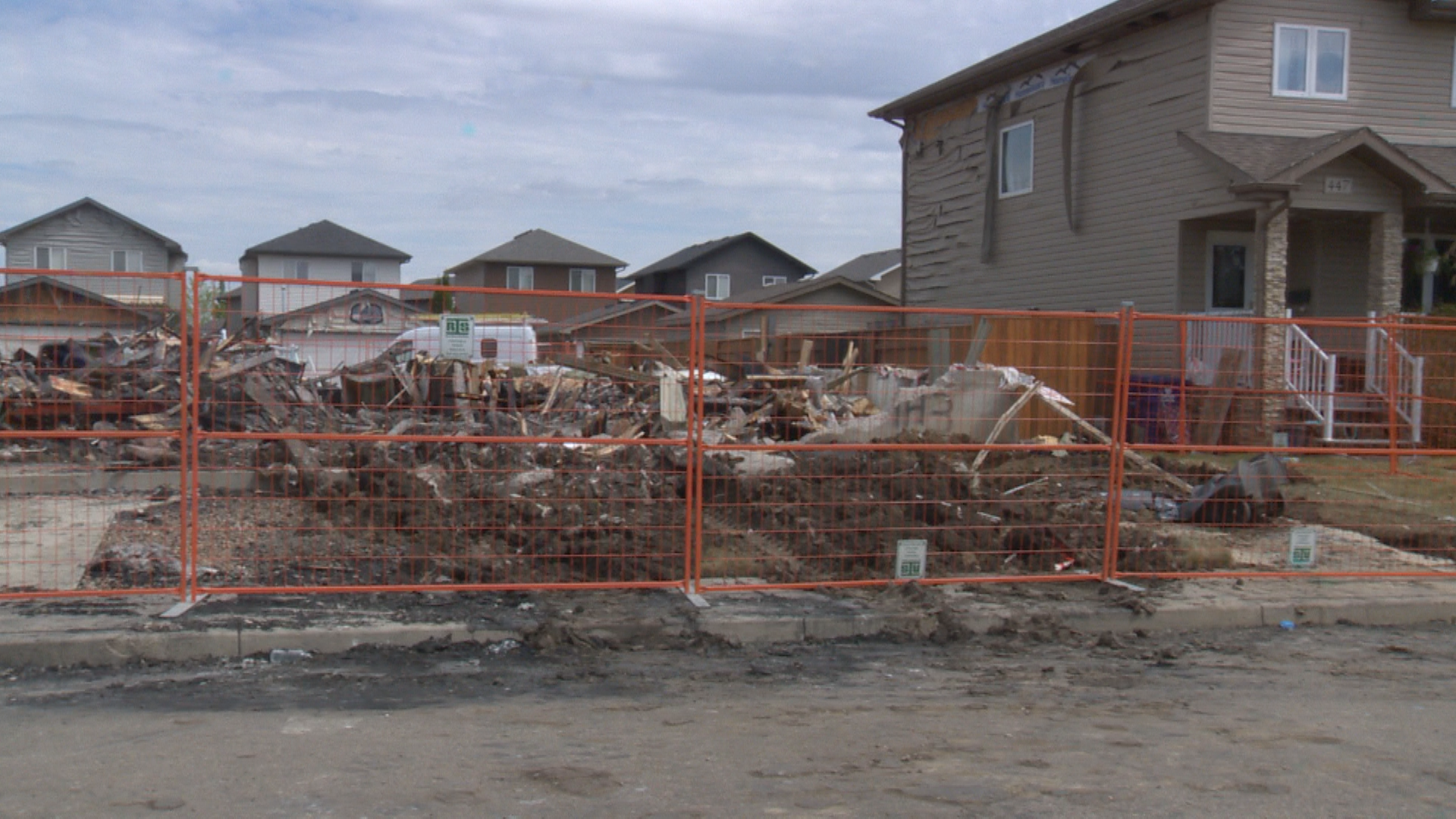
The air in north-west Saskatoon usually smells of sweetgrass and prairie wind. But on that Tuesday, the horizon turned the color of bruised plums. Thick, oily smoke began to choke the afternoon light over Hampton Village. It started with a single spark on a balcony. Within minutes, a multi-family residential complex was transformed into a towering inferno.
An apartment fire is not just a statistical anomaly or a blip on a scanner app. It is a sudden, violent rewriting of dozens of human lives. One moment you are deciding what to make for dinner, worrying about a math test, or folding a basket of warm laundry. The next, you are running down a concrete stairwell in your socks, clutching a terrified cat, watching every physical marker of your existence dissolve into ash.
By the time the Saskatoon Fire Department brought the blaze under control, the damage was absolute. Several units were completely gutted. Dozens of residents stood on the asphalt, shivering in the prairie breeze, staring at the skeletal remains of their homes. They had their lives, yes. But they had nothing else. No wallets, no winter coats, no identification, no childhood photos.
That is when a second, quieter event began to unfold across the city.
The Anatomy of an Instant Crisis
Disaster has a specific geometry. When a fire tears through a high-density complex, it creates an immediate vacuum. The Emergency Social Services team scrambled to set up a reception center at the nearby Cosmo Civic Centre. This is the standard bureaucratic response to tragedy. It is necessary, structured, and vital. Staff laid out cots, opened emergency water bottles, and began the slow process of registering displaced families.
But institutional help has its limits. Government vouchers can buy a temporary hotel room and a hot meal, but they cannot replace the specific comfort of a teddy bear for a screaming four-year-old who refuses to sleep in a strange bed. They do not provide a fresh change of scrubs for a nurse who needs to report for a shift the next morning.
Consider a hypothetical resident named Sarah. She represents a composite of the very real people standing on that pavement. Sarah didn't just lose a roof over her head; she lost the textbook she needed for her university midterms, the prescription medication she required for her asthma, and the sense of absolute safety that most of us take for granted when we lock our front doors at night.
The immediate aftermath of a crisis is characterized by this frantic, overwhelming disorientation. The phone rings constantly with calls from worried relatives, insurance adjusters, and well-meaning friends. Amidst that noise, the sheer weight of what has been lost begins to settle into the bones.
The Prairie Response
Saskatoon is a city built on the concept of community preservation. When the winter temperatures drop to minus forty, looking out for your neighbor is not a casual moral choice; it is a survival mechanism. That deeply ingrained cultural DNA asserted itself within hours of the Hampton Village fire.
Before the official donation drives could even organize their spreadsheets, the community took action.
Local social media groups erupted with activity. Neighbors living just blocks away from the charred complex began filling their trunks with blankets, shoes, and baby formula. They drove down to the evacuation perimeter, seeking out volunteers to hand over goods directly to those in need. Businesses in Hampton Village opened their doors, offering free coffee, charging stations, and a quiet space for displaced residents to sit and process the shock.
"We saw the smoke from our kitchen window," one local volunteer noted while sorting through a mountain of donated clothing. "You don't think about guidelines or logistics in that moment. You just think about what you would need if everything you owned turned to ash in twenty minutes."
This is the invisible infrastructure of a city. It cannot be budgeted for, and it cannot be mandated by city council. It is the spontaneous, messy, beautifully human reflex to cushion the fall of a stranger.
The Logistics of Kindness
As the days progressed, the initial wave of adrenaline-fueled giving had to transition into something sustainable. This is where the true challenge of disaster relief begins. Well-meaning citizens often flood donation centers with items that are not immediately useful. High-heeled shoes, outdated electronics, and used toys clog the system when what families truly require are gift cards, hygiene products, and dignity.
Local community associations and faith-based groups stepped in to streamline the generosity. They created specific, targeted lists of needs. They asked for new underwear, socks, diapers of specific sizes, and pet food.
The response was overwhelming. Storage rooms filled to the ceilings.
This collective effort reveals a fundamental truth about human nature: people want to help, but they need a channel. When a community provides a clear, transparent pathway for generosity, the volume of support can easily match the scale of the tragedy.
But the physical items are only a surrogate for the real gift being offered. Every donated sweater, every loaded gift card, and every offered spare bedroom is a message whispered to the survivors. It is the city saying: You are seen. You are not alone. We will help you rebuild.
The Long Road to Recovery
The cameras eventually pack up. The smoke clears, leaving behind a black, hollowed-out scar against the Saskatoon sky. The news cycle moves on to the next headline, the next political debate, or the next weather warning.
But for the families of Hampton Village, the fire is not over when the trucks leave.
The true test of a city's compassion lies in the weeks and months that follow the initial disaster. Finding affordable housing in a tight rental market is a grueling task under the best circumstances. Doing so while navigating insurance claims, replacing lost identification documents, and managing the psychological trauma of a narrow escape is monumental.
Children who experienced the fire may flinch at the sound of a siren for years to come. Parents will feel a spike of panic every time they smell burnt toast. The physical structure can be rebuilt with concrete, drywall, and insurance payouts, but the emotional architecture of a life takes much longer to restore.
The spontaneous generosity witnessed in the days following the blaze sets a baseline. It proves that the community is capable of rallying in a crisis. The challenge now is to maintain that collective empathy, to remember the families of Hampton Village when their plight is no longer trending on local news feeds.
A city is defined by how it treats its most vulnerable in their darkest hours. Saskatoon looked into the smoke, saw its neighbors in peril, and decided to step forward instead of looking away.
The charred remains of the apartment building still stand as a grim reminder of how quickly everything can change. But down the street, in community halls and living rooms, the quiet, persistent work of rebuilding lives continues, one small act of kindness at a time.