Fear has a very specific sound. It is not a scream. Screams belong to the movies. Real fear is the low, rhythmic thrum of plastic sandals hitting packed red earth at midnight, accompanied by the muffled clatter of an iron cooking pot tucked hastily under a shivering arm.
In the eastern provinces of the Democratic Republic of Congo, the air often smells like woodsmoke and damp green fern. But lately, when the wind shifts off the jungle canopy, it carries something heavier. It carries the metallic tang of chlorine water and the suffocating hush of an invisible predator moving silently from village to village. If you liked this article, you might want to look at: this related article.
Ebola is back. And the machinery meant to stop it is grinding its gears in the dark.
To understand why new hot spots are erupting with such vicious speed, you have to throw away the sanitized maps we look at from air-conditioned desks thousands of miles away. You have to walk into the red dust of a rural health zone where electricity is a rumor and a single motorcycle with a flat tire can mean the difference between containment and catastrophe. For another angle on this development, check out the recent update from National Institutes of Health.
Imagine standing in a clinic built of rough-sawn timber and corrugated tin. The roof radiates the afternoon heat like an oven plate. Inside, responders describe a reality that goes far beyond simple disorganization. They call it chaotic. But chaos is a polite word for a room where people are dying faster than their names can be logged into damp paper registers.
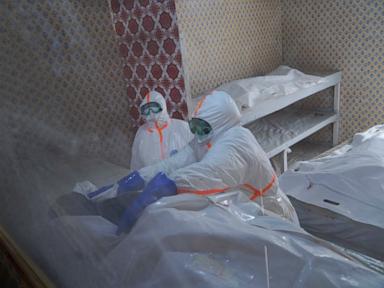
Consider what happens when a virus older than human history crosses paths with a modern war zone. The Kivus and surrounding territories are not blank slates waiting for a neat medical intervention. They are living, breathing landscapes scarred by decades of conflict, fractured trust, and institutional neglect. When a health team rolls into a village wearing full personal protective equipment—yellow plastic suits, heavy goggles, rubber boots that squelch in the mud—they do not look like saviors to a terrified mother clutching a burning child. To a population that has survived armed militia raids, forced displacements, and broken government promises time and time again, these space-suited figures look like harbingers of doom.
Suspicion takes root instantly. It grows faster than the virus itself.
Villagers hide their sick. Funerals happen in the deep dead of night, away from the watchful eyes of surveillance teams who insist on safe, dignified burials that strip families of their traditional mourning rites. Every hidden body becomes a silent fuse. Every secret farewell lights another spark miles down the road, creating unpredictable hot spots that flare up like brushfires in a dry wind.
The medical science of Ebola is actually quite simple, almost brutally so. It is an envelope virus, fragile in the open air, easily neutralized by soap, bleach, and basic barrier nursing. It requires direct contact with bodily fluids to jump from host to host. In a sterile laboratory with infinite resources, stopping it is an engineering problem.
But human beings do not live in laboratories.
They live in close-knit communities where caring for the sick is an act of sacred obligation. When your brother shivers with chills and his skin turns yellow, your first instinct is not to call a distant hotline staffed by strangers who speak a different dialect. Your instinct is to pull him close, to wipe his brow with a cool cloth, to hold his hand as his breathing grows shallow.
That natural, beautiful impulse is what the virus weaponizes against us.
Responders on the ground are caught in a grinding mill of impossible choices. Do they enforce quarantine with armed escorts, driving families further into underground resistance? Or do they step back, plead for patience, and watch the transmission chains multiply while they wait for community elders to grant permission to enter a neighborhood?
There is no textbook answer for that. You learn it in the sweat of your own uniform, watching the numbers tick upward on a whiteboard while the generator sputters and dies for the fourth time that night.
The local nurses and community health workers are the real unsung spine of this fight. They are not distant international experts flying in on private chartered planes with shiny equipment. They are local women and men who walk three hours to work through muddy terrain, knowing full well that the patient in bed four might carry a death sentence. They work double shifts until their eyes burn from chlorine fumes. They know the names of the children. They know which family owns the spotted goat, whose grandfather planted the mango tree by the well, and who was supposed to get married next month.
When one of those nurses falls ill, the grief in the clinic is suffocating. It is personal. It shatters morale in a way that spreadsheets and epidemiological graphs can never capture.
Yet the work continues. Because beneath the administrative failures, beneath the supply chain bottlenecks that leave clinics without enough syringes or cold-chain refrigeration, there is an enduring, stubborn human resilience.
We saw it in Beni. We saw it in Equateur. We are seeing it now in the flickering orange glow of kerosene lanterns across new forest clearings where young doctors sit on wooden benches, listening for hours to village elders, trading patience for trust, one cautious conversation at a time.
Epidemics are rarely defeated by force alone. They are cornered by listening.
The smoke still drifts over the canopy in the Congo. The red dust still clings to the boots of the weary. Somewhere in a dim room tonight, a monitor is beeping, a nurse is dipping her gloved hands into a bucket of bleach, and the ancient, invisible war between human survival and viral replication enters its next quiet, desperate hour.