The coffee in the chipped ceramic mug had gone cold twenty minutes ago, but Layla didn't pour it out. In a city where water is monitored with the quiet anxiety of a dying battery, you do not waste a single drop of liquid, even if it tastes of copper and stale storage.
Outside her kitchen window, the morning air over southern Lebanon hung heavy and violet-tinted. It was the color of a bruise before it swells.
Then came the sound. Not the distant, rhythmic thrum of cargo planes or the harmless buzz of distant traffic, but a sudden tearing in the fabric of the atmosphere. The sort of sound that makes your teeth ache and your stomach press flat against your spine.
By the time the secondary shockwave rattled the glass in its wooden frame, the official count was already forming in bureaucratic text messages across newsrooms in Beirut, Washington, and Tel Aviv: eleven dead. At least eleven. A dry integer attached to a footnote in a midday broadcast.
Numbers are cowards. They reduce a grandmother kneading dough, a mechanic wiping grease from his calloused knuckles, a child chasing a stray kitten into a concrete alleyway, into a tally sheet. They turn human breathing into flatlined statistics. But when you are the one sitting in the kitchen, watching the plaster dust drift slowly down through a shaft of sunlight like gray snow, numbers are nothing at all. They are an insult.
Hostilities do not arrive as a sudden storm. They accumulate. They pool in the spaces between neighbors who stop looking each other in the eye across balconies. They thicken in the conversations of old men playing backgammon in shaded courtyards, their dice rattling like dry bones against the board while they calculate the distance between the border ridge and their grandchildren's schools.
For months, the cadence of life had been governed by a cruel metronome. A shell here. A retaliatory strike there. A low-frequency hum of dread that people learned to live alongside the way one learns to live with a chronic murmur in the heart. You adjust your stride. You keep your children close. You tell yourself that tomorrow will look precisely like yesterday, because the alternative—confronting the jagged edge of an escalation that refuses to halt—requires a species of courage that feels entirely beyond reach.
Yet yesterday dissolved at dawn.
In Tyre, fishermen who had cast their nets before the stars burned out found themselves racing back toward the harbor not for a catch, but to outrun columns of black smoke climbing lazily into the blue. In Nabatieh, storefront metal shutters crashed down one by one, a metallic chorus of retreat that echoed down streets usually bustling with the trade of olives, soap, and fresh bread.
Every strike writes a new chapter in a ledger of mutual exhaustion.
Consider what happens next in the quiet parlors of diplomats thousands of miles away. Telephones ring in wood-paneled offices. Statements are drafted, redrafted, polished until the sharp corners of reality are smoothed away into diplomatic euphemisms. Deeply concerned. Urgent de-escalation. All parties must exercise restraint.
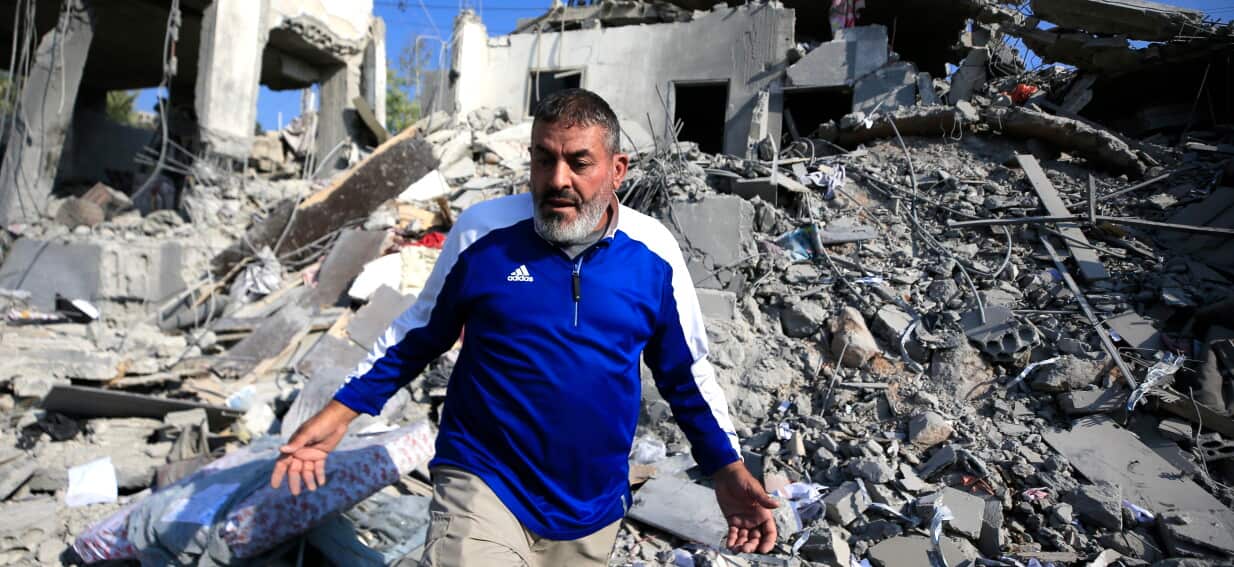
The words float through television screens mounted in cafes where the patrons stare blankly at the tickers beneath the news anchors' faces. Rest restraint. Exercise calm. Try telling that to the wind rushing through the jagged hole where the third-floor apartment used to be. Try whispering about proportionality to a mother kneeling beside a covered stretcher in the courtyard of a hospital where the lights flicker and hum from an overburdened generator.
We have built an entire vocabulary to sanitize suffering. We talk about kinetic actions, precision munitions, degraded capabilities, and collateral metrics. It is a language designed to let the speaker sleep at night. It is armor made of syllables.
Strip away the armor, and you find the raw nerve of the matter.
A border is not a line on a map drawn by colonial surveyors with rulers and ink. A border is a scar that people live on top of. It is where two histories collide with the force of grinding tectonic plates. When those plates slip, it is never the architects of the conflict who bear the weight of the rubble. It is Layla. It is the pharmacist on the corner who lost his inventory and his livelihood in four seconds of concussive fury. It is the teenager who was supposed to take his university entrance exams next Tuesday, wondering if there will even be a university left to walk into.
The escalation did not begin this morning. It began the moment we decided that other people's safety was negotiable. It began every time an ultimatum was issued instead of an invitation, every time a siren was treated as background music rather than a catastrophe in progress.
Inside her apartment, Layla finally set the cold mug down on the formica table. The dust had settled on her eyelashes, gray and fine. She did not cry. There is a strange, hollow stage of grief where tears refuse to cooperate, blocked by the sheer logistical impossibility of processing what has just occurred.
She walked over to the hallway mirror, straightened the collar of her cardigan with automatic precision, and looked at her own reflection. The glass was cracked right down the center, splitting her face into two asynchronous halves.
Outside, another distant rumble rolled across the valley, short and heavy, reminding anyone still listening that the ledger was not yet closed for the day.