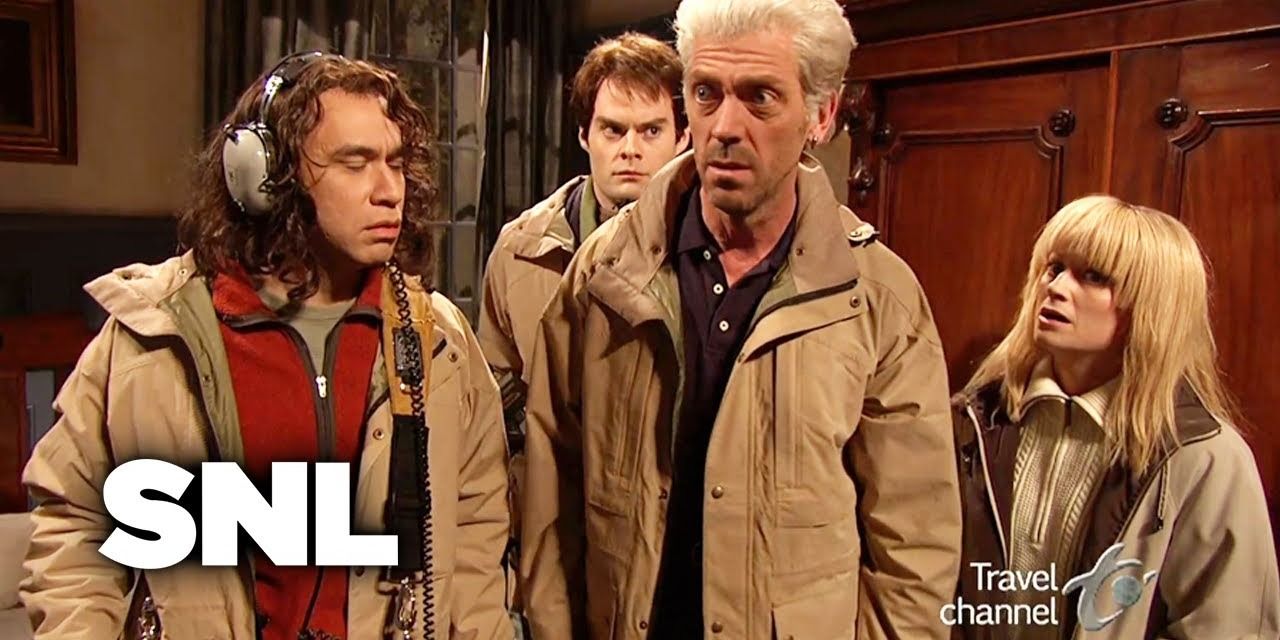
The British media is currently patting itself on the back because Saturday Night Live finally crossed the Atlantic. They are marveling at Tina Fey’s opening monologue. They are giggling at "very British" sketches about tea and queues. They are calling it a "bold new chapter" for late-night television.
They are wrong.
What we witnessed with the premiere of SNL UK wasn't the birth of a cultural powerhouse. It was the expensive taxidermy of a dying format. By trying to transplant a sixty-year-old American variety show into the London comedy scene, NBCUniversal and its local partners haven't modernized British humor—they’ve colonized it with a zombie.
The Tina Fey Fallacy
Starting with Tina Fey was the first mistake. It was a move born of fear, not creative vision.
The "lazy consensus" among TV critics is that bringing in an American heavy hitter provides a "bridge" for the audience. It’s supposed to lend the fledgling production instant gravitas. In reality, it signaled a total lack of faith in the British talent pool.
If SNL UK actually wanted to be British, it would have opened with someone like Stewart Lee or Phoebe Waller-Bridge—performers who understand that British comedy is built on a foundation of cringe, class resentment, and failure. Instead, we got the polished, rapid-fire "Update" style that Fey perfected decades ago. It felt like watching a high-end cover band. You recognize the notes, but the soul is missing.
The Sketch Comedy Industrial Complex
The original Saturday Night Live succeeded in 1975 because it was dangerous. It was Lorne Michaels and a group of "Not Ready for Prime Time Players" doing drugs and mocking the hand that fed them. It was counter-culture.
You cannot manufacture counter-culture in a boardroom in 2026.
The modern sketch show is a victim of the "Viral Clip Metric." Writers aren't trying to create a cohesive ninety-minute experience; they are trying to create three-minute chunks of "shareable content." This leads to what I call the Anemic Premise Loop:
- Identify a mildly recognizable trope (The awkwardness of a Greggs queue).
- Repeat the trope three times with increasing volume.
- End the sketch because you ran out of time, not because there was a punchline.
British comedy has historically been better than this. From Monty Python to The Fast Show to Limmy’s Show, the DNA of UK sketch work is surrealism and character-driven pathos. SNL UK strips that away in favor of the American "High-Concept Parody" model. It’s efficient, it’s shiny, and it’s utterly forgettable.
The Myth of "Very British Humor"
Reviewers are tripping over themselves to praise the "local flavor" of the writing. They point to sketches about the NHS or the Royal Family as proof that the show has a British heart.
This is a surface-level observation.
True British satire isn't just about mentioning the NHS. It’s about the specific, agonizing bitterness of the British experience. When the original SNL tries to do "British," it usually results in bad accents and jokes about bad teeth. When SNL UK does "British," it feels like it was written by an algorithm that has spent too much time on UK Twitter. It’s performative.
I’ve seen networks pour tens of millions into "localizing" formats. They always make the same mistake: they keep the skeleton (the American structure) and just change the skin. But the skeleton is the problem. The 11:30 PM live variety format is an artifact of a linear television world that no longer exists.
The Math of Failure
Let’s talk about the logistics. Producing a live, 90-minute sketch show is a financial nightmare.
- Talent Burnout: The weekly grind of writing and performing SNL kills creativity. In New York, the sheer scale of the industry sustains it. In London, the pool is smaller. You will see the same three writers' voices exhausted by week six.
- The Rehearsal Paradox: British comedy thrives on spontaneity or obsessive polish. SNL’s "write on Tuesday, perform on Saturday" schedule creates a middle ground of mediocrity. It’s too rushed to be perfect and too scripted to be punk.
- The Audience Gap: The people who want SNL already watch the American version on YouTube. The people who want British comedy are watching experimental shorts on TikTok or bingeing scripted sitcoms on Channel 4. Who is this show actually for?
Dismantling the "People Also Ask" Delusions
Is SNL UK the savior of British late-night?
No. It’s the tombstone. Late-night is dead because the "monoculture" is dead. We don’t all watch the same thing at the same time anymore. Trying to resurrect the "watercooler moment" with a live broadcast is like trying to sell someone a corded telephone in 2026. It’s nostalgic tech, nothing more.
Does it provide a platform for new talent?
It provides a platform for a very specific kind of talent: people who can play well with corporate lawyers and brand safety officers. The truly "dangerous" comedians—the ones who would have been on SNL in the 70s—are currently being canceled or are building their own empires on independent platforms. They don't need a guest spot on a legacy network.
The Counter-Intuitive Truth
If you want to actually "disrupt" the comedy scene, you don't build a bigger stage. You shrink it.
The most successful "sketches" of the last five years didn't happen in Studio 8H or a London soundstage. They happened in vertical video formats, shot on iPhones, with zero budget and 100% creative control.
The institutional weight of a brand like SNL is now a liability, not an asset. It brings expectations of "balance" and "broad appeal." But comedy isn't supposed to be broad. It’s supposed to be a knife. By the time a joke passes through the various layers of producers and legal checks required for a flagship international format, the edge is gone.
What we saw with the Tina Fey premiere was a "safe" version of rebellion. It was a rebellion sponsored by a multinational media conglomerate.
The Battle Scars of Experience
I have watched countless "international versions" of hits fail. From The Office (the versions that didn't work) to various attempts at bringing The Daily Show to different markets. The failure point is always the same: The Cargo Cult Mentality.
In World War II, islanders saw planes land with supplies. They built "runways" out of straw and wood, hoping the planes would return. They had the shape right, but they didn't understand the engine.
SNL UK has the desk. It has the musical guest. It has the "Live from London!" catchphrase. It has the straw runway.
But there is no engine. There is no reason for this show to exist other than brand extension. It is a cynical exercise in intellectual property management.
Stop asking if the sketches were funny. Start asking why we are still pretending that a format designed for 1970s Manhattan has anything to say to a 2026 London.
The British audience doesn't need a translated version of an American institution. They need something that reflects the fractured, chaotic, and deeply weird reality of modern Britain—and that thing won't be found on a set that looks exactly like a studio in Rockefeller Center.
The "Britishness" of the show is a coat of paint on a rotting fence. You can change the host, you can swap the tea for coffee, and you can hire the best writers in Soho, but you are still making a show for a world that has moved on.
Burn the script. Break the cameras. If you want to save British comedy, stop trying to make it "Live from London" and start making it alive.
Go watch a teenager on a social media app explain the collapse of the Western economy in sixty seconds with a filter on their face. That is more "SNL" than anything Tina Fey did on that stage.
The show is a monument. And monuments are for the dead.
Would you like me to analyze the specific demographic data that explains why linear variety shows are failing to capture the under-30 market in the UK?