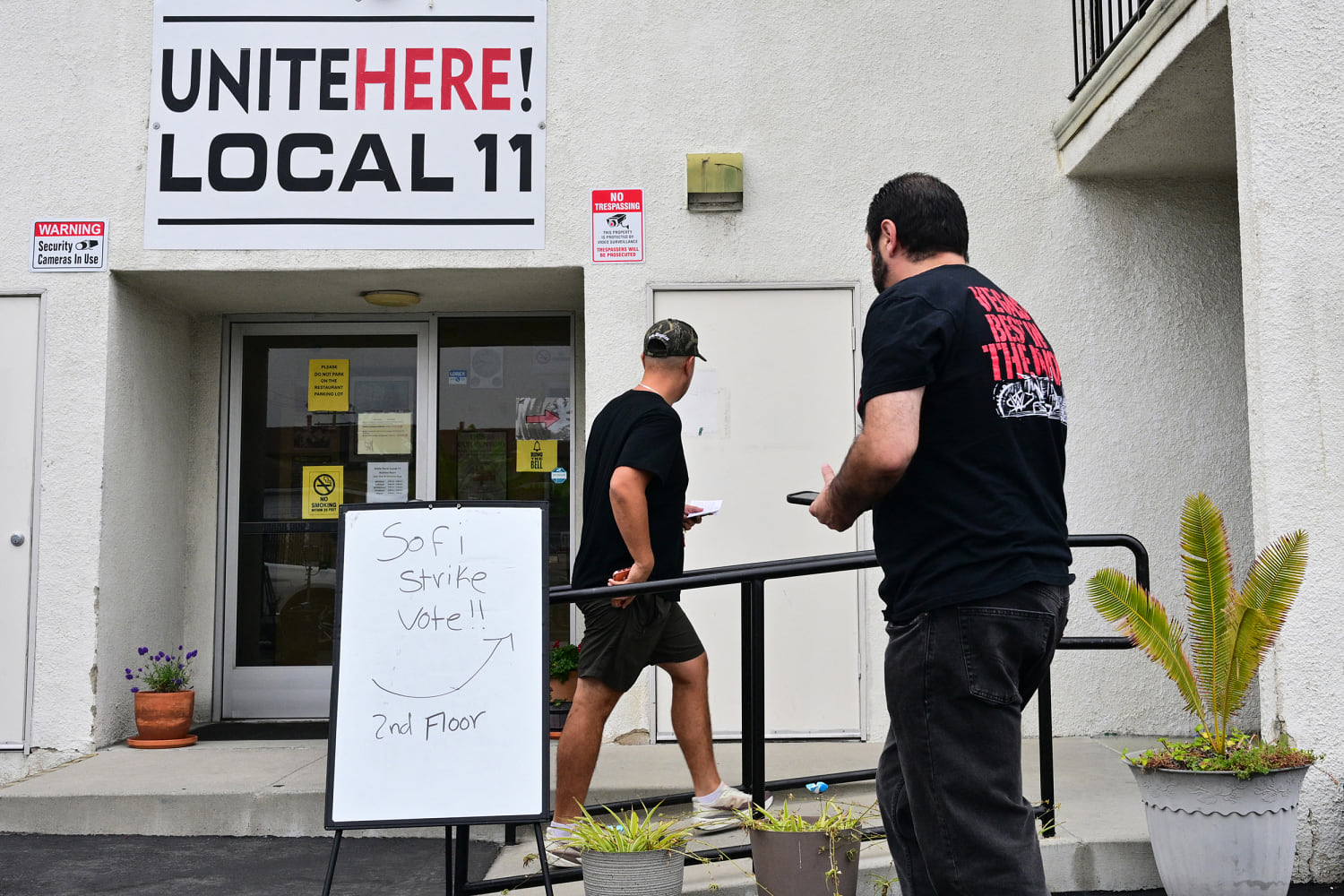
The media is currently swooning over the "historic victory" at SoFi Stadium. Headlines are celebrating a tentative agreement that averted a strike just as the venue prepares for massive global events. The mainstream narrative is predictably lazy: brave workers stood up to billionaire stadium owners, authorized a strike, forced management's hand, and won a living wage.
It is a heartwarming story. It is also entirely wrong. You might also find this connected coverage interesting: Stop Blaming the Chip Shortage for Your Overpriced Car.
What just happened in Los Angeles was not a triumph of labor strategy. It was a massive, systemic failure of imagination by union leadership. By settling for a standard, incremental wage hike right before the most lucrative sports cycle in American history, the union did not squeeze management. They saved them.
The conventional wisdom says that avoiding a strike is a win-win. The truth is that stadium operators were staring down the barrel of an operational apocalypse, and union leaders handed them an escape hatch for pennies on the dollar. As highlighted in latest reports by The Wall Street Journal, the effects are significant.
The Economics of Inelastic Stadium Deadlines
To understand why this agreement is actually a loss for long-term labor leverage, you have to look at the brutal reality of sports venue economics.
Stadium operators deal with a variable known as absolute time constraint. If an office building project is delayed by two weeks, the developer incurs holding costs, but the building still opens. If a stadium is paralyzed by a strike on the night of a massive international tournament or a Taylor Swift concert, that revenue does not defer to next month. It vanishes forever.
The cost of a canceled event includes:
- Direct ticketing revenue losses that cannot be recouped.
- Broadcast rights penalties from networks demanding premium content.
- Sponsor litigation for failure to deliver guaranteed eyeballs.
- Long-term reputational damage that scares away future live entertainment bookings.
I have spent years analyzing the back-end financials of major venue operations. The panic inside executive suites when a strike authorization vote passes ahead of a global tournament is palpable. Management knows that a 48-hour disruption can wipe out an entire fiscal year's profit margin.
Because of this, the workers held 100% of the leverage. They possessed a functional monopoly on the physical operation of a facility that cost over $5 billion to build. Yet, the resulting tentative agreement looks like every other standard collective bargaining agreement signed in a boring, non-event year.
Dismantling the Myth of the Successful Compromise
Let's address the flawed premise that dominates the "People Also Ask" sections of every major search engine whenever labor disputes hit the news.
Does a tentative agreement mean the workers won?
No. A tentative agreement simply means management found the exact price point required to make the threat go away without changing the underlying power dynamic.
In the case of the Los Angeles stadium workers—including food service staff, janitors, and ride-share coordinators—the narrative focuses heavily on hourly wage increases. But focusing solely on the hourly rate is an amateur mistake.
| Metric | The Union's Perception | The Operational Reality |
|---|---|---|
| Hourly Wage | A significant percentage bump over previous contracts. | Displaced by inflation and high regional costs of living. |
| Shift Guarantees | Minor concessions on scheduling predictability. | Management retains the right to cut hours during off-season lulls. |
| Event Premium | Standard overtime rates for holiday shifts. | No direct revenue-sharing from mega-event tier pricing. |
When a stadium sells a single luxury suite package for $50,000 for one night, an extra $3 or $4 an hour for the concessions worker serving that suite is statistical noise. By settling before walking out, the union capped its upside. They accepted a linear increase in a world of exponential venue monetization.
Why Unions Keep Settling Too Early
Why do labor leaders consistently blink right when management is about to crack?
It comes down to a fundamental misunderstanding of risk asymmetry. Union executives are political creatures. They need a visible, uncomplicated win to justify dues and maintain their positions. A ratified contract with a shiny percentage increase looks like a victory on a flyer. A prolonged strike introduces variables they cannot control: worker fatigue, negative press, and potential legal challenges over strike legality around multi-tenant facilities.
But this risk aversion ignores the massive asymmetry in favor of the workers. A billionaire owner can weather a strike financially, but they cannot weather the public relations disaster of an empty, dark stadium during prime-time television broadcasts. The pressure from sponsors, city officials, and athletic leagues on the stadium operator is immense.
By taking the first serious offer on the table, union negotiators let management buy insurance against a catastrophic event at a massive discount.
The Playbook for Real Venue Labor Disruption
If stadium labor unions actually wanted to reshape the industry instead of merely surviving within it, they would throw out the traditional collective bargaining playbook entirely.
1. Demand Revenue-Sharing, Not Hourly Wages
Stadium food and beverage costs are notoriously inflated. A bottle of water that costs $0.50 wholesale sells for $9 at the concourse. Workers should stop bargaining for fixed hourly increases that get eaten alive by inflation within twenty-four months.
Instead, contracts should tie event-day compensation directly to a percentage of gross concession and ticketing revenue for that specific day. If tickets for a high-profile match spike by 400%, worker pay for that shift should scale proportionally. If the venue profits wildly from a capacity crowd, the people operating the turnstiles and pouring the beers should participate in that upside.
2. Weaponize the Just-In-Time Operational Model
Modern stadiums operate on a hyper-efficient, just-in-time logistical framework. Food prep, security briefings, and technological synchronization happen in the precise hours leading up to gates opening.
The traditional strike notice gives management days to scramble, hire temporary contract labor, shift logistics, or secure injunctions. True disruptive leverage comes from unexpected tactical walkouts during the critical three-hour window before a major event begins. By the time management realizes the staff isn't showing up, it is already too late to deploy alternative labor.
3. Cross-Venue Coalition Building
The ultimate vulnerability of major venue operators in regions like Southern California is that the same pool of specialized, part-time event staff moves between multiple venues. The same workers pulling shifts at SoFi are often working at Crypto.com Arena, the Rose Bowl, or BMO Stadium.
Currently, unions negotiate with these venues as isolated entities. This is a massive strategic error. A regional coalition that threatens a simultaneous operational freeze across every major venue in a metropolitan area would hold the entire entertainment economy hostage. That is how you dictate terms, rather than begging for adjustments to a baseline contract.
The Underside of the Hardline Stance
To be completely fair, executing this level of industrial warfare has distinct downsides. If a union pushes a venue operator to the absolute brink, management will accelerate the one thing workers fear most: automation.
We are already seeing the early stages of this transition. Walk-through biometric scanning lanes are replacing traditional ticket takers. Autonomous grab-and-go concession stands powered by AI cameras are reducing the need for human cashiers. Every time human labor becomes more expensive or less reliable, the return on investment for automation technology looks better to a CFO.
If a union strikes and successfully halts a major global event, they might win that specific contract, but they will simultaneously guarantee that management spends the next twelve months spending millions to engineer human beings out of the stadium experience permanently.
That is the gamble. But right now, unions are taking all of the long-term automation risk anyway, without extracting any of the short-term maximum payouts they could be getting while they still have the leverage.
Stop celebrating tentative agreements that preserve a broken status quo. The workers at SoFi Stadium didn't win a war; they accepted a payout to let the show go on. As long as labor leadership remains terrified of the disruption required to force true structural change, billionaire venue owners will continue to view union threats as just another predictable cost of doing business.