The death of Dr. Elaine Ingham at 73 marks the end of a primary shift in agricultural methodology from a chemical-input model to a biological-systems model. Ingham’s work centered on a singular, verifiable thesis: soil is not a passive medium for chemical delivery but a complex, self-regulating biological engine. To understand the impact of her career, one must deconstruct the Soil Food Web—a term she popularized—not as a metaphorical "circle of life," but as a functional ecological hierarchy that dictates the nutrient cycling capacity of the planet.
The Mechanistic Failure of the NPK Paradigm
The industrial agricultural model operates on the assumption of nutrient extraction and replacement, primarily focusing on Nitrogen (N), Phosphorus (P), and Potassium (K). This model views soil as a physical substrate. Ingham’s research identified a fundamental bottleneck in this logic: the presence of a mineral in the soil does not equate to its bioavailability.
Plants require nutrients in specific ionic forms. In a sterile or chemically suppressed environment, these nutrients remain locked in mineral structures or organic matter. The "NPK paradigm" ignores the energy cost of synthetic fertilizers, which often bypass the plant’s natural signaling systems, leading to high nitrate runoff and the degradation of soil structure. Ingham quantified the alternative: a biological system where microbes act as the primary processors of mineral wealth.
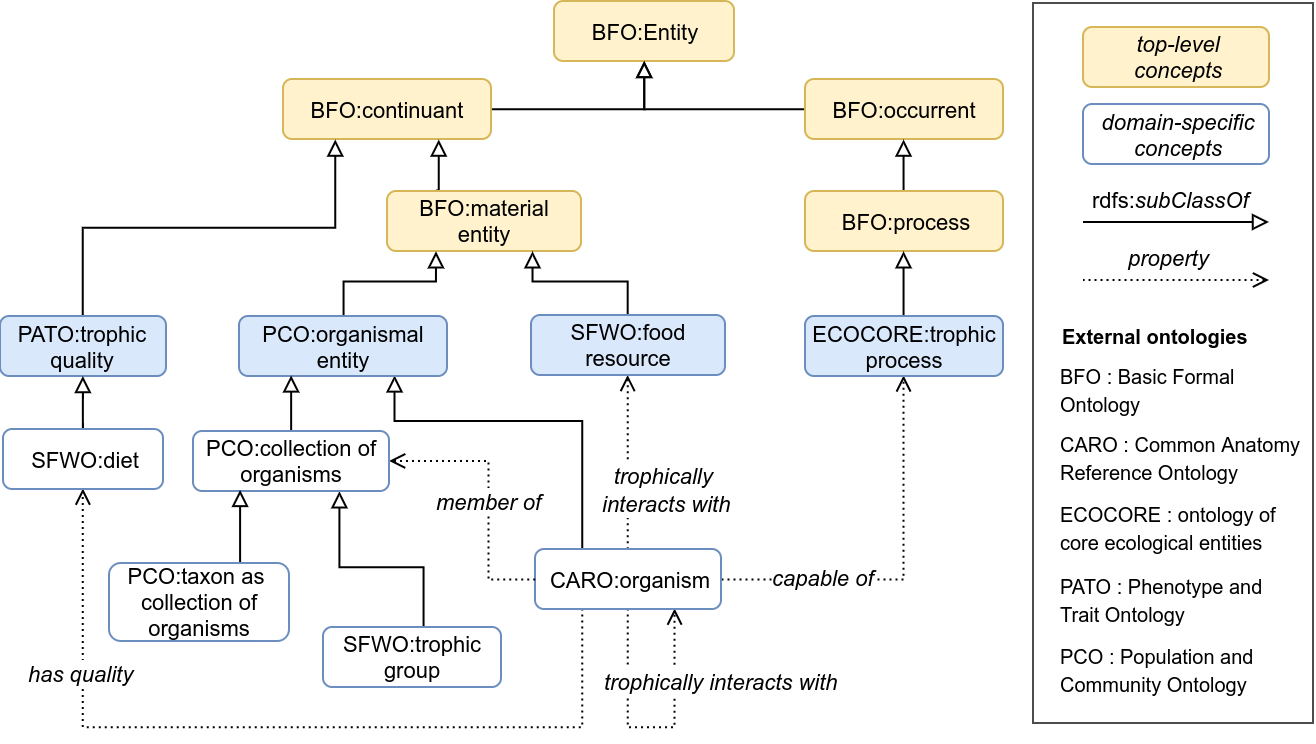
The Architecture of the Soil Food Web
Ingham categorized the soil ecosystem into distinct functional layers. Her analysis moved beyond identifying species to mapping the biomass ratios of these organisms, which serve as the leading indicators of soil health and successional trajectory.
1. The Bacterial and Fungal Foundation
Bacteria and fungi are the primary decomposers. They produce the enzymes necessary to break down complex organic molecules and mine minerals from sand, silt, and clay.
- Bacteria specialize in easy-to-digest sugars and proteins, often found in the rhizosphere (the area surrounding plant roots).
- Fungi utilize chitin and lignin, the structural components of woody material. They extend the reach of root systems through hyphal networks, increasing the surface area for water and nutrient absorption by orders of magnitude.
2. The Predator-Prey Nutrient Release Loop
The critical mechanism Ingham identified is the "Tax-Free" nitrogen release. Protozoa, nematodes, and micro-arthropods consume bacteria and fungi. Because these predators have a lower nitrogen requirement than their prey, they excrete the excess nitrogen in a plant-available form ($NH_4^+$) directly at the root zone.
This creates a localized, demand-driven fertilization system. The plant releases exudates—carbohydrates and proteins—to "farm" the bacteria it needs, which in turn attracts predators that release the nutrients the plant requires. This feedback loop eliminates the need for external chemical intervention if the microbial population densities are maintained within specific parameters.
Quantifying Soil Health via Biomass Ratios
Ingham’s most tactical contribution to soil science was the application of direct microscopy to determine Fungal-to-Bacterial (F:B) ratios. This metric allows land managers to predict the success of specific crops based on the successional state of the soil.
- Bacterial-Dominated Soils (F:B < 0.1): Characteristic of disturbed lands, weeds, and early-stage succession. These soils are high in nitrates ($NO_3^-$), which favor opportunistic "r-strategy" plant species.
- Balanced Soils (F:B 1:1): Ideal for most row crops, vegetables, and grasses.
- Fungal-Dominated Soils (F:B > 10:1 to 1000:1): Essential for old-growth forests and woody perennials. These soils are high in ammonium ($NH_4^+$), which suppresses weed germination and favors "K-strategy" species.
By measuring these ratios, Ingham transformed "organic farming" from a belief system into a data-driven optimization problem. If a vineyard is failing, the analyst does not look for a missing chemical; they look for a deficiency in the fungal biomass necessary to support woody vine growth.
The Cost Function of Synthetic Inputs
The adoption of the Ingham methodology requires an assessment of the hidden costs associated with traditional chemical management. These costs are not merely financial but structural.
- Osmotic Shock: High-salt fertilizers create an osmotic gradient that dehydrates soil microbes. This leads to a "biological desert," where the plant becomes entirely dependent on the grower for survival.
- Structural Collapse: Soil aggregates are held together by bacterial glues (biofilms) and fungal threads (glomalin). When these organisms die, the soil loses its porosity. This results in compaction, reduced oxygen infiltration, and increased erosion.
- Pathogen Vulnerability: In a healthy soil food web, every niche is occupied. Beneficial organisms provide "competitive exclusion," physically blocking pathogens from reaching root surfaces. Removing the biology leaves the niche open for opportunistic pathogens like Phytophthora or Pythium.
The Logic of Thermal Composting and Liquid Biological Extracts
Ingham did not just diagnose the problem; she engineered the solution through standardized biological inoculants. She redefined composting from a waste-disposal process to a controlled cultivation of beneficial aerobic organisms.
The Thermal Threshold
To ensure the safety and efficacy of compost, Ingham mandated a strict temperature regime: maintaining the pile between $55^{\circ}C$ and $65^{\circ}C$ ($131^{\circ}F$ to $150^{\circ}F$) for at least three days. This temperature is sufficient to kill human pathogens and weed seeds while allowing beneficial thermophilic microbes to thrive. If the temperature exceeds $74^{\circ}C$, the pile risks turning anaerobic, producing alcohols and organic acids that are phytotoxic to plants.
Extraction vs. Brewing
The strategy for scaling these biological benefits involves two distinct liquid formats:
- Compost Extracts: A mechanical process where microbes are washed off the compost into a water solution. This is used for soil drenching to move organisms deep into the profile.
- Compost Teas: A brewing process where catalysts (like kelp or humic acid) are added to the water to trigger rapid microbial reproduction. This is used for foliar applications to coat leaves with protective biology.
The Bottleneck of Adoption: Knowledge vs. Scalability
Despite the clarity of Ingham’s frameworks, large-scale adoption faces significant hurdles. The primary limitation is the lack of "off-the-shelf" biological solutions that remain stable during shipping and storage. Living organisms require oxygen and moisture; they do not survive in a sealed plastic jug on a shelf for six months.
Furthermore, the transition from chemical-heavy to biological-heavy systems often involves a "trough of disillusionment." Soil that has been chemically managed for decades lacks the structural integrity to support biology immediately. There is a lag time—often two to three growing seasons—where yields may fluctuate as the microbial populations stabilize.
Strategic Integration of Biological Analysis
For the modern agricultural strategist, the path forward involves integrating Ingham’s biological metrics into existing precision agriculture stacks.
- Microbial Auditing: Move beyond standard chemistry tests (pH, EC, NPK) to include total and active biomass counts for all four functional groups of the food web.
- Carbon Sequestration via Glomalin: Recognize that fungal-dominated soils are the most effective sinks for atmospheric carbon. Fungal hyphae are made of chitin, which is highly resistant to decay, locking carbon in the soil for decades rather than months.
- Reducing Operational Expenditure: Every unit of "free" nitrogen released by the predator-prey loop is a unit of synthetic fertilizer that does not need to be purchased, transported, or applied.
The shift Ingham initiated is the move toward Regenerative Ag-Tech. This field uses data to minimize intervention. The objective is to reach a state of ecological equilibrium where the system’s internal nutrient cycling exceeds the crop's export requirements.
Managers should prioritize the restoration of the Fungal:Bacterial ratio as the primary KPI for long-term land value. The replacement of chemical dependency with biological self-sufficiency is the only viable mechanism for maintaining global caloric output in an era of rising input costs and degrading topsoil. The focus must remain on the microscopic architecture of the rhizosphere; the health of the macro-system is merely a downstream consequence of microbial density and diversity.