The earth does not remember who you were. It only knows what you weigh upon it.
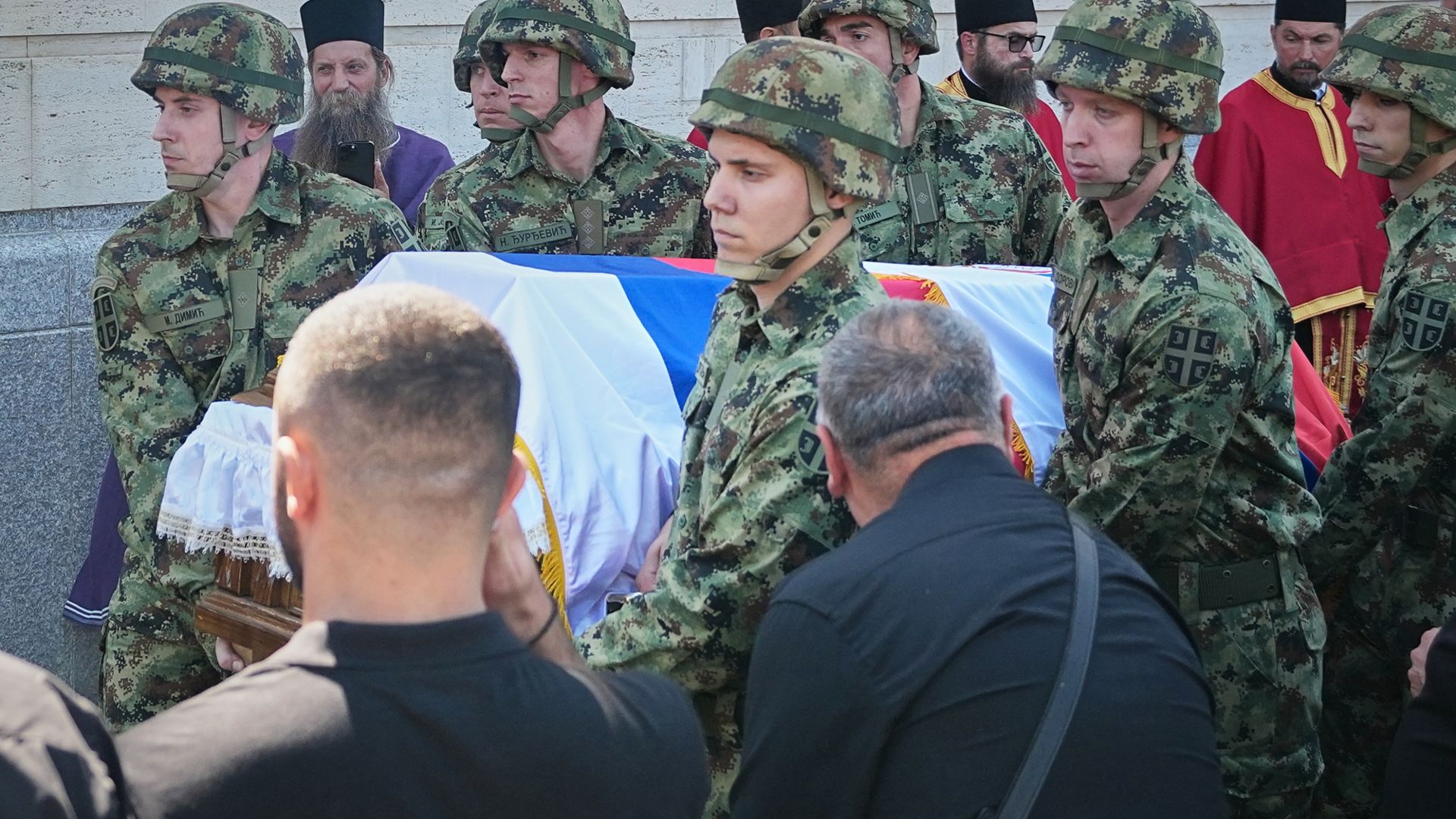
In a quiet corner of Serbia, away from the sterile glass towers where diplomats draft warnings that evaporate before they hit the desk, a grave was dug in the dead of night. No state flags snapped in the wind. No official delegations marched in lockstep before television cameras. Yet, the air thick with incense and the heavy, metallic tang of unheeded history told a different story. Ratko Mladić, a man whose name remains a synonym for the methodical unmaking of human lives, was laid to rest not as a pariah, but as a martyr.
The European Union issued its predictable statements. Condemnations rolled off printing presses like autumn leaves—brittle, dry, and easily swept aside. Brussels spoke of regional stability, of European values, of the painful, necessary work of reconciliation. But Brussels is far away. Brussels smells of espresso and bureaucracy. Serbia smells of damp soil, cheap tobacco, and a stubborn, bruised pride that refuses to heal because healing requires an admission of rot.
Imagine walking down a dusty street in a small Balkan town in the late autumn of 1995. The air is sharp enough to bite your lungs. The war is officially over, the ink on the Dayton Agreement still wet and smelling of chemical solvents. You look across a courtyard at a neighbor you have known since childhood. You grew up sharing roasted chestnuts, trading schoolyard insults, laughing at the same absurd local jokes. Now, there is a wall of glass between your eyes. Behind that glass is the quiet, terrifying knowledge that he knows where your brother’s bones lie beneath a shallow mound of clay. He doesn't look away. He holds your gaze with the flat, deadened stare of a man who has looked into the abyss and found it accommodating.
That is the inheritance of the Balkans. It is not merely a collection of borders carved out by men in drawing rooms; it is a ghost town of the mind.
When the International Criminal Tribunal for the former Yugoslavia finally handed down its life sentence for genocide and crimes against humanity, the legal world breathed a sigh of relief. Justice, they whispered, had been served. The scales were balanced. The ledger was closed.
Except ledgers are kept by accountants, not by mothers who still search for a signet ring in jars of unidentified teeth.
Law is an abstraction. It operates in mahogany courtrooms with simultaneous translation headsets and sterile procedural rules. But trauma operates in the blood. It lives in the way an old woman flinches when a car backfires on a cobblestone alley. It breathes in the silence of a classroom where half the desks are empty because of a Tuesday morning in July. When the courts declared Mladić a monster, they spoke a truth that was legally unassailable and emotionally impotent to the people who needed redemption the most.
Because to thousands who still wear black shawls in Republika Srpska, Mladić was never a monster. He was the shield. He was the dark, necessary instrument that protected them from an existential threat, real or manufactured. Human beings possess a terrifying capacity for compartmentalization. We can look at a butcher and see a savior if the alternative is admitting that our survival was bought with the currency of atrocities.
To admit that Mladić was a war criminal is to admit that the community was built on a foundation of ash and stolen breath. It requires an undoing of the self that most psyches are simply too fragile to endure. So, they choose denial. They wrap themselves in the warm, suffocating blanket of victimhood. They tell themselves that the world is simply unfair, that the West hates them, that their heroes are merely misunderstood defenders of the hearth.
Consider what happens when a society refuses to lance a wound. The infection does not stay localized. It creeps through the groundwater, poisoning the wells of the next generation.
I remember talking to a young man in Belgrade a few years ago. He was twenty-two, intelligent, fluent in English, wearing a crisp streetwear hoodie. He had never smelled cordite in his life. He had never heard the whistling shrapnel of an incoming mortar round over the rooftops of Sarajevo. Yet, when the conversation drifted toward the wars of the nineties, his jaw tightened into a knot of ancient grievance. He recited talking points he had scraped off the dark corners of Telegram channels and nationalist forums as if they were holy scripture. He spoke of historical injustices centuries old as if they had happened yesterday afternoon.
He was wearing the armor of a war he never fought.
That is the true tragedy of the Mladić funeral and the quiet celebration of men like him. It is not just about the past. It is a mortgage taken out on the future, payable in the currency of perpetual hostility. Every time a mural of a convicted war criminal is painted on a brick wall in broad daylight—protected by the casual indifference of local police—a message is sent across the border. It is a flare fired into the dark, spelling out a simple, chilling word: Again.
The European Union watches this with a mixture of exasperation and willful blindness. Expansion policy moves like a glacier, driven by checklists and bureaucratic benchmarks. Did you pass the judicial reform bill? Check. Did you privatize the telecom? Check. Did you stop glorifying mass murderers? Well, look, let's not push too hard on that one; we don't want to destabilize the coalition.
In the calculus of geopolitics, stability always wins out over justice. Brussels wants quiet borders more than it wants clean souls. It prefers a compliant, corrupt autocrat who keeps the lid on the boiling pot to a chaotic democratic transition that might throw up uncomfortable truths. And so, the compromise is struck in the dark. The politicians in the region play a double game: speaking the language of European integration in Brussels while winking at the radical nationalists back home.
The earth swallows the coffin. The fresh mound of dirt settles under a gray autumn drizzle.
What remains isn't the man himself. Mladić was never the storm; he was just the lightning rod. What remains is the atmosphere that generated him. It is the belief that safety can only be achieved by the absolute erasure of the neighbor. It is the narrative that everyone else is an existential threat waiting for permission to strike.
Until that narrative is dismantled—not by sternly worded communiqués from foreign bureaucrats, but by the agonizing, brave, domestic work of looking in the mirror—the Balkans will remain a museum of unburied ghosts.
The grave in Serbia is covered now. The mourners have dispersed, their footsteps fading down the damp paths. But the soil is heavy with what refuses to rot. Somewhere across the valley, a dog barks, and the night closes in, heavy with the weight of everything left unsaid.