In a small fabrication plant in Hsinchu, a technician named Lin watches a robotic arm move with the grace of a surgeon. The room is a cathedral of sterile air and yellow light, pressurized to keep out even a single speck of dust that could ruin a wafer of silicon. Lin knows that the tiny chips born here—thinner than a human hair—power the smartphones in Washington and the missile guidance systems in Beijing. He also knows that his quiet workspace is the most dangerous square inch of dirt on the planet.
For decades, the world has operated on a fragile consensus. It was a diplomatic magic trick where everyone agreed to look the other way while Taiwan built the digital backbone of the modern age. But the air is changing. The silence coming from the United States is no longer the comfortable quiet of status quo; it has become a heavy, pressurized void.
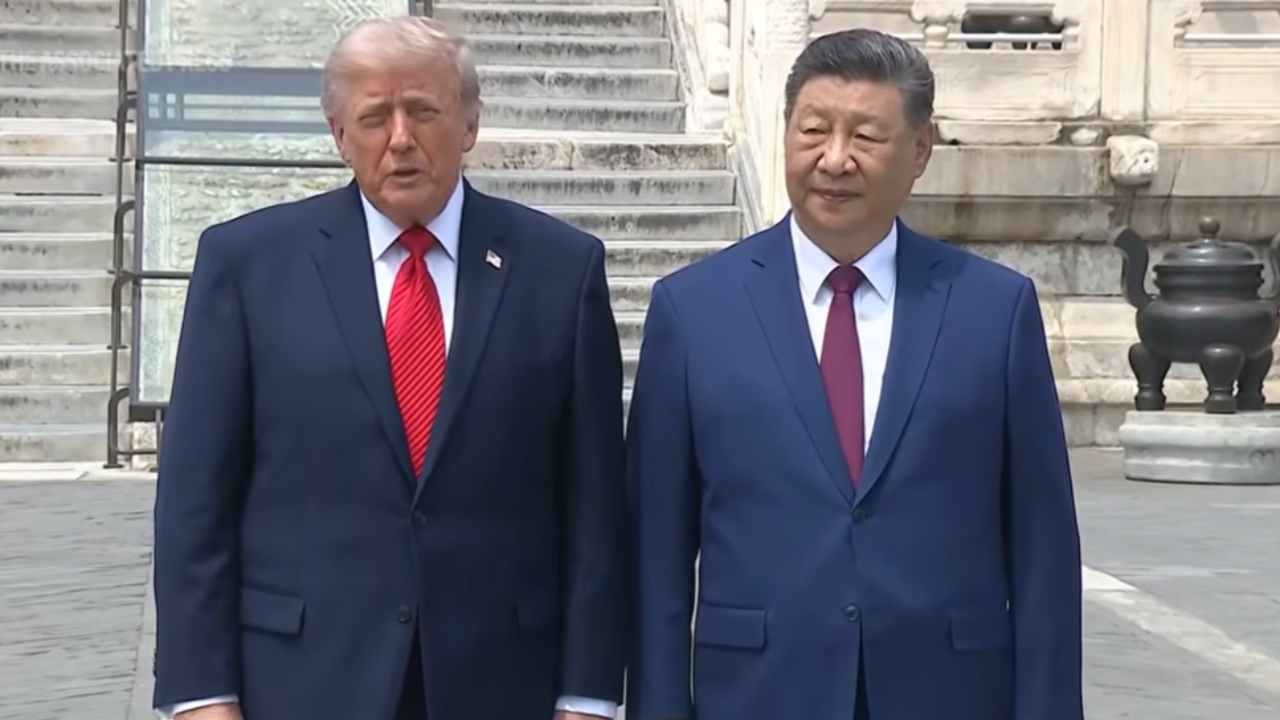
When the leaders of the world’s two largest superpowers meet, every syllable is weighed like gold. Recently, the rhetoric from the East has sharpened. Xi Jinping’s warnings about "clashes and conflicts" aren't just boilerplate political posturing. They are the sound of a door being bolted. Meanwhile, the silence from the incoming American administration is a different kind of message. It is the tactical quiet of a gambler who refuses to show his hand until the stakes are high enough to break the table.
The Silicon Shield and the Human Cost
To understand why a few islands in the Pacific keep presidents awake at night, you have to stop thinking about maps and start thinking about your own life. Every time you start your car, check your bank balance, or heat up a meal, you are interacting with Taiwan. If the flow of those chips stops, the global economy doesn't just slow down. It vanishes.
Think about a father in Ohio trying to buy a new truck for his business, only to find the lot empty because the "brain" of the vehicle is stuck in a shipping container under the shadow of a naval blockade. Think about the engineer in Shenzhen who sees the same chips as the final hurdle to national rejuvenation. This isn't a "question" of geography. It is a struggle over who owns the future.
The "Taiwan question" is a clinical term for a deeply emotional reality. For the people living in Taipei, the daily headlines aren't abstract geopolitical theory. They are the backdrop to grocery shopping and school runs. They live in the center of a tug-of-war between a rising superpower that views the island as a missing piece of its soul and a global hegemon that views it as the ultimate strategic lynchpin.
The Weight of What Is Unsaid
Diplomacy usually relies on "strategic ambiguity." It’s the art of being vague enough that no one feels forced to start a fight. But that ambiguity is fraying. When the American side stays quiet on whether it would send sons and daughters to defend a democracy halfway across the world, it creates a vacuum.
Nature hates a vacuum. So does Beijing.
The warning of "clashes and conflicts" is a direct response to that silence. It is an attempt to fill the void with a hard boundary. If the U.S. treats Taiwan like a bargaining chip in a trade war, it risks miscalculating the emotional and nationalist fervor on the other side. You cannot trade away what someone else considers their birthright without expecting a firestorm.
Imagine two giants standing in a crowded room, holding a glass vase between them. One giant is shouting instructions on how to hold it. The other giant is staring intently, saying nothing at all. The people standing around them—the Lins of the world, the small business owners, the tech giants—are holding their breath, waiting for a grip to slip.
The Invisible Stakes of a Hard Bargain
We often talk about "chips" as if they are oil or gold. They aren't. Oil is extracted; chips are imagined. They require a specific, highly fragile ecosystem of talent, peace, and global cooperation. You cannot produce a 3-nanometer processor in a war zone. You cannot run a global supply chain when the sea lanes are a "clash of civilizations."
The shift we are seeing now is a move away from the "One China" policy toward a transactional reality. If the U.S. approach becomes "What is Taiwan worth to me today?" the stability of the last fifty years evaporates. This isn't just about protecting a democracy or honoring a treaty. It's about the fundamental trust that underpins the global market.
Investors hate uncertainty more than they hate bad news. The current silence is the purest form of uncertainty. It forces companies to spend billions of dollars trying to build factories elsewhere—in Arizona, in Germany, in Japan—to "de-risk" their future. But these things take decades. We are currently living in the gap between the old world and whatever comes next.
Beyond the Briefing Rooms
The tragedy of high-level geopolitics is that it forgets the individual. The narrative often treats Taiwan like a game piece on a cardboard map. But the "proper handling" Xi refers to involves twenty-three million people who have built a vibrant, noisy, tech-saturated society out of the ashes of the twentieth century.
The danger of "clashes" isn't just military. It's the total fracturing of the digital age. We have spent thirty years knitting the world together with fiber optic cables and shared standards. Now, we are watching the scissors come out.
The silence from Washington might be a negotiation tactic. It might be a sign of shifting priorities. Or it might be the sound of a superpower realizing that the old rules no longer apply. When the music stops, everyone has to find a chair. The problem is that there aren't enough chairs for everyone involved in this dance.
In Hsinchu, Lin finishes his shift. He steps out of the cleanroom, removes his mask, and breathes in the humid air of the Pacific. He looks at the horizon, where the gray sea meets the gray sky. He doesn't know what was said in the closed-door meetings in Mar-a-Lago or the Great Hall of the People. He only knows that the machines are still humming, for now.
The most terrifying thing about a storm isn't the thunder. It’s the eerie, total stillness that comes right before the first gust of wind hits the trees.
The world is currently standing in that stillness.